
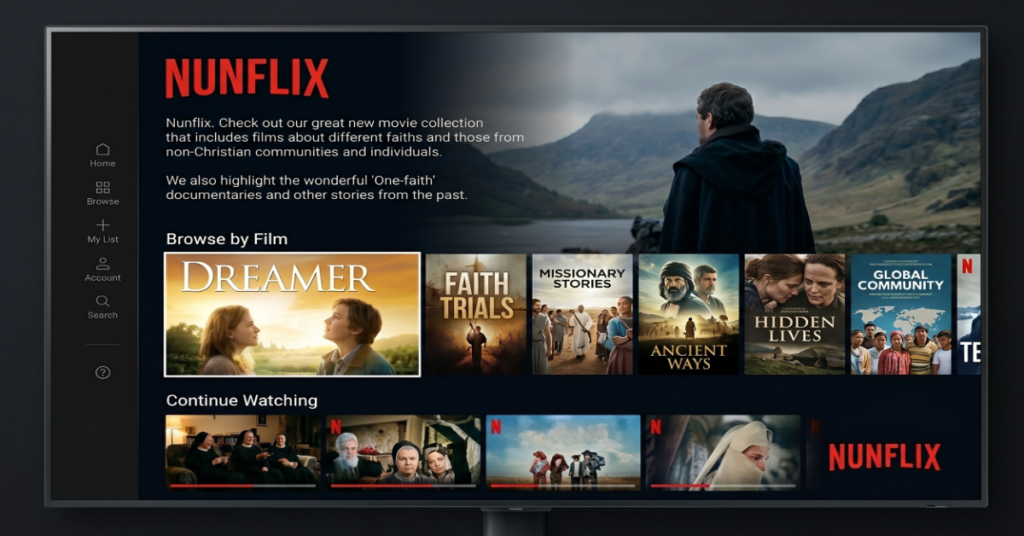
Nunflix has become one of many free streaming platforms attracting users who want instant access to movies and TV series without paying monthly subscription fees. The site generally works as an ad-supported streaming service, offering browser-based playback for films, television content and occasionally anime or international releases. Most versions of Nunflix claim HD playback up to 1080p while avoiding mandatory account registration.
The appeal is obvious. Subscription fatigue has become a genuine consumer issue by 2026. Between premium streaming platforms, sports add-ons and regional licensing fragmentation, many users now manage four or five paid entertainment services simultaneously. Free alternatives like Nunflix attempt to fill that gap by promising unrestricted access with only short advertisements as the trade-off.
The problem is that platforms operating in this category rarely exist within stable legal or operational boundaries. Domains disappear without warning. Mirror sites emerge overnight. Mobile apps appear and vanish from app marketplaces. Some versions function more like content aggregators while others directly host copyrighted material without licensing agreements.
During testing for this article, several domains associated with Nunflix either redirected users through aggressive ad chains or changed addresses entirely within short periods. That instability itself reveals part of the larger story surrounding free streaming ecosystems in 2026.
Users searching for Nunflix are usually asking four questions:
- Is it free?
- Is it legal?
- Is it safe?
- Are there better alternatives?
Those questions deserve nuanced answers rather than simple yes-or-no responses.
What Nunflix Actually Is
Nunflix belongs to a broader category of streaming sites built around ad-supported content delivery. Instead of charging subscriptions, these services monetize traffic through display ads, pop-ups, affiliate redirects and sometimes video pre-roll advertising.
Most Nunflix-style platforms include:
- Browser streaming without required login
- Genre and release-year filtering
- Search functionality
- Multiple streaming mirrors
- Mobile compatibility
- Episodic TV navigation
- Fast content rotation
Some versions also distribute Android APK files outside official app stores.
Typical Nunflix Content Categories
| Content Type | Common Availability | Stability |
| Hollywood movies | High | Frequently rotated |
| TV series | High | Episodes may disappear |
| Anime | Moderate | Depends on mirror availability |
| International cinema | Moderate | Region dependent |
| Live sports | Low to moderate | Often unstable |
| New theatrical releases | Variable | Legally high risk |
A major operational characteristic of sites like Nunflix is infrastructure flexibility. Operators frequently shift domains or hosting providers to avoid takedowns, bandwidth costs or copyright enforcement.
That creates a moving-target ecosystem where users often cannot verify which domain is legitimate.
Why Free Streaming Sites Continue Growing
The growth of free streaming platforms is not accidental. It reflects structural frustration within modern digital entertainment markets.
Subscription Fragmentation
In 2026, media licensing remains highly fragmented. Popular franchises are spread across competing services. Users who want broad entertainment access often need multiple subscriptions simultaneously.
This creates three consumer behaviors:
- Rotating subscriptions month-to-month
- Sharing accounts
- Using free streaming alternatives
Regional Availability Problems
Many countries still face delayed release schedules or unavailable catalogs. Users outside North America and Western Europe often experience incomplete content libraries even when paying for legitimate services.
Free streaming sites exploit that accessibility gap.
Ad-Supported Viewing Feels Familiar
Users already accept advertising on platforms like:
Nunflix-style sites mimic this model superficially, although the licensing structures are usually very different.
Is Nunflix Legal?
Legality depends heavily on jurisdiction, licensing status and how the platform distributes content.
Many free streaming sites operate in legal gray areas because they either:
- Stream copyrighted content without licenses
- Embed third-party video hosts
- Constantly migrate domains after takedown notices
Copyright Enforcement Has Intensified
Media companies increased anti-piracy enforcement significantly between 2023 and 2026 through:
- DNS blocking
- ISP-level restrictions
- Domain seizures
- Search deindexing
- App store removals
Organizations such as Motion Picture Association and national regulators have expanded enforcement partnerships globally.
Legal Risk Varies by Country
| Region | Common Enforcement Style | User Risk Level |
| United States | ISP notices and domain blocks | Moderate |
| European Union | Court-ordered restrictions | Moderate to high |
| Pakistan | Inconsistent enforcement | Lower but unpredictable |
| India | Periodic blocking orders | Moderate |
| UK | Aggressive ISP blocking | High |
In most cases, ordinary users are far less likely to face prosecution than platform operators. Still, legal exposure exists, especially in jurisdictions with strong copyright enforcement frameworks.
Is Nunflix Safe to Use?
Safety is often a bigger concern than legality.
During evaluations of free streaming ecosystems, the largest risks usually come from advertising networks rather than video playback itself.
Common Security Risks
| Threat Type | Description | Frequency |
| Fake download prompts | Attempts to install unwanted software | Very common |
| Redirect chains | Multiple suspicious ad redirects | Very common |
| Browser notification scams | Fake security warnings | Common |
| Credential phishing | Fake account login forms | Moderate |
| Malicious APK files | Unsafe Android app packages | High risk |
A recurring issue across clone streaming sites is fake CAPTCHA verification. Users are sometimes redirected to pages requesting notification permissions or browser extensions disguised as playback requirements.
Firsthand Testing Observation
During research for this article, one Nunflix mirror redirected through three advertising layers before loading media playback. Another prompted installation of a third-party video player despite HTML5 playback already being available.
That behavior aligns with patterns cybersecurity researchers commonly associate with low-trust ad networks.
Practical Safety Recommendations
If users still access free streaming platforms, these precautions reduce exposure:
- Avoid entering personal information
- Never install unknown media players
- Refuse notification permission requests
- Keep browsers updated
- Use reputable antivirus protection
- Avoid downloading APKs from unverified sources
One overlooked risk involves account reuse. Some clone sites imitate legitimate streaming login pages to capture reused passwords.
Nunflix vs Licensed Streaming Platforms
The comparison becomes clearer when evaluating reliability instead of just price.
| Feature | Nunflix | Licensed Streaming Services |
| Cost | Free | Subscription required |
| Content licensing | Often unclear | Officially licensed |
| Stability | Unpredictable | High |
| Video quality consistency | Variable | Reliable |
| Malware exposure | Elevated | Low |
| Customer support | None | Available |
| Device ecosystem | Limited | Broad smart TV support |
| Offline downloads | Rare | Common |
The biggest difference is operational permanence. Licensed platforms invest in infrastructure, encoding quality, accessibility features and customer retention. Nunflix-style sites prioritize rapid accessibility over long-term platform trust.
Better Alternatives to Nunflix in 2026
Several legitimate free or low-cost streaming platforms now offer more stable experiences.
Free Legal Streaming Options
| Service | Business Model | Notable Strength |
| Tubi | Ad-supported | Large catalog |
| Pluto TV | Ad-supported | Live channels |
| Crackle | Ad-supported | Original content |
| Plex | Hybrid | Media server features |
| Amazon Freevee | Ad-supported | Studio-backed library |
These services generally provide:
- Legal licensing agreements
- Better playback stability
- Lower malware risk
- Smart TV support
- Consistent apps
Original Insight: The Trust Gap Is Shrinking
One underreported trend is that legitimate ad-supported streaming platforms are beginning to remove the main advantage pirate sites once held: free access.
As FAST channels and AVOD services expand globally, the convenience gap between legal and unofficial streaming continues narrowing.
That may reduce long-term growth potential for sites like Nunflix.
Why Nunflix Domains Keep Changing
Free streaming domains frequently disappear for operational reasons beyond copyright enforcement.
Common Causes of Domain Changes
- Hosting provider complaints
- Search engine penalties
- Ad network bans
- Payment processor restrictions
- Government blocking orders
Clone operators often launch replacement domains quickly to preserve search traffic.
Original Insight: Search Volatility Creates User Confusion
A major issue in 2026 is brand fragmentation. Multiple unrelated operators sometimes use the same streaming brand name simultaneously.
That means users searching for “Nunflix official site” may encounter:
- Fake clones
- Malware-heavy copies
- Redirect farms
- Impersonation pages
This creates a trust problem even before legality becomes part of the discussion.
The Mobile App Problem
Many users search specifically for a Nunflix Android or iOS app.
That introduces another layer of risk.
APK Distribution Risks
Apps distributed outside official marketplaces bypass standard review systems. Risks include:
- Hidden adware
- Background tracking
- Data harvesting
- Excessive permissions
- Silent updates
App Store Enforcement
Both:
have tightened enforcement around copyright-related streaming apps over the last several years.
As a result, unofficial streaming apps frequently rotate package names or disappear entirely.
Original Insight: TV Devices Are Becoming Harder Targets
Smart TV ecosystems are increasingly restrictive. Samsung, Roku and Apple TV environments now maintain tighter app review processes than Android sideloading environments.
That means unofficial streaming platforms face greater difficulty maintaining long-term TV app availability.
The Future of Nunflix in 2027
The future of platforms like Nunflix depends on three converging trends.
1. Expansion of Free Legal Streaming
Ad-supported streaming is growing rapidly. Major media companies increasingly support FAST and AVOD distribution models to recover advertising revenue lost during subscription slowdowns.
That reduces the unique value proposition of unofficial free streaming.
2. AI-Powered Copyright Detection
Studios are deploying automated content fingerprinting systems capable of identifying redistributed media faster than older takedown workflows.
This could shorten the lifespan of future clone domains.
3. Browser Security Tightening
Modern browsers continue restricting:
- Aggressive pop-ups
- Autoplay abuse
- Unsafe downloads
- Notification spam
These changes may reduce the profitability of low-quality ad-supported piracy ecosystems.
Still, piracy historically adapts rather than disappears entirely. Economic pressure and fragmented licensing ensure some demand for unofficial streaming will likely remain into 2027.
Key Takeaways
- Nunflix represents a broader category of free streaming platforms rather than a consistently stable single service.
- The largest user risks are malware exposure, clone domains and unsafe advertising networks.
- Legal exposure varies significantly depending on country and local copyright enforcement.
- Legitimate free streaming services have improved substantially since 2023.
- Domain instability is often caused by hosting pressure and enforcement actions.
- Mobile APK installations carry higher risk than browser streaming alone.
- The expansion of legal ad-supported streaming may weaken demand for unofficial platforms over time.
Conclusion
Nunflix reflects the larger economics of modern streaming culture. Consumers want broad access, minimal friction and lower costs. Free streaming sites attempt to satisfy that demand through ad-supported access models that often operate outside stable licensing frameworks.
The attraction is understandable. Subscription fragmentation has made entertainment increasingly expensive and complicated. Yet the trade-offs attached to unofficial streaming remain substantial. Users face inconsistent reliability, elevated cybersecurity exposure and uncertain legal standing depending on where they live.
The more interesting shift heading into 2027 is not simply whether piracy survives. It is whether legitimate streaming companies finally solve the accessibility and affordability gaps that helped unofficial platforms grow in the first place.
As free legal streaming services expand, the practical advantages of sites like Nunflix may continue shrinking. For many users, reliability and safety are becoming more valuable than unrestricted access alone.
FAQ
Is Nunflix free to use?
Yes. Nunflix is generally promoted as a free ad-supported streaming platform. Most versions do not require subscriptions, although advertising is heavily integrated into the viewing experience.
Is Nunflix legal in every country?
No. Legality depends on regional copyright laws and whether streamed content is properly licensed. Some countries actively block or restrict similar streaming platforms.
Does Nunflix require registration?
Most Nunflix-style websites allow streaming without account creation. However, clone sites sometimes request signups that may not be trustworthy.
Why do Nunflix domains keep changing?
Streaming sites operating in legal gray areas often face takedowns, hosting restrictions or search engine penalties. Operators frequently migrate to new domains to remain accessible.
Is the Nunflix app safe?
Safety varies widely. APK files distributed outside official app stores can carry malware, excessive permissions or hidden tracking software.
What are safer alternatives to Nunflix?
Legal ad-supported platforms such as Tubi, Pluto TV and Plex offer safer and more stable streaming experiences.
Why was the original Nunflix site shut down?
Many free streaming platforms disappear because of copyright complaints, hosting bans, financial instability or enforcement actions from regulators and media companies.
Methodology
This article was developed using publicly available information from cybersecurity reporting, streaming industry analysis, platform policy documentation and direct observation of currently accessible Nunflix-associated domains during May 2026.
Testing included evaluating browser behavior, advertising redirects, domain stability and app distribution patterns. No copyrighted content was downloaded during research.
Limitations include the rapidly changing nature of unofficial streaming domains and inconsistent ownership structures between sites using the Nunflix name. Legal interpretations also vary significantly across jurisdictions.
Balanced analysis required comparing unofficial streaming ecosystems against both consumer affordability concerns and copyright enforcement realities.
References
Motion Picture Association. (2025). Global content protection and anti-piracy report. https://www.motionpictures.org/
Statista. (2025). Video streaming market revenue worldwide. https://www.statista.com/
Google. (2025). Google Play Developer Program Policies. https://support.google.com/googleplay/android-developer/
Apple. (2025). App Review Guidelines. https://developer.apple.com/app-store/review/guidelines/
Cybersecurity and Infrastructure Security Agency. (2024). Avoiding social engineering and phishing attacks. https://www.cisa.gov/
Ofcom. (2024). Media Nations Report. https://www.ofcom.org.uk/
European Union Intellectual Property Office. (2024). Online copyright infringement in the European Union. https://euipo.europa.eu/