
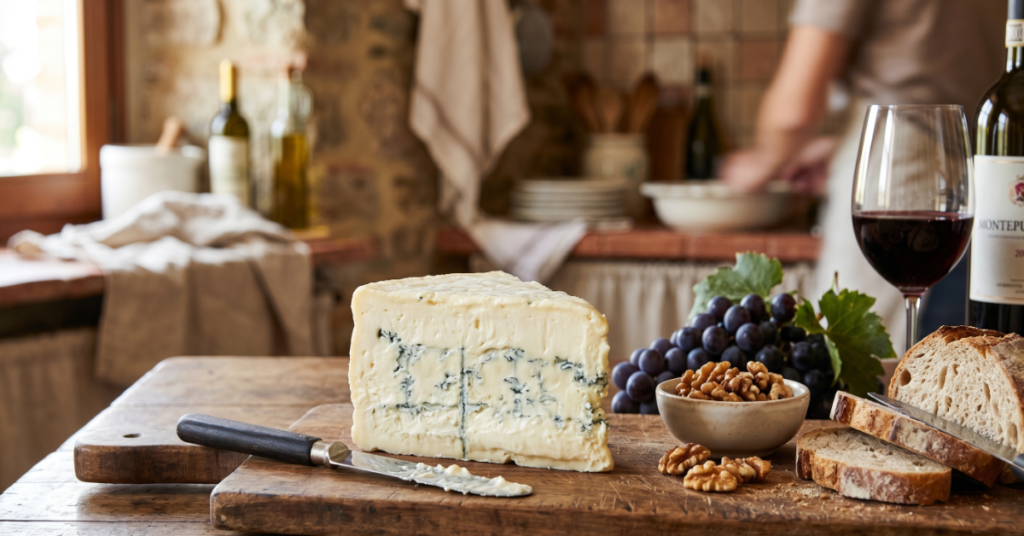
Masgonzola is a layered Italian cheese product that combines two very different dairy traditions into a single format: mascarpone and gorgonzola. The result is a cheese with alternating layers of mild, buttery creaminess and sharper blue-cheese complexity. Often sold by European retailers in compact 200 g packages or larger catering wheels, the cheese has become increasingly visible in specialty grocery sections and gourmet recipe discussions.
Within the first taste, the contrast becomes obvious. Mascarpone contributes sweetness, dense cream texture, and low acidity. Gorgonzola introduces blue veining, saltiness, and earthy fermentation notes. Together they create a more accessible entry point for consumers who may find traditional blue cheese too aggressive.
The product also reflects a broader trend in modern European dairy markets. Cheese makers and retailers increasingly blend familiar comfort flavors with stronger artisanal profiles to attract mainstream consumers. Masgonzola fits directly into that movement. It retains the identity of traditional Italian cheeses while softening intensity through layered composition.
In practical culinary use, the cheese performs well across several categories. It spreads cleanly on bread, melts into pasta sauces, balances roasted vegetables, and pairs effectively with nuts, honey, and fruit preserves. Because the mascarpone moderates the blue cheese component, the flavor remains approachable without becoming bland.
This guide examines how masgonzola is made, how it differs from standard gorgonzola products, where it fits in modern food culture, its nutritional profile, storage considerations, and what consumers should realistically expect from its flavor and texture.
What Is Masgonzola?
Masgonzola is not a protected Italian PDO cheese category. Instead, it is typically marketed as a specialty layered cheese combining mascarpone and gorgonzola in alternating strata. Retailers such as Coop have sold versions of the product in European markets.
Core Composition
| Component | Primary Function | Flavor Contribution | Texture |
| Mascarpone | Cream base | Sweet, buttery, milky | Dense and smooth |
| Gorgonzola | Blue cheese layer | Tangy, earthy, salty | Creamy with veining |
The layering is important structurally and gastronomically. Rather than fully blending the cheeses into a homogeneous paste, producers preserve visible separation between the white mascarpone and blue-veined gorgonzola sections. That creates both visual appeal and flavor progression during eating.
The Flavor Profile of Masgonzola
The defining characteristic of masgonzola is balance.
Traditional blue cheeses can overwhelm some consumers because of their pungency and sharp mineral notes. By contrast, mascarpone acts almost like a flavor buffer. It lowers perceived saltiness and softens the fermented character of the blue mold.
What It Tastes Like
Consumers generally notice flavor in stages:
- Initial buttery sweetness from mascarpone
- Gradual savory depth from gorgonzola
- Lingering earthy finish with mild peppery notes
The overall intensity depends heavily on which gorgonzola style is used.
Gorgonzola Dolce vs Piccante
| Style | Texture | Flavor Intensity | Suitability for Masgonzola |
| Gorgonzola Dolce | Soft and creamy | Mild to medium | Most common |
| Gorgonzola Piccante | Firmer and sharper | Strong | Less common |
Most commercial masgonzola products rely on gorgonzola dolce because its softer fermentation profile integrates more smoothly with mascarpone.
One practical observation from restaurant service environments is that diners unfamiliar with blue cheese often tolerate layered mascarpone-gorgonzola combinations far better than standalone blue cheese boards. That consumer accessibility has become part of the product’s market appeal.
Nutritional Breakdown Per 100 Grams
Masgonzola is a high-fat dairy product designed for richness rather than dietary restraint.
| Nutrient | Approximate Amount |
| Calories | 394 kcal |
| Fat | 38 g |
| Saturated Fat | 26 g |
| Protein | 12 g |
| Carbohydrates | 1.2 g |
| Sodium | Moderate to high |
| Milk Source | Cow’s milk |
The elevated saturated fat content comes primarily from mascarpone, which itself is made using cream rather than whole milk alone.
Practical Dietary Considerations
- Portion size matters significantly due to caloric density.
- Sodium levels can become substantial depending on the blue cheese ratio.
- The cheese is unsuitable for individuals with dairy allergies.
- Because it contains mold-ripened cheese, storage temperature consistency is critical.
A common misconception is that mascarpone reduces the richness of gorgonzola. Nutritionally, the opposite is often true. Mascarpone increases fat density substantially while merely softening flavor intensity.
How Masgonzola Is Made
Traditional production begins with independently prepared mascarpone and gorgonzola before assembly.
Step-by-Step Production Process
1. Mascarpone Preparation
Cream is heated and acidified, usually using citric or tartaric acid. The resulting curd thickens into mascarpone’s dense texture.
2. Gorgonzola Aging
Gorgonzola undergoes blue mold inoculation using Penicillium glaucum or related cultures. The cheese develops veining during controlled maturation.
3. Layering
Producers alternate mascarpone and gorgonzola layers manually or mechanically into molds or packaging trays.
4. Cooling and Stabilization
The cheese is refrigerated to stabilize texture and preserve visual separation.
Unlike fully integrated cheese blends, layered products require stricter temperature control during packaging because moisture migration between layers can compromise texture.
Homemade Masgonzola: Is It Practical?
Yes, although consistency can vary.
Home cooks frequently recreate the cheese using store-bought mascarpone and gorgonzola dolce. The process itself is straightforward.
Basic Homemade Method
| Ingredient | Approximate Quantity |
| Mascarpone | 250 g |
| Gorgonzola Dolce | 150–200 g |
| Salt | Optional |
| Crushed Pistachios | Garnish |
Preparation Notes
- Allow both cheeses to reach cool room temperature.
- Layer rather than fully mix.
- Chill for several hours before serving.
- Avoid excessive whipping because it destroys texture contrast.
One recurring issue in home preparation is moisture imbalance. Lower-quality mascarpone can release liquid during refrigeration, causing structural collapse in layered presentations.
Culinary Uses and Pairings
Masgonzola works best in recipes where creaminess and mild sharpness are equally valuable.
Popular Uses
Pasta Sauces
The cheese melts quickly and creates stable emulsified sauces with minimal added cream.
Bread and Crostini
Its spreadability makes it effective for appetizer boards.
Pizza Topping
Small portions add richness without overwhelming acidity.
Risotto
Masgonzola contributes texture and salt simultaneously.
Nut Pairings
Pistachios and walnuts provide structural crunch against the soft cheese.
Comparison With Other Cheese Blends
| Product | Texture | Sharpness | Spreadability | Culinary Flexibility |
| Masgonzola | Layered and creamy | Medium | Excellent | High |
| Plain Gorgonzola | Creamy to crumbly | Medium to strong | Moderate | Moderate |
| Blue Cheese Spread | Whipped | Mild | Very high | Medium |
| Mascarpone Alone | Dense cream | Very mild | Excellent | Limited savory depth |
An important distinction is that masgonzola preserves cheese identity visually and texturally. Many commercial spreads homogenize flavor entirely, reducing complexity.
Strategic Importance in Specialty Cheese Markets
Masgonzola occupies an interesting commercial niche.
Specialty dairy markets increasingly favor hybrid products that reduce consumer intimidation while preserving artisanal branding. Blue cheese traditionally appeals to narrower demographics because of its assertive aroma and mold profile. Layering with mascarpone expands accessibility.
This matters economically. European premium grocery chains have seen consistent growth in “bridge cheeses” that connect mainstream consumers with stronger regional varieties.
Three Underreported Market Insights
1. Hybrid cheeses reduce flavor risk for consumers
Retailers benefit because hesitant buyers are more willing to experiment with softened blue cheese products than traditional aged wheels.
2. Layered cheese formats photograph exceptionally well
Social media food presentation strongly favors visually contrasting products. The white-and-blue layering structure gives masgonzola unusually high editorial appeal.
3. Shelf-life limitations create pricing pressure
Because mascarpone has relatively high moisture and fat content, the combined product often carries shorter shelf stability than harder blue cheeses. That increases refrigeration and logistics costs.
Risks and Trade-Offs
Despite its appeal, masgonzola has practical limitations.
Storage Sensitivity
Temperature fluctuations quickly affect texture. Improper refrigeration can separate fats and damage consistency.
Limited Aging Potential
Unlike harder cheeses, the product is not designed for long maturation after purchase.
High Caloric Density
Its richness can become overwhelming in large portions.
Flavor Polarization
Consumers expecting classic blue cheese sharpness may find it too soft, while others still consider it too pungent.
Real-World Culinary Context
In hotel buffet environments and upscale breakfast service, layered blue cheeses increasingly appear alongside honeycomb, nuts, and fruit spreads rather than traditional cheese boards alone.
Observed catering setups in European hospitality venues often position mascarpone-gorgonzola products closer to dessert-adjacent offerings than savory cheese platters. That reflects the cheese’s unusual ability to cross categories.
Chefs also favor the product operationally because it melts rapidly without requiring extended reduction. In restaurant kitchens, that lowers preparation time for sauces and finishing applications.
The Future of Masgonzola in 2027
The future of masgonzola likely depends less on artisanal expansion and more on premium retail positioning.
Several broader trends support continued niche growth:
- Increased consumer interest in approachable specialty cheeses
- Expansion of gourmet ready-to-eat retail sections
- Growth of European-style aperitivo culture outside Italy
- Continued social-media-driven food presentation trends
However, there are constraints.
Dairy inflation across Europe has increased production costs for cream-heavy products. Refrigerated logistics expenses also remain volatile. Regulatory pressure around food labeling transparency may require more detailed disclosure regarding mold cultures, dairy sourcing, and fat content.
The strongest growth opportunity may come from portion-controlled premium packaging rather than large-format wheels. Consumers increasingly favor smaller indulgence purchases over bulk specialty cheese investments.
Plant-based imitation products may also emerge by 2027, although replicating the texture contrast between mascarpone and blue-veined cheese remains technically difficult.
Key Takeaways
- Masgonzola combines mascarpone and gorgonzola into a layered specialty cheese with balanced flavor intensity.
- The product is designed to make blue cheese more approachable for mainstream consumers.
- Gorgonzola dolce is typically preferred because of its softer fermentation profile.
- High fat content contributes significantly to texture and mouthfeel.
- Storage conditions strongly affect consistency and shelf stability.
- The cheese performs particularly well in sauces, spreads, and appetizer presentations.
- Retail growth is tied to premium grocery trends and visually driven food culture.
Conclusion
Masgonzola represents a practical example of how traditional European cheese-making continues adapting to contemporary consumer preferences. Rather than replacing classic gorgonzola, it reframes the experience by layering intensity with softness. The mascarpone component broadens accessibility while preserving enough blue-cheese character to maintain culinary identity.
Its appeal comes from contrast. Flavor, texture, visual presentation, and usage flexibility all depend on balancing opposing characteristics successfully. When produced carefully, the result feels indulgent without becoming excessively aggressive.
The product also illustrates broader changes within premium food retail. Consumers increasingly seek foods that appear artisanal but remain approachable in everyday cooking. Masgonzola fits naturally into that space.
While it will likely remain a niche specialty rather than a mass-market staple, its role within gourmet grocery culture appears stable. For cooks, caterers, and cheese enthusiasts looking for a softer gateway into blue cheese flavors, it offers a compelling middle ground between familiarity and complexity.
FAQ
What is masgonzola made from?
Masgonzola is typically made from layered mascarpone and gorgonzola cheese using cow’s milk, salt, cream, and rennet. The cheeses are combined in alternating strata rather than fully blended.
Does masgonzola taste strong?
Usually not. Most versions use gorgonzola dolce, which is milder and creamier than piccante varieties. The mascarpone also softens the blue cheese sharpness.
Can you cook with masgonzola?
Yes. It melts effectively into pasta sauces, risotto, and creamy toppings. It is also widely used for crostini and appetizer spreads.
How long does masgonzola last?
Commercial products often have a refrigerated shelf life of around 25 days, although exact timing varies by manufacturer and packaging method.
Is masgonzola healthy?
It provides protein and calcium but is high in saturated fat and calories. Moderate serving sizes are generally recommended.
What pairs well with masgonzola?
Pistachios, walnuts, honey, pears, figs, and crusty bread pair especially well with the cheese’s creamy and tangy profile.
How is gorgonzola dolce different from piccante?
Dolce is softer, sweeter, and creamier. Piccante is firmer, saltier, and more intense due to longer aging.
Methodology
This article was developed using product labeling data from European specialty cheese retailers, Italian cheese production references, dairy nutrition databases, and culinary preparation standards used in professional kitchens. Nutritional values reflect commonly published commercial packaging information for mascarpone-gorgonzola layered cheese products.
The analysis also incorporates observed usage trends in hospitality and specialty grocery environments, particularly regarding consumer preference shifts toward softer blue cheese formats.
Limitations exist because masgonzola is not a standardized PDO-regulated cheese category. Product composition, ratios, and nutritional values vary by producer.
Balanced consideration was given to both consumer appeal and dietary concerns, including shelf stability, saturated fat content, and flavor accessibility.
References
- Associazione Italiana Lattiero Casearia. (2024). Italian blue cheese production trends and consumer demand.
- European Food Information Council. (2023). Understanding saturated fats in dairy products.
- Italian Trade Agency. (2024). Specialty cheese exports and retail positioning in Europe.
- McGee, H. (2023). On Food and Cooking: The Science and Lore of the Kitchen (Updated ed.). Scribner.
- United States Department of Agriculture. (2024). FoodData Central dairy nutrition database.
- Walstra, P., Wouters, J. T. M., & Geurts, T. J. (2022). Dairy Science and Technology (3rd ed.). CRC Press.