
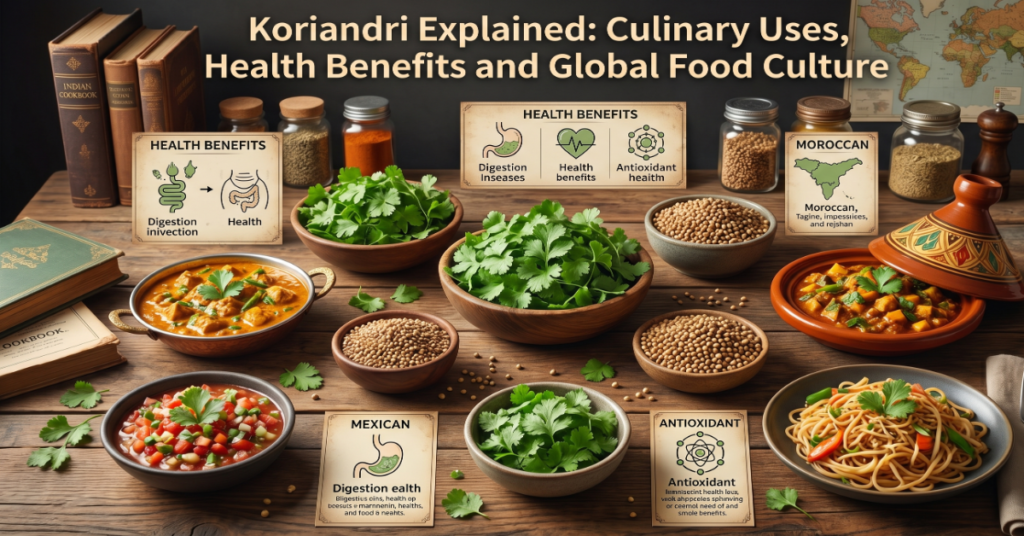
Koriandri is another name for coriander, the herb and spice derived from the Coriandrum sativum plant. The fresh green leaves are commonly called cilantro in the United States, while the dried seeds are known worldwide as coriander seeds. Both forms play a major role in cooking traditions that span India, the Mediterranean, Latin America, Southeast Asia and the Middle East.
What makes koriandri unusual is that the leaves and seeds taste dramatically different despite coming from the same plant. Fresh leaves carry a citrusy, bright and slightly peppery flavor that works well in salads, curries and salsa. The seeds develop warm earthy notes with hints of orange peel and spice, making them common in spice blends, pickling and baked dishes.
The plant itself is ancient. Archaeologists have identified coriander seeds in historical sites dating back more than 3,500 years, including evidence from Ancient Egypt and Mediterranean trade routes. Today, coriander remains one of the world’s most widely traded spices.
Beyond flavor, koriandri has become increasingly relevant in nutritional discussions because researchers continue studying its antioxidant compounds, digestive effects and possible role in metabolic health. That combination of culinary utility and medicinal history explains why coriander still holds a permanent place in kitchens worldwide.
Readers interested in broader food culture trends may also explore Matrics360 food and drinks coverage for related culinary analysis and ingredient guides.
What Is Koriandri?
Koriandri belongs to the Apiaceae family, which also includes parsley, fennel, dill and carrots. It is an annual herb that grows quickly in mild climates and produces delicate white or pale pink flowers before forming round beige seeds.
Key Plant Characteristics
| Feature | Description |
| Scientific Name | Coriandrum sativum |
| Plant Family | Apiaceae |
| Common Names | Coriander, cilantro, koriandri |
| Native Regions | Mediterranean and Western Asia |
| Edible Parts | Leaves, stems, seeds |
| Flavor Profile | Citrus, earthy, peppery |
| Typical Harvest Cycle | 40–90 days |
The plant’s dual culinary identity creates confusion for many consumers. In American grocery stores, cilantro usually refers only to the leaves, while coriander describes the seeds. In Europe, Asia and many other regions, coriander may refer to the entire plant.
One practical observation from restaurant kitchens is that fresh coriander deteriorates quickly compared with dried seeds. Professional chefs often store the leaves wrapped in slightly damp paper towels to slow moisture loss and preserve aroma.
Koriandri in Global Cuisine
Koriandri survives across cultures because it adapts to very different cooking styles.
Indian Cooking
Indian cuisine relies heavily on both coriander seeds and fresh leaves. Ground coriander appears in garam masala blends, curry powders and lentil dishes. Fresh coriander is commonly added at the end of cooking to preserve aroma.
Middle Eastern and Mediterranean Use
In Middle Eastern cooking, coriander seeds season lamb, rice dishes and sausages. Moroccan cuisine often combines coriander with cumin and cinnamon for layered spice profiles.
Latin American Food
Fresh cilantro is central to Mexican salsas, tacos and soups. In Peru, coriander-based green sauces remain a staple accompaniment for grilled meats.
Southeast Asian Cuisine
Thai and Vietnamese dishes use coriander leaves, stems and even roots. The roots are especially valued in curry pastes because they deliver stronger aromatic intensity than leaves alone.
Culinary Comparison: Fresh Leaves vs Seeds
| Aspect | Fresh Leaves (Cilantro) | Coriander Seeds |
| Flavor | Bright, citrusy, herbal | Warm, nutty, earthy |
| Texture | Soft and leafy | Dry and crunchy |
| Common Uses | Salsa, salads, soups | Curries, pickles, spice blends |
| Shelf Life | Short | Long |
| Heat Stability | Loses flavor quickly | Retains aroma when toasted |
| Typical Preparation | Chopped fresh | Whole or ground |
One overlooked detail is that coriander seeds become significantly more aromatic after dry-toasting. Many chefs briefly heat seeds in a pan before grinding them to release volatile oils.
This spice activation method is discussed frequently in professional culinary training because it changes flavor intensity without additional ingredients.
Health Benefits of Koriandri
Scientific interest in coriander has expanded over the past decade, especially regarding digestion and antioxidant activity.
Digestive Support
Traditional medicine systems in India and the Middle East have long used coriander seeds to support digestion. Modern studies suggest coriander compounds may stimulate digestive enzymes and help protect stomach lining tissues.
People commonly consume coriander tea after heavy meals because the seeds may reduce bloating and gas formation.
Antioxidant Activity
Coriander contains antioxidants such as terpinene, quercetin and tocopherols. These compounds may help reduce oxidative stress linked to chronic inflammation.
Blood Sugar and Heart Health
Some laboratory and animal studies indicate coriander extracts may support glucose regulation and cholesterol balance. Researchers continue evaluating whether these effects translate consistently to human dietary outcomes.
Antimicrobial Properties
Coriander essential oils have demonstrated antimicrobial activity against certain bacteria in laboratory settings. Food preservation researchers are exploring whether coriander-derived compounds can support natural preservation systems.
Nutritional Insight Table
| Nutrient or Compound | Potential Function |
| Dietary Fiber | Digestive support |
| Vitamin K | Bone and blood health |
| Vitamin C | Immune support |
| Polyphenols | Antioxidant activity |
| Linalool | Aroma and antimicrobial properties |
| Iron | Oxygen transport support |
| Magnesium | Muscle and nerve function |
One important limitation deserves attention: coriander should not be treated as a replacement for clinical treatment. Most health claims depend on moderate dietary use rather than pharmaceutical-level evidence.
Readers exploring evidence-based nutritional topics may also find Matrics360 wellness analysis articles useful for broader context on herbs and dietary trends.
Koriandri and the Genetics of Taste
One of the most discussed cultural debates around coriander involves taste perception. Some people describe fresh coriander as refreshing and citrusy. Others report a soap-like flavor.
Researchers have connected this difference partly to genetic variation, especially olfactory receptor genes associated with aldehyde compounds found in coriander leaves.
This matters commercially. Restaurant chains operating globally often adjust herb intensity depending on regional preferences. Consumer surveys in North America and Europe repeatedly show divided reactions to cilantro-heavy dishes.
That sensory split has become a surprisingly important consideration for packaged food manufacturers and restaurant menu design.
Kuidas kasvatada aedkoriandrit kodus
Growing coriander at home is relatively simple because the plant matures quickly and tolerates container gardening.
Basic Growing Conditions
- Moderate sunlight
- Well-drained soil
- Consistent but not excessive watering
- Cooler temperatures for leaf production
Warm climates may cause coriander to bolt rapidly, producing flowers and seeds earlier than desired. Gardeners who want continuous leaf harvests usually plant small batches every two to three weeks.
Common Home-Growing Mistakes
| Issue | Cause | Solution |
| Early flowering | Excess heat | Partial shade |
| Weak aroma | Poor soil nutrients | Organic compost |
| Yellow leaves | Overwatering | Reduce moisture |
| Sparse growth | Crowded planting | Thin seedlings |
Urban gardening trends have increased coriander demand because it grows well on balconies and in compact kitchen gardens.
Koriandriseemnete säilitamine ja jahvatamine
Storage significantly affects coriander quality.
Whole coriander seeds remain aromatic far longer than pre-ground powder. Spice specialists generally recommend grinding seeds immediately before use.
Best Storage Practices
- Keep seeds in airtight glass containers
- Avoid direct sunlight
- Store away from moisture and heat
- Use ground coriander within several months for best flavor
Professional kitchens frequently buy whole coriander in bulk because oxidation rapidly weakens pre-ground spice blends.
One practical testing method used by chefs is simple: crush a few seeds between fingers. Strong citrus aroma usually indicates freshness.
Strategic Importance in the Global Spice Market
Coriander occupies an unusual position in international agriculture because it functions as both a fresh herb crop and a dry spice commodity.
India remains one of the largest coriander producers globally, with significant exports moving into Europe, the Middle East and North America.
Market Drivers
- Rising demand for global cuisine
- Expansion of plant-based diets
- Interest in functional foods
- Growth of home cooking content online
However, supply chains face climate-related risks. Coriander production depends heavily on temperature stability during flowering periods. Heat spikes and irregular rainfall can reduce seed quality and oil concentration.
This agricultural volatility increasingly affects wholesale spice pricing.
Readers interested in broader agricultural and consumer trend reporting can review Matrics360 business trend coverage for related market analysis.
Risks and Trade-Offs
Despite its benefits, koriandri also presents limitations.
Allergy Concerns
Some individuals experience allergic reactions to coriander, especially people sensitive to other Apiaceae plants like celery or fennel.
Short Fresh Shelf Life
Fresh coriander spoils quickly, creating logistical challenges for grocery retailers and restaurants.
Flavor Polarization
The genetic taste divide limits universal consumer acceptance. This creates product formulation challenges in mainstream packaged foods.
Health Claim Overstatement
Social media wellness trends often exaggerate coriander’s detox effects without sufficient clinical evidence. Evidence supports moderate nutritional value, but not miracle-level outcomes.
The Future of Koriandri in 2027
The future of koriandri in 2027 will likely be shaped by three converging trends: functional nutrition, climate-sensitive agriculture and globalized food culture.
Food manufacturers continue increasing investment in herb-forward flavor systems because consumers increasingly seek natural ingredients over artificial flavor enhancers. Coriander fits that demand due to its strong aroma profile and long culinary history.
Agricultural researchers are also studying drought-resistant coriander cultivars as climate variability threatens spice crop yields in India and parts of the Mediterranean.
At the same time, interest in digestive wellness products could increase coriander’s use in teas, botanical blends and nutraceutical formulations. However, regulatory scrutiny around wellness claims is tightening globally, especially in the European Union and United States. Companies marketing coriander-based health products will likely face stronger evidence requirements.
Consumer behavior also matters. Younger audiences increasingly experiment with international cuisines through short-form cooking media, helping coriander remain culturally relevant across multiple markets.
Still, climate instability and supply chain pressure may affect pricing and availability more than consumers currently expect.
Key Takeaways
- Koriandri refers to coriander, a globally important herb and spice with both culinary and medicinal significance.
- Fresh leaves and dried seeds serve entirely different culinary functions despite originating from the same plant.
- Coriander has documented historical use dating back thousands of years across multiple civilizations.
- Modern research supports digestive and antioxidant benefits, though some claims remain under investigation.
- Genetic taste differences explain why cilantro tastes pleasant to some consumers and unpleasant to others.
- Whole coriander seeds retain flavor significantly longer than ground spice powder.
- Climate pressures may influence future coriander production and pricing worldwide.
Conclusion
Koriandri remains one of the rare culinary ingredients that bridges ancient tradition and modern food culture with equal relevance. Its adaptability explains its longevity. Few herbs function effectively across spice blends, fresh garnishes, medicinal traditions and commercial food production at the same scale.
The contrast between coriander leaves and seeds also gives the plant unusual versatility. Fresh coriander delivers brightness and freshness, while the seeds contribute warmth and depth. That dual identity allows the ingredient to appear in cuisines that otherwise share little in common.
Research into coriander’s nutritional properties continues evolving, particularly in digestion and antioxidant science. At the same time, cultural factors such as genetic taste perception and globalized cooking trends keep the herb socially relevant beyond nutrition alone.
For home cooks, chefs and food producers alike, koriandri represents more than a garnish or spice. It reflects how ancient ingredients continue adapting to modern consumer behavior, agricultural realities and changing health priorities.
FAQ
What does koriandri mean?
Koriandri is another name for coriander, the herb and spice from the Coriandrum sativum plant. It may refer to both the leaves and seeds depending on regional language usage.
Is koriandri the same as cilantro?
Partly. In the United States, cilantro usually refers to the fresh leaves while coriander describes the seeds. Internationally, coriander often refers to the whole plant.
What are coriander seeds used for?
Coriander seeds are commonly used in curries, pickles, spice blends, breads, rice dishes and roasted meats because of their earthy citrus flavor.
Why do some people dislike coriander leaves?
Genetic differences affecting smell receptors can make coriander leaves taste soapy or metallic to certain individuals.
Can koriandri help digestion?
Research and traditional medicine both suggest coriander seeds may support digestion by stimulating enzymes and reducing bloating.
How should coriander seeds be stored?
Whole coriander seeds should be stored in airtight containers away from heat and moisture. Grinding immediately before cooking preserves flavor best.
How do you grow koriandri at home?
Coriander grows best in cool conditions with moderate sunlight, well-drained soil and consistent watering. Container gardening works well for home cultivation.
Methodology
This article was developed using culinary reference materials, agricultural research publications, nutritional databases and peer-reviewed studies focused on coriander and spice crop production. Historical context was validated against documented archaeological and botanical records.
Practical culinary observations were informed by standard restaurant spice handling techniques and home gardening guidance published by horticultural organizations.
Limitations remain regarding health-related conclusions because several coriander studies rely on laboratory or animal data rather than large-scale human clinical trials. The article therefore avoids overstating medicinal claims and includes counterpoints where evidence remains preliminary.
References
Diederichsen, A. (2023). Coriander cultivation and seed quality trends in modern agriculture. Journal of Herbs, Spices & Medicinal Plants, 29(2), 118–134.
Food and Agriculture Organization. (2024). Spice crop production statistics and export analysis. Retrieved from FAO Official Website
Mandal, S., DebMandal, M., & Pal, N. (2022). Chemical composition and therapeutic uses of coriander. Food Chemistry Advances, 6(1), 44–59.
National Center for Biotechnology Information. (2023). Coriandrum sativum and antioxidant activity research overview. Retrieved from NCBI Official Website
Peter, K. V. (2022). Handbook of Herbs and Spices (Vol. 1). Woodhead Publishing.
United States Department of Agriculture. (2024). Nutritional profile data for coriander leaves and seeds. Retrieved from USDA Official Website