
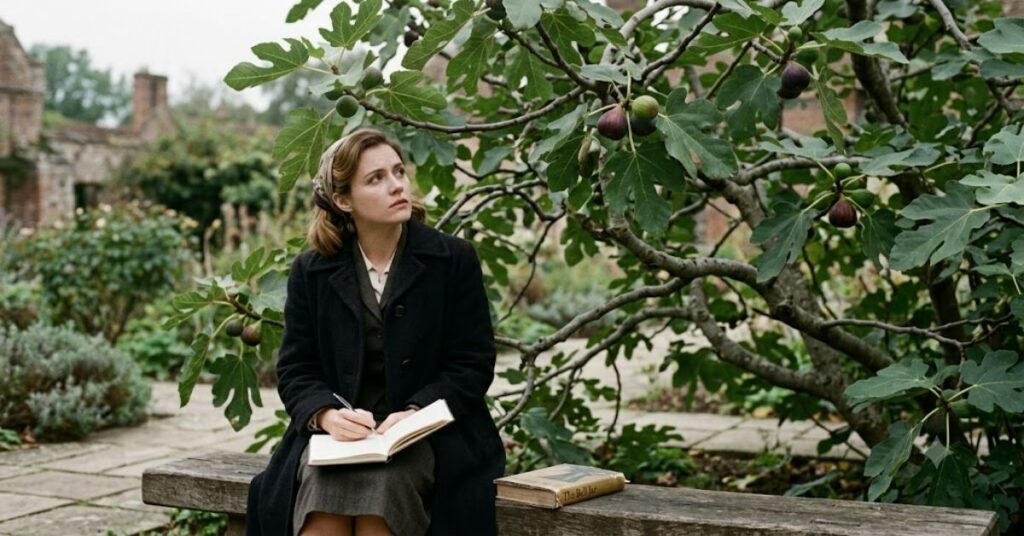
The sylvia plath fig tree metaphor is one of the most memorable symbols in modern literature. Appearing in The Bell Jar, published in 1963, it captures a feeling many people experience: the fear of choosing one path in life while losing the opportunity to pursue countless others. Through the image of a tree filled with ripe figs, Sylvia Plath illustrates how overwhelming too many possibilities can become.
The novel follows Esther Greenwood, a talented young woman who struggles with depression, social expectations, and uncertainty about her future. While sitting beneath an imagined fig tree, Esther sees each fig representing a different future—a successful career, marriage, motherhood, artistic achievement, travel, and countless other dreams. Unable to choose, she watches the figs shrivel and fall to the ground.
This metaphor has become far more than a passage in a novel. It is frequently discussed in literature classrooms, psychology courses, career counseling, and even online conversations about decision-making. The image perfectly describes the anxiety that comes from fearing the consequences of choosing one life over another.
This article explores the meaning of the fig tree, its literary context, its psychological relevance, and why it continues to inspire readers decades after The Bell Jar was first published.
The Origin of the Fig Tree Metaphor
The fig tree appears near the middle of The Bell Jar, Sylvia Plath’s only novel. Esther imagines herself sitting beneath a tree whose branches hold countless ripe figs.
Each fig represents a different future. One promises a happy marriage. Another represents becoming a famous poet. Others symbolize travel, academic success, motherhood, financial security, adventure, and independence.
Instead of picking one, Esther hesitates because choosing one future means letting all the others disappear forever. As she waits, every fig becomes overripe and falls from the tree.
The scene illustrates the painful reality that life requires choices, and every choice closes the door on other possibilities.
Why the Fig Tree Is Such a Powerful Symbol
The strength of this metaphor lies in its simplicity.
Most people have experienced moments when several attractive opportunities appear at once. Choosing one often means sacrificing another.
The fig tree transforms this universal experience into a vivid image.
Rather than describing anxiety directly, Plath allows readers to picture a tree full of beautiful fruit slowly disappearing because no decision is made.
This symbolism makes Esther’s emotional struggle easy to understand, even for readers who have never experienced depression themselves.
Understanding Esther Greenwood’s Dilemma
Esther wants many different things from life.
She dreams of becoming a successful writer while also considering marriage, family, travel, education, and professional achievement.
The problem is not that these dreams are impossible individually. The problem is believing they must all happen simultaneously.
Her inability to prioritize reflects a deeper fear: making the wrong choice and living with regret.
This emotional conflict drives much of the novel and contributes to Esther’s declining mental health.
The Psychological Meaning Behind the Metaphor
Modern psychology offers useful insights into why this metaphor continues to resonate.
Researchers studying decision-making have found that having too many choices can increase stress rather than satisfaction. This phenomenon is often called choice overload.
When people face numerous attractive options, they may:
| Situation | Possible Emotional Response |
| Too many career options | Indecision |
| Multiple life goals | Anxiety |
| Fear of making mistakes | Procrastination |
| Comparing every option | Mental exhaustion |
| Delaying decisions | Missed opportunities |
The fig tree illustrates these emotional patterns long before psychologists formally described them.
A Reflection of Sylvia Plath’s Life
Although The Bell Jar is fiction, it draws heavily from Sylvia Plath’s own experiences.
Like Esther, Plath excelled academically, earned scholarships, published poetry, and struggled with severe depression.
She also faced the cultural expectations placed upon women during the 1950s and early 1960s.
Society often suggested that women should prioritize marriage and motherhood, while ambitious careers were frequently viewed as secondary.
The fig tree captures this conflict between personal ambition and traditional expectations.
Literary scholars generally agree that while Esther is not an exact portrait of Sylvia Plath, many aspects of her experiences influenced the novel.
Comparing the Fig Tree to Other Literary Symbols
Many famous literary works use symbols to represent internal conflict.
| Symbol | Work | Meaning |
| Fig tree | The Bell Jar | Life choices and lost opportunities |
| Green light | The Great Gatsby | Hope and unattainable dreams |
| Mockingbird | To Kill a Mockingbird | Innocence and compassion |
| Conch shell | Lord of the Flies | Order and civilization |
| River | Adventures of Huckleberry Finn | Freedom and change |
The fig tree stands out because it focuses on possibility rather than destiny.
Why the Metaphor Still Matters Today
Readers often relate the fig tree to modern life.
Today’s young adults face decisions about education, careers, relationships, finances, travel, and personal identity.
Social media can intensify these pressures by constantly exposing people to others’ achievements and lifestyles.
The fear of missing out, often called FOMO, mirrors Esther’s fear of choosing one fig while losing the others.
This explains why quotations from the fig tree passage continue to circulate widely online.
Common Misinterpretations
Some readers interpret the metaphor as encouraging people to pursue every opportunity.
In reality, Plath suggests the opposite.
The tragedy occurs because Esther refuses to choose.
The message is not that options are harmful but that avoiding decisions can become its own form of loss.
Another misconception is that the metaphor only concerns careers.
It actually encompasses every major life decision, including love, creativity, family, identity, and purpose.
Literary Significance
The fig tree has become one of the defining symbols of twentieth-century literature.
It is frequently studied because it combines psychological insight with elegant imagery.
Unlike complex symbolic systems that require extensive interpretation, the fig tree communicates its meaning almost immediately while still inviting deeper analysis.
Its accessibility has helped generations of readers connect with Plath’s work.
The Future of the Topic in 2027
By 2027, the fig tree metaphor is likely to remain highly relevant.
Growing discussions around mental health, career flexibility, remote work, and changing family expectations continue to make Esther’s dilemma feel contemporary.
Educational institutions increasingly emphasize emotional well-being alongside literary analysis, making The Bell Jar valuable not only as literature but also as a starting point for conversations about identity and decision-making.
At the same time, scholars continue to debate how modern readers should interpret the novel while recognizing evolving understandings of mental illness and gender roles.
Key Takeaways
- The fig tree represents life’s many possibilities.
- Every fig symbolizes a different future.
- Esther’s inability to choose reflects anxiety about irreversible decisions.
- The metaphor remains relevant because modern life offers more choices than ever.
- It reflects both Sylvia Plath’s personal experiences and universal human emotions.
- The passage continues to influence literature, psychology, and discussions about personal growth.
Conclusion
Few literary symbols have achieved the lasting influence of Sylvia Plath’s fig tree. Through a single image, Plath captures one of humanity’s most common struggles: wanting every possible future while fearing the consequences of choosing only one.
The metaphor resonates because it speaks to readers across generations. Whether someone is deciding on a career, a relationship, a place to live, or a personal ambition, the fear of closing one door to open another remains familiar.
Rather than offering easy answers, the fig tree encourages reflection. It reminds readers that indecision carries consequences just as real as making the wrong choice. In many ways, the metaphor’s enduring popularity proves its timeless truth: life is shaped not only by the opportunities we receive but also by the decisions we make.
Frequently Asked Questions
What does the Sylvia Plath fig tree symbolize?
It symbolizes the many possible futures available in life and the anxiety that comes from choosing one while giving up others.
Why is the Sylvia Plath Fig Tree important in The Bell Jar?
The metaphor illustrates Esther Greenwood’s fear of commitment, identity, and irreversible life choices, making it central to the novel’s themes.
Is the fig tree based on Sylvia Plath’s own life?
The novel is semi-autobiographical. While Esther is a fictional character, many scholars believe the metaphor reflects Plath’s personal struggles with ambition, identity, and mental health.
Why do so many people relate to the Sylvia Plath Fig Tree today?
Modern readers face numerous educational, career, and lifestyle choices. The metaphor captures the pressure of having many opportunities but fearing the consequences of choosing one.
Does the fig tree represent depression?
Not directly. It primarily represents indecision and fear of lost possibilities, although these feelings contribute to Esther’s broader struggles with depression in the novel.
Methodology
This article was prepared by reviewing Sylvia Plath’s The Bell Jar, examining literary criticism from reputable academic sources, and consulting psychological research on decision-making and choice overload. Historical information was verified using established literary references and scholarly publications. Interpretations of the metaphor vary among critics, and this article presents the most widely accepted readings while acknowledging that literary analysis remains open to thoughtful debate.
References (APA)
Barry Schwartz. (2004). The Paradox of Choice: Why More Is Less. Harper Perennial.
Plath, S. (2005). The Bell Jar. Harper Perennial Modern Classics. (Original work published 1963)
The Poetry Foundation. (n.d.). Sylvia Plath. https://www.poetryfoundation.org/poets/sylvia-plath
Encyclopaedia Britannica. (n.d.). Sylvia Plath. https://www.britannica.com/biography/Sylvia-Plath