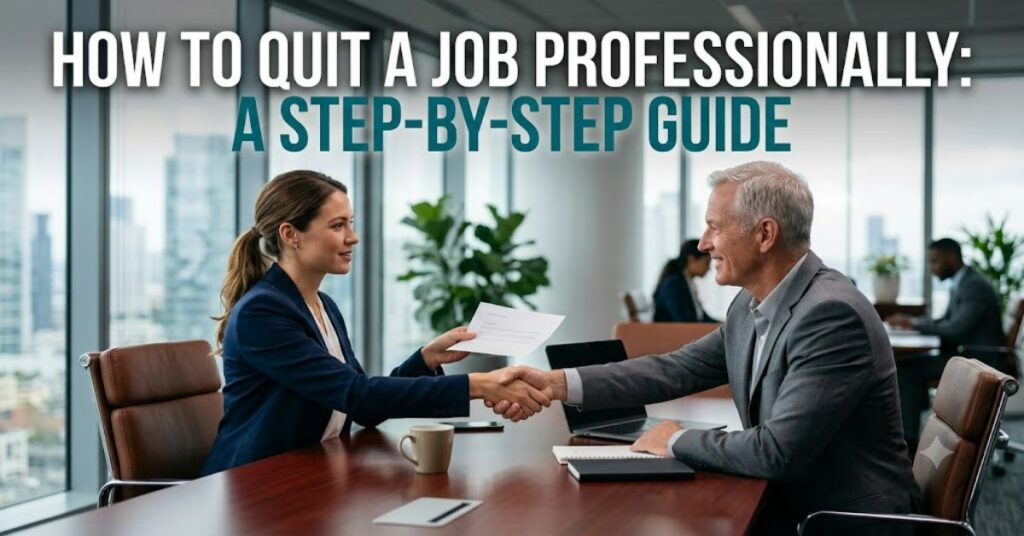
Knowing how to quit a job professionally is just as important as knowing how to secure one. Whether you have accepted a better opportunity, want a career change, or need a healthier work-life balance, leaving respectfully helps maintain valuable professional relationships.
Before resigning, review your employment contract to confirm your required notice period, outstanding obligations, and any non-compete or confidentiality clauses. Once you are prepared, arrange a private meeting or video call with your manager to explain your decision. Follow the conversation immediately with a concise resignation letter that clearly states your final working day. This structured approach demonstrates professionalism and reduces misunderstandings during the transition.
Step-by-Step Resignation Process
| Step | Action | Why It Matters |
| Review your contract | Confirm notice period | Prevents contractual issues |
| Prepare a resignation letter | State final working day | Creates a formal record |
| Meet your manager | Share your decision respectfully | Maintains trust |
| Submit written notice | Follow up immediately | Confirms resignation |
| Complete handover | Document ongoing work | Supports business continuity |
Following these steps ensures a smooth and respectful departure.
Writing an Effective Resignation Letter
A professional resignation letter should be brief and positive.
Include:
- Date of resignation
- Position title
- Intended last working day
- Appreciation for the opportunity
- Offer to assist during the transition
Avoid criticism, emotional language, or detailed complaints. If you have concerns about the workplace, discuss them privately during an exit interview rather than in your resignation letter.
Common Mistakes to Avoid
Many employees unintentionally damage professional relationships by making rushed decisions.
| Mistake | Better Alternative |
| Quitting without notice | Follow contractual notice requirements |
| Posting complaints on social media | Remain professional |
| Leaving unfinished work | Create a handover document |
| Speaking negatively about colleagues | Stay respectful |
| Ignoring company procedures | Follow HR guidance |
Professionalism during your final weeks often leaves a stronger impression than your first few months at the company.
Protecting Your Professional Reputation
A positive departure benefits both you and your employer.
Before leaving:
- Complete outstanding projects where possible.
- Organise files and documentation.
- Train your replacement if requested.
- Return company equipment.
- Save personal files from work devices only if company policy allows.
- Request a reference after completing your notice period.
One frequently overlooked point is maintaining relationships with colleagues through professional networking platforms. Future opportunities often arise through former coworkers and managers.
The Future of Job Resignations in 2027
Hybrid and remote work are changing resignation processes. More organisations now conduct resignation meetings virtually and use digital HR systems for documentation and offboarding.
By 2027, AI-assisted HR platforms may automate exit paperwork, knowledge transfer, and equipment returns. Despite these technological changes, respectful communication, proper notice, and professional conduct will remain the foundation of a successful resignation.
Key Takeaways
- Review your employment contract before resigning.
- Speak with your manager before submitting written notice.
- Keep your resignation letter short and professional.
- Complete your notice period responsibly.
- Leave on good terms whenever possible.
- Protect long-term professional relationships.
Conclusion
Learning how to quit a job professionally helps safeguard your career long after your final working day. Every resignation shapes your reputation, influences future references, and may even affect future employment opportunities.
A thoughtful approach begins with understanding your contractual responsibilities, communicating openly with your manager, and providing a clear written resignation. Completing your handover, remaining respectful, and supporting your team during the transition demonstrates maturity and professionalism.
Even if your reasons for leaving are difficult, maintaining courtesy throughout the process reflects positively on your character and helps preserve valuable professional connections.
Frequently Asked Questions
How much notice should I give when quitting a job?
Check your employment contract, as notice periods differ between employers and jurisdictions.
Should I tell my manager before sending my resignation letter?
Yes. A private conversation is considered professional and should usually come before submitting formal written notice.
Can I resign by email?
Yes, if permitted by company policy or when working remotely. Follow any conversation with formal written confirmation.
What should a resignation letter include?
Your resignation statement, final working day, appreciation, and willingness to assist during the transition.
Is it acceptable to leave immediately?
Only if your employer agrees or your employment contract allows immediate resignation.
Methodology
This article how to quit a job is based on widely accepted employment best practices, HR guidance, workplace policies, and career development resources. Because employment laws and contractual obligations vary by country and employer, readers should review their own employment agreements and consult local employment regulations where appropriate.
References
- Society for Human Resource Management (SHRM). (2024). Employee Resignation Best Practices.
- ACAS. (2024). Resignation and Notice Period Guidance.
- Harvard Business Review. (2023). How to Leave Your Job Professionally.
Editorial Disclosure
This article was drafted with AI assistance and should be reviewed by a human editor before publication. All facts, references, and guidance should be independently verified before publishing on Matrics360.com.