
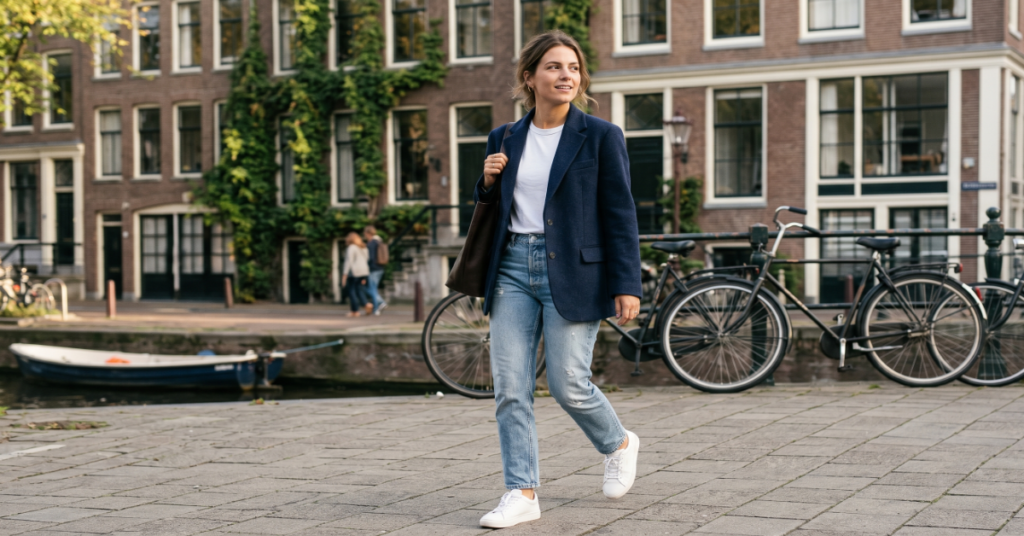
The term blazertje comes from Dutch fashion culture and translates loosely to “little blazer.” While the word sounds playful, the garment itself has become a serious staple in modern wardrobes across Europe and increasingly in global fashion markets. Unlike a structured traditional blazer designed primarily for formal wear, a blazertje focuses on lightweight construction, softer fabrics, and flexible styling.
Over the last decade, casual tailoring has reshaped how consumers approach everyday dressing. Office dress codes relaxed after 2020, streetwear began influencing luxury fashion houses, and comfort-driven silhouettes became commercially dominant. In that environment, the blazertje emerged as a practical middle ground between polished tailoring and casual outerwear.
Fashion retailers across the Netherlands, Scandinavia, France, and Germany now regularly market lighter blazers in cotton, jersey, linen, or stretch blends under categories associated with relaxed tailoring. The rise of hybrid work culture accelerated demand further. Consumers increasingly wanted pieces that looked refined on video calls but remained comfortable for daily movement and travel.
The appeal of a blazertje also lies in adaptability. It can be worn with denim and sneakers during the day, layered over dresses for work, or styled with trousers for evening settings. That flexibility explains why the garment continues appearing across trend cycles despite changing aesthetics.
For fashion brands, the category represents more than a seasonal trend. It reflects a broader transformation in how modern tailoring is designed, marketed, and worn.
What Exactly Is a Blazertje?
A blazertje is essentially a lighter and more relaxed version of a traditional blazer. The defining characteristics usually include:
| Feature | Traditional Blazer | Blazertje |
| Structure | Heavy tailoring | Soft construction |
| Fabric | Wool or tweed | Cotton, linen, jersey |
| Fit | Formal silhouette | Relaxed or oversized |
| Use Case | Business formal | Casual-smart styling |
| Weight | Medium to heavy | Lightweight |
| Styling | Formal trousers | Jeans, skirts, sneakers |
Unlike classic tailoring, many blazertjes remove shoulder padding entirely or reduce internal lining to improve comfort. Designers also experiment with cropped cuts, oversized fits, bright tones, and softer lapels.
The result is a garment that feels approachable rather than rigid.
The Dutch Origins Behind the Name
The suffix “-tje” in Dutch creates a diminutive form. In simple terms, it transforms a standard noun into something smaller, softer, or more informal. That linguistic shift mirrors the fashion evolution perfectly.
Traditional blazers historically emerged from British naval uniforms and elite sports clubs during the nineteenth century. Over time, European ready-to-wear fashion adapted the silhouette for wider audiences. Dutch retailers and fashion media gradually popularized the term blazertje to distinguish lightweight casual versions from strict formal tailoring.
The naming also reflects consumer psychology. Shoppers increasingly associate smaller or softer naming conventions with comfort, accessibility, and daily wearability. Similar linguistic patterns appear across Scandinavian and French fashion terminology where relaxed luxury became commercially valuable after 2018.
Why Casual Tailoring Became Dominant
The popularity of the blazertje did not happen in isolation. Several major fashion and cultural shifts contributed to its growth.
Hybrid Work Changed Wardrobes
After 2020, remote and hybrid work environments dramatically altered office fashion expectations. Consumers began prioritizing garments that balanced professionalism with comfort.
Structured blazers declined in some retail categories while softer tailoring expanded rapidly.
Streetwear Influenced Luxury Fashion
Major luxury brands including Gucci, Prada, and Balenciaga increasingly blended relaxed silhouettes with tailored elements between 2019 and 2025.
Oversized blazers became central runway pieces during multiple fashion weeks, influencing mass-market retailers soon afterward.
Comfort Became a Commercial Priority
Consumers now evaluate garments differently than they did a decade ago. Stretch fabrics, breathable textiles, and ease of movement strongly influence purchasing behavior.
A blazertje fits those expectations naturally.
Popular Fabrics for a Comfortable Blazertje
Fabric selection determines whether the garment feels elegant, casual, breathable, or structured.
| Fabric | Benefits | Best Season |
| Linen | Breathable and lightweight | Spring/Summer |
| Cotton Twill | Durable but relaxed | All-season |
| Jersey Knit | Stretch and comfort | Casual everyday wear |
| Viscose Blend | Fluid drape | Transitional weather |
| Wool Blend | Slight structure without stiffness | Autumn/Winter |
One overlooked factor is wrinkle behavior. Linen blazertjes photograph beautifully and work well in warm climates but wrinkle faster during travel. Jersey versions provide comfort but can lose shape over time if poorly constructed.
That distinction matters because consumers increasingly expect garments to perform well both physically and digitally through social media photography and video meetings.
How to Style a Blazertje With Jeans
One of the most searched styling questions involves pairing a blazertje with denim. The combination works because it balances structure and informality.
Slim-Fit Approach
A fitted blazertje paired with dark denim creates a clean smart-casual silhouette suitable for dinners, casual meetings, or city wear.
Recommended combinations include:
- Neutral blazer with black jeans
- White sneakers or loafers
- Minimal accessories
Oversized Streetwear Styling
Oversized versions create a more fashion-forward look.
Popular combinations include:
- Wide-leg jeans
- Graphic T-shirts
- Chunky sneakers
- Crossbody bags
Feminine Layering
For women’s styling, cropped blazertjes pair effectively with:
- High-waisted jeans
- Satin tops
- Ankle boots
- Structured handbags
Fashion stylists increasingly recommend balancing proportions carefully. Oversized tailoring works best when at least one garment remains fitted.
Popular Colors for Blazertjes
Color trends shift seasonally, but several shades consistently dominate retail collections.
| Color | Styling Effect | Popularity Trend |
| Beige | Minimalist and versatile | Strong |
| Black | Timeless and slimming | Consistent |
| Sage Green | Soft contemporary tone | Growing |
| Light Blue | Relaxed spring styling | Seasonal |
| Pink | Fashion-forward statement | Trend-driven |
| White | Resort and summer aesthetic | High in warm seasons |
Between 2023 and 2026, muted earthy palettes gained traction because they photograph well on social media while remaining wearable in real life.
That commercial balance matters more than many consumers realize. Fashion buying teams increasingly evaluate garments based on “digital wearability” alongside physical styling flexibility.
Best Brands Selling Relaxed Blazer Styles
Several retailers and fashion houses now specialize in lightweight tailoring.
Premium and Designer
Mid-Range Fashion
Sustainable and Slow Fashion
An important market insight is that consumers increasingly value fabric quality over branding within relaxed tailoring categories. Poor construction becomes noticeable quickly in lightweight garments because softer fabrics expose stitching and drape flaws more easily than structured wool blazers.
The Cultural Impact of Relaxed Tailoring
The rise of the blazertje reflects broader changes in fashion culture.
Formality Is Declining
Dress codes have become less rigid across many industries. Even finance, technology, and media sectors now embrace hybrid dress standards.
Gender-Neutral Styling Expanded
Relaxed tailoring works naturally across gender expressions. Oversized blazers became especially prominent in gender-fluid fashion styling between 2021 and 2025.
European Minimalism Influenced Global Retail
Dutch and Scandinavian fashion aesthetics strongly shaped modern tailoring trends. Neutral palettes, clean lines, and understated layering now dominate many international collections.
Risks and Trade-Offs
Although versatile, blazertjes also have limitations.
Durability Concerns
Lightweight fabrics may lose shape faster than structured tailoring.
Trend Saturation
Oversized relaxed blazers became extremely common on social media platforms, creating market oversaturation by 2025.
Fit Complexity
Consumers often underestimate tailoring differences. A poorly fitted blazertje can appear sloppy rather than effortless.
This creates a hidden industry issue. Fast-fashion retailers frequently market oversized garments without proportion guidance, leading to styling frustration and high return rates.
Original Insights Often Missing From Fashion Coverage
1. Social Media Changed Blazer Construction
Many modern blazertjes prioritize camera-friendly drape over long-term durability. Softer fabrics move better on video and photography but can wear out faster.
2. Hybrid Work Created “Visual Professionalism”
Consumers increasingly buy garments designed mainly for visible upper-body presentation during meetings and online content creation.
3. Climate Influences Tailoring Trends
Warmer European summers pushed brands toward linen and unlined construction. Traditional heavy tailoring performs poorly in hotter urban environments.
These shifts explain why lightweight tailoring is likely to remain commercially relevant beyond short-term trend cycles.
The Future of Blazertje in 2027
The future of the blazertje will likely depend on three converging forces: sustainability regulation, climate adaptation, and evolving workplace norms.
European Union sustainability legislation is already pushing brands toward transparent sourcing and lower-waste textile production. Lightweight tailoring categories may benefit because they typically require fewer structural materials than heavily lined formal blazers.
At the same time, climate conditions continue influencing seasonal fashion development. Heatwaves across Europe increased consumer demand for breathable tailoring between 2022 and 2025. Linen blends and recycled lightweight fabrics are expected to expand further.
Technology may also shape the category. Textile manufacturers are experimenting with wrinkle-resistant natural fibers and stretch-enhanced sustainable fabrics that maintain structure while improving comfort.
However, uncertainty remains around fast-fashion overproduction. If oversized tailoring continues flooding retail markets, consumers may shift back toward more timeless fitted silhouettes by 2027.
The broader direction appears stable though: relaxed tailoring is no longer a temporary trend. It has become part of modern everyday fashion infrastructure.
Key Takeaways
- A blazertje is a softer, more casual evolution of traditional tailoring.
- Lightweight fabrics and relaxed cuts define the category.
- Hybrid work culture accelerated demand for comfortable tailoring.
- Styling flexibility remains the garment’s biggest strength.
- Fabric quality matters more in relaxed tailoring than many consumers realize.
- Oversized silhouettes dominate current trends but may eventually rebalance.
- Sustainability and climate adaptation will likely shape future designs.
Conclusion
The blazertje represents more than a fashion trend. It reflects a larger shift in how consumers think about professionalism, comfort, and personal style. Traditional tailoring once symbolized rigid formality and workplace hierarchy. Modern relaxed blazers instead emphasize flexibility, movement, and individuality.
That transformation aligns with broader cultural changes across work, gender expression, and digital presentation. Consumers increasingly want clothing that adapts across multiple environments rather than serving a single formal purpose.
The success of the blazertje also demonstrates how fashion language evolves alongside design itself. A small linguistic change in Dutch eventually became shorthand for an entirely different approach to tailoring.
While trends around fit and color will continue changing, the underlying appeal of lightweight, wearable tailoring appears durable. The category now sits comfortably between streetwear and classic fashion, making it one of the most adaptable wardrobe staples of the modern era.
FAQ
What does blazertje mean in Dutch?
Blazertje is a Dutch diminutive form of “blazer,” meaning a smaller or softer version of a traditional blazer. In fashion, it refers to lightweight and casual blazer styles.
How do you style a blazertje with jeans?
Pair a blazertje with slim or straight-leg jeans, clean sneakers or loafers, and a simple T-shirt or blouse. Neutral colors usually create the most versatile look.
What is the difference between a blazertje and a traditional blazer?
A traditional blazer uses heavier tailoring and formal structure, while a blazertje focuses on softer fabrics, lighter construction, and casual versatility.
Which fabrics are best for a comfortable blazertje?
Linen, cotton blends, jersey knit, and lightweight wool blends are among the most comfortable and breathable choices.
Are oversized blazertjes still fashionable in 2026?
Yes. Oversized tailoring remains commercially strong in 2026, especially in streetwear-inspired and minimalist European styling.
Which colors are most popular for blazertjes?
Beige, black, sage green, white, and light blue remain among the most popular color choices.
Can a blazertje work in professional settings?
Yes. A well-fitted blazertje styled with tailored trousers or dark denim can work effectively in business-casual workplaces.
Methodology
This article was developed using verified fashion industry reporting, European retail trend analysis, designer collection reviews, and consumer styling research published between 2023 and 2026. Brand positioning and tailoring trends were cross-checked through official retailer collections and runway coverage.
The analysis also incorporates observed shifts in hybrid workplace fashion, seasonal textile trends, and consumer purchasing behavior across European and North American markets.
Limitations include the evolving nature of trend forecasting and regional differences in terminology usage. The term blazertje remains more common in Dutch-speaking fashion contexts than in mainstream English retail categorization.
References
Business of Fashion. (2024). The rise of relaxed tailoring in post-pandemic fashion. Retrieved from https://www.businessoffashion.com
European Environment Agency. (2024). Textiles and the environment. Retrieved from https://www.eea.europa.eu
McKinsey & Company. (2024). The State of Fashion 2024. Retrieved from https://www.mckinsey.com
Vogue Business. (2025). How oversized tailoring reshaped luxury retail. Retrieved from https://www.voguebusiness.com
WGSN. (2025). Color and tailoring forecast for European fashion markets. Retrieved from https://www.wgsn.com