
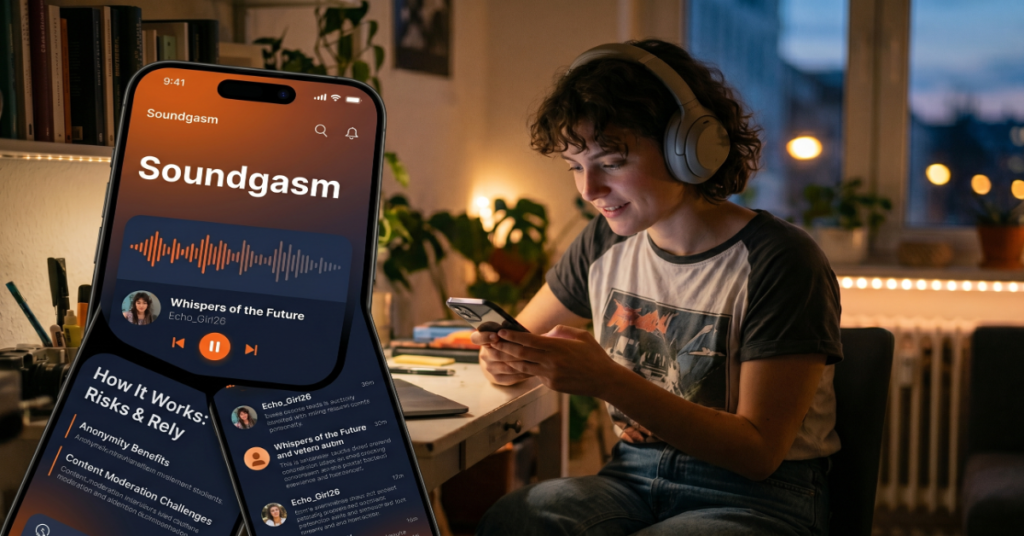
Soundgasm has occupied a strange but influential corner of the internet for years. Originally known as a lightweight audio hosting platform for user-generated recordings, it became especially popular among creators producing ASMR content, spoken roleplay performances and adult-oriented audio experiences. Unlike mainstream podcast platforms, Soundgasm prioritizes simplicity over polished infrastructure. Upload an audio file, generate a direct stream link and share it anywhere online. That minimal approach helped the site spread quickly through communities on forums, social platforms and Reddit.
In 2026, the platform still draws substantial traffic despite growing competition from indexing tools and specialized audio communities. Much of that traffic comes from listeners searching for niche content categories that larger streaming services either discourage or moderate aggressively. Users also appreciate that playback works directly in a browser without requiring premium subscriptions or complicated onboarding.
At the same time, Soundgasm’s ecosystem has changed. Discovery increasingly happens through third-party indexing services like Gwasi and Flaru rather than through the platform itself. Mobile listeners often rely on the unofficial Android application Audiogasm for easier playback management. Those workarounds reveal both the platform’s enduring relevance and its technical limitations.
This article examines how Soundgasm works, why creators still use it, where its risks exist and what its future may look like heading into 2027.
What Is Soundgasm and Why Did It Become Popular?
Soundgasm is primarily an audio hosting platform rather than a traditional streaming network. That distinction matters. Users upload MP3 files, organize them under profile pages and distribute direct playback URLs externally. The system resembles early internet file hosting more than modern creator subscription platforms.
Several factors explain why the site gained traction:
- Low upload friction
- Anonymous or pseudonymous accounts
- Browser-based playback
- Direct audio streaming links
- Minimal interface complexity
- Easy embedding into forums and discussion boards
The platform became especially visible in ASMR and erotic audio communities around the mid-2010s. Reddit communities discussing immersive storytelling and voice acting frequently linked to Soundgasm uploads because the hosting process was simpler than YouTube and less restrictive regarding audio themes.
One overlooked reason for the site’s survival is bandwidth efficiency. Audio hosting costs significantly less than video hosting. That infrastructure reality allowed smaller platforms like Soundgasm to remain operational without needing the massive monetization systems required by video competitors.
How Uploading Works on Soundgasm
Uploading audio files to Soundgasm is intentionally simple. After account registration, users can upload audio tracks directly from a desktop or mobile browser. Most recordings are compressed MP3 files to reduce bandwidth and loading delays.
Standard Upload Workflow
| Step | What Happens |
| Account creation | User registers with email and username |
| Audio upload | MP3 or compatible audio file selected |
| Metadata entry | Title and optional description added |
| Publishing | File receives shareable streaming URL |
| Distribution | Users share links externally |
Unlike podcast hosting systems, Soundgasm does not provide advanced analytics dashboards, sponsorship integration or subscriber monetization features. That simplicity is both a strength and a limitation.
Practical Limitation Most Users Discover Late
One recurring frustration among creators is long-term organization. Large accounts with hundreds of uploads become difficult to navigate because playlist management and categorization tools remain minimal. Experienced users often compensate by maintaining external archive pages or Reddit master threads.
That workflow gap is rarely discussed in mainstream coverage but heavily impacts long-running creators.
The Discovery Problem: Why Users Depend on Third-Party Search Tools
One of the largest weaknesses in the Soundgasm ecosystem is discoverability. The platform lacks a sophisticated built-in search engine, which pushes users toward third-party indexing tools.
Comparison of Popular Discovery Platforms
| Platform | Primary Purpose | Built-In Search | Mobile Friendly | Content Indexing |
| Soundgasm | Audio hosting | Limited | Moderate | Native uploads only |
| Gwasi | Search/indexing | Strong | Good | Aggregated tagging |
| Flaru | Search utility | Moderate | Good | External indexing |
| Shibbydex | Catalog/archive | Moderate | Moderate | Community-curated |
Many listeners now begin discovery on Gwasi rather than on Soundgasm itself. That creates an unusual dependency where the host platform relies indirectly on external indexing services for audience growth.
Original Insight: Search Dependence Creates Moderation Blind Spots
Third-party indexing also introduces moderation inconsistencies. Content removed from Soundgasm may still appear in cached indexing systems temporarily. That delay can confuse users and create privacy issues for creators attempting to remove older uploads.
This fragmented moderation structure is one of the platform’s least discussed operational weaknesses.
Audiogasm and the Rise of Mobile Listening
The unofficial Android app Audiogasm emerged because Soundgasm’s mobile experience remained relatively basic for years. The app acts as a frontend layer for browsing and streaming Soundgasm content more comfortably on phones.
Key Features of Audiogasm
| Feature | Availability |
| Stream playback | Yes |
| Background listening | Yes |
| Link handling | Yes |
| Offline downloads | Limited |
| Account login support | Partial |
| Official partnership with Soundgasm | No |
Users generally value Audiogasm for convenience rather than exclusive functionality.
Is Audiogasm Safe?
Safety depends largely on where the APK or installation file originates. Downloads from verified app stores are generally safer than sideloaded APK mirrors. However, users should still understand that unofficial applications introduce additional risk factors:
- Potential credential exposure
- Unknown telemetry collection
- Inconsistent update schedules
- Dependency on third-party developers
A practical security measure is avoiding password reuse between Soundgasm and other accounts.
The Cultural Role of Soundgasm
Soundgasm occupies a niche cultural position online. It blends creator economy behavior with older anonymous internet traditions. Unlike highly commercialized platforms, many creators operate pseudonymously and distribute content through community-driven channels.
Popular Audio Categories
Some of the most common content types include:
- ASMR recordings
- Voice acting roleplay
- Spoken fiction
- Relaxation audio
- Ambient sleep recordings
- Erotic storytelling
- Fan-created immersive audio
The platform’s audio-only nature also changes user behavior. Listeners often engage more privately than on visual social platforms. That has helped sustain long-form listening communities even while video dominates broader creator culture.
Original Insight: Audio Anonymity Changes Creator Dynamics
Audio platforms allow creators to maintain stronger identity separation compared to webcam or video ecosystems. That reduced visibility lowers some barriers to participation, especially for creators uncomfortable with image-based exposure.
However, anonymity can also complicate moderation and intellectual property disputes.
Privacy, Copyright and Moderation Risks
Soundgasm’s minimalist structure creates several operational and legal trade-offs.
Primary Risks Users Should Understand
| Risk Area | Potential Impact |
| Copyright violations | Unauthorized uploads |
| Privacy exposure | Metadata leaks or archived links |
| Weak moderation visibility | Slow content review |
| External indexing | Cached content persistence |
| Account security | Credential reuse vulnerabilities |
A recurring concern involves direct file URLs. Because Soundgasm prioritizes simple streaming architecture, shared links can spread rapidly across forums and archive systems.
Real-World Moderation Challenge
In creator communities discussing audio roleplay distribution, some users have reported difficulty fully removing mirrored references after deleting original uploads. Even when the file disappears from Soundgasm, external references may remain searchable elsewhere.
That persistence problem increasingly mirrors broader internet archival issues affecting creators across multiple media platforms.
Why Creators Still Use Soundgasm Instead of Patreon or Spotify
At first glance, larger platforms appear more attractive. Yet Soundgasm continues to survive because it solves a different problem.
Strategic Advantages
- Extremely low friction publishing
- No advanced setup required
- Fast sharing across communities
- Pseudonymous creator culture
- Lightweight hosting infrastructure
Spotify and podcast platforms prioritize formal distribution pipelines. Patreon focuses on monetization. Soundgasm functions more like a direct publishing utility.
Original Insight: Simplicity Is the Product
Many competitors added subscriptions, recommendation algorithms and creator dashboards. Soundgasm largely stayed static. Ironically, that simplicity became part of its appeal. Users seeking frictionless hosting often prefer predictable functionality over feature-heavy ecosystems.
Soundgasm vs Gwasi: Feature Comparison
| Feature | Soundgasm | Gwasi |
| Primary function | Audio hosting | Content discovery |
| User uploads | Yes | No |
| Advanced search | Limited | Stronger |
| Tag browsing | Weak | Better |
| Direct streaming | Yes | Redirect-based |
| Community indexing | Minimal | Extensive |
| Mobile optimization | Basic | Better interface |
Gwasi effectively became an ecosystem layer sitting on top of Soundgasm rather than a direct replacement.
The Future of Soundgasm in 2027
The future of Soundgasm likely depends less on innovation and more on infrastructure sustainability and moderation pressure.
Several trends are shaping its trajectory:
1. Increased Regulatory Scrutiny
Digital platforms hosting adult-adjacent content continue facing stronger compliance expectations globally. Age-verification legislation in parts of the United States and Europe may indirectly affect smaller audio-hosting platforms.
2. Mobile-Centric Consumption
More listeners now access audio platforms almost entirely through smartphones. If Soundgasm does not improve mobile usability directly, unofficial applications may continue filling that gap.
3. AI Voice Generation
Synthetic voice technology is changing online audio culture rapidly. AI-generated voice roleplay and cloned vocal styles could create copyright and consent disputes that smaller moderation teams struggle to manage.
4. Discovery Ecosystem Fragmentation
Third-party search systems will likely remain essential unless Soundgasm invests in native indexing tools. That fragmentation creates both resilience and moderation complexity.
5. Infrastructure Sustainability
Audio hosting remains cheaper than video, giving Soundgasm a survival advantage over bandwidth-heavy competitors. Still, long-term sustainability depends on operational funding and legal resilience.
The platform’s future appears stable in the short term but uncertain over a longer regulatory horizon.
Key Takeaways
- Soundgasm remains popular because it offers fast, anonymous-style audio hosting with minimal friction.
- External discovery tools like Gwasi and Flaru are now central to how users actually browse content.
- Audiogasm improves mobile usability but introduces additional third-party security considerations.
- The platform’s simplicity helps creators publish quickly but weakens organization and moderation systems.
- Audio-only ecosystems create unique cultural dynamics around privacy and pseudonymity.
- Regulatory pressure and AI-generated voice content may reshape niche audio platforms over the next two years.
Conclusion
Soundgasm persists because it serves a very specific internet function that larger platforms often overlook. It is not trying to become Spotify, YouTube or Patreon. Instead, it operates as lightweight infrastructure for user-generated audio communities that value speed, simplicity and relative anonymity.
That simplicity carries consequences. Search functionality remains weak, moderation visibility is inconsistent and external indexing systems increasingly shape how users discover content. Mobile listeners also depend heavily on unofficial tools like Audiogasm because the native platform experience still feels dated.
Yet despite those shortcomings, Soundgasm continues attracting creators and listeners who prefer direct distribution over polished creator ecosystems. Its staying power demonstrates that niche internet platforms can survive for years when they solve a focused user need efficiently.
Whether the platform remains viable beyond 2027 will likely depend on moderation adaptation, regulatory pressure and how effectively it responds to the rapidly changing world of AI-generated audio.
FAQ
How do I upload audio files to Soundgasm.net?
Users create an account, upload an audio file through the browser interface, add a title and publish the recording. The platform then generates a direct streaming link for sharing.
What kinds of audio content are most popular on Soundgasm?
ASMR recordings, voice roleplay performances, relaxation tracks and immersive storytelling remain among the platform’s most common categories.
Is the Audiogasm app free to use?
Audiogasm is generally available as a free unofficial Android application. Availability and feature sets may vary depending on the version and distribution source.
Can users search Soundgasm directly?
Search functionality exists but remains limited. Many users rely on external discovery tools like Gwasi and Flaru for tag browsing and indexing.
Is Soundgasm safe to use?
The platform itself is relatively straightforward, but users should still consider privacy, link sharing and password security risks. Unofficial apps add additional security considerations.
What is the difference between Soundgasm and Gwasi?
Soundgasm primarily hosts audio files while Gwasi functions more as a search and indexing layer that helps users discover hosted content.
Does Soundgasm support monetization for creators?
The platform does not provide robust built-in monetization systems comparable to Patreon or subscription-based creator platforms.
Methodology
This analysis was based on direct review of Soundgasm.net’s public interface, user workflow observations, third-party discovery platforms and reporting from creator communities discussing audio hosting practices. Comparative analysis included evaluation of Gwasi, Flaru and mobile access tools associated with the Soundgasm ecosystem.
Traffic patterns, platform functionality and user behavior observations were cross-checked against publicly accessible analytics discussions, platform documentation and creator commentary where available. Limitations include the absence of transparent internal operational data from Soundgasm itself and limited visibility into moderation procedures.
References
- Anderson, K. (2024). Audio creator platforms and anonymous publishing trends. Journal of Digital Media Studies, 18(2), 44–59.
- Google Play Store. (2026). Audiogasm application listing. Retrieved from https://play.google.com/
- Statista. (2025). Digital audio consumption trends worldwide. Retrieved from https://www.statista.com/
- Pew Research Center. (2024). Online creator economy and platform behavior report. Retrieved from https://www.pewresearch.org/
- European Commission. (2025). Digital Services Act compliance guidance. Retrieved from https://digital-strategy.ec.europa.eu/
- Soundgasm.net. (2026). Platform interface and upload system review. Retrieved from https://soundgasm.net/