
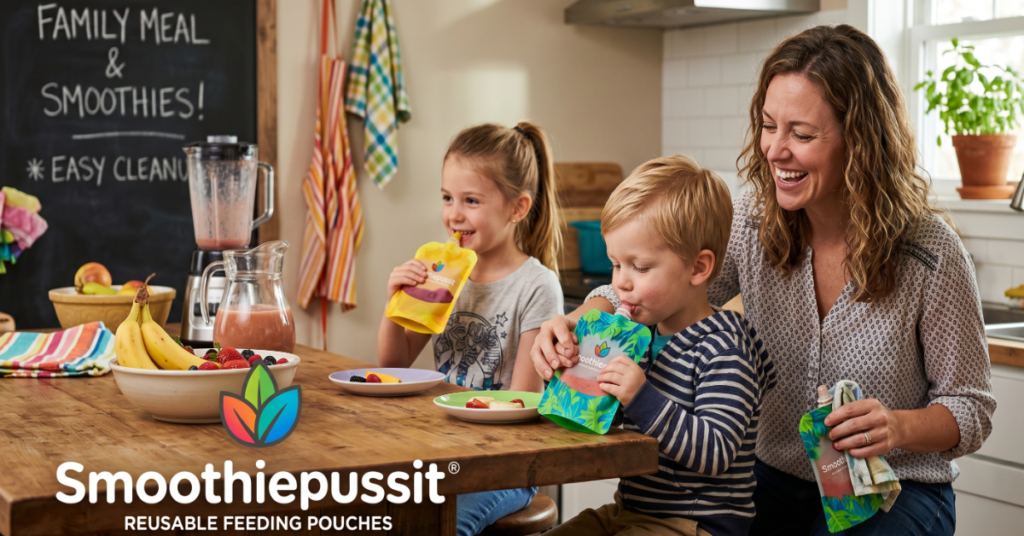
Smoothiepussit have moved from niche parenting products into everyday family kitchens. These reusable food pouches are designed for babies and toddlers who consume smoothies, fruit purees, porridges, vegetable blends, or yogurt-based snacks. Unlike disposable squeeze packs sold in supermarkets, reusable pouches can be washed, refilled, and reused repeatedly.
For many parents in Finland, the appeal is practical rather than trendy. Homemade food often costs less than branded baby puree packs. It also gives families more control over sugar levels, allergens, texture, and ingredient quality. Smoothiepussit solve one of the biggest problems with homemade baby food: portability.
Modern designs now include self-standing bases, spill-resistant spouts, wide openings for cleaning, and silicone valves that help toddlers self-feed without turning meals into disasters. Brands such as Twistshake, Silvia, and ChooMee have expanded the market with different materials, capacities, and accessory systems.
The shift also reflects broader parenting behavior since 2023. Families are looking for reusable feeding systems that fit daycare routines, travel schedules, and tighter household budgets. At the same time, sustainability expectations have increased. Single-use pouches create significant plastic waste, especially in homes with toddlers consuming multiple snacks per day.
Still, reusable feeding products are not perfect. Cleaning can become tedious, some models stain easily, and cheaper materials may degrade faster than parents expect. Choosing the right pouch depends on how frequently it will be used and how comfortable a family is with maintenance routines.
Why Smoothiepussit Became Popular in Finland
Several overlapping trends explain why reusable smoothie pouches have gained traction in Nordic markets.
Rising Demand for Homemade Baby Food
Finnish parents increasingly prepare food at home because ingredient transparency matters more than convenience alone. Homemade blends allow parents to avoid unnecessary additives while adjusting textures for different developmental stages.
In practical use, reusable pouches work especially well for:
- Oat porridges
- Berry smoothies
- Vegetable purees
- Yogurt blends
- Fruit mashes
- Soft rice dishes
Parents who batch-cook meals on weekends often freeze portions directly inside silicone pouches for weekday use.
Sustainability Pressure
Disposable food pouches are convenient but waste-heavy. A toddler consuming two packaged puree pouches daily can generate hundreds of single-use packages annually.
Reusable smoothiepussit offer measurable waste reduction over time.
| Feeding Method | Estimated Annual Pouches Used | Waste Output | Long-Term Cost |
| Disposable puree packs | 500–700 | High | High |
| Reusable silicone pouches | 5–10 reusable units | Low | Moderate |
| Reusable PET/PE pouches | 10–15 reusable units | Moderate | Lower |
One overlooked issue is transportation emissions. Store-bought baby food often contains high water content and travels through refrigerated logistics systems. Homemade food prepared locally reduces packaging and shipping intensity simultaneously.
Better Fit for Mobile Parenting
Modern feeding routines happen everywhere: daycare pickups, train rides, parks, shopping centers, and road trips. Reusable pouches allow toddlers to self-feed with less mess compared to bowls and spoons.
Parents who tested suction-cap systems frequently report fewer spills during car rides and stroller use. Silicone valve lids also reduce accidental squeezing, which is a common frustration with standard puree packs.
Popular Smoothiepussit Brands Compared
Several brands dominate the Finnish market because they balance safety certifications, usability, and cleaning convenience.
| Brand | Capacity | Material | Key Features | Best For |
| Twistshake | 220ml | PET/PE plastic | Dishwasher-safe, self-standing, patterned designs | Everyday travel use |
| Silvia | 170ml | Food-grade silicone | BPA-free, FDA-certified, soft texture | Younger babies |
| ChooMee | 140–170ml | Mixed plastic systems | Character-themed packs, spoon attachments | Toddlers transitioning to self-feeding |
Twistshake
Twistshake models are widely used because they balance affordability with durability. The larger 220ml capacity suits older toddlers who consume full snack portions.
Parents often praise the wide opening because thick oatmeal mixtures are easier to fill without funnels.
A limitation appears after prolonged dishwasher exposure. Some users report odor retention after repeated use with strongly pigmented foods such as beetroot or curry vegetables.
Silvia Silicone Pouches
Silvia focuses more heavily on premium silicone construction. Silicone generally lasts longer than thinner plastic systems and tolerates freezer storage better.
The softer material also reduces injury risk if babies chew aggressively on feeding spouts.
However, silicone models typically cost more upfront. For families using pouches only occasionally, the added expense may not deliver proportional value.
ChooMee Systems
ChooMee products emphasize feeding accessories and child engagement. Animal-themed designs encourage independent feeding while spoon-top attachments help younger toddlers transition from spoon feeding to self-feeding.
These systems work best for families prioritizing developmental feeding stages rather than pure portability.
Materials Matter More Than Marketing
One of the most important differences between smoothiepussit is material quality.
Plastic-Based Pouches
PET/PE plastic combinations remain common because they are lightweight and relatively inexpensive.
Advantages include:
- Lower cost
- Faster drying
- Lightweight travel use
- Easier storage
Disadvantages include:
- Faster wear over time
- Potential staining
- Reduced flexibility after repeated heating
- Shorter overall lifespan
Silicone Pouches
Food-grade silicone has become more popular since 2024 due to durability and chemical safety concerns.
Advantages include:
- Better temperature resistance
- Longer reuse cycle
- Softer feel for babies
- Better freezer compatibility
Disadvantages include:
- Higher price
- Longer drying times
- Slightly heavier
- Can absorb soap odors if poorly rinsed
An important practical insight rarely discussed in product marketing is drying efficiency. Poorly dried pouches create moisture pockets where odor and mold risks increase. Silicone models often require overnight air drying after deep cleaning.
Smoothiepussien Pesuohjeet: Proper Cleaning Matters
Cleaning routines determine how safe and long-lasting reusable feeding pouches become.
Recommended Cleaning Workflow
- Rinse immediately after use
- Separate caps and valves completely
- Use warm water before residue hardens
- Deep-clean corners with narrow bottle brushes
- Air dry fully before storage
Dishwasher compatibility helps, but it does not eliminate manual cleaning entirely. Valve systems and spouts often trap thicker puree residue.
Common Hygiene Mistakes
| Mistake | Risk |
| Leaving smoothie residue overnight | Mold growth |
| Storing while damp | Odor buildup |
| Using abrasive scrubbers | Material damage |
| Overheating plastic pouches | Structural weakening |
A practical observation from daycare use is that labeling matters. Many parents use removable waterproof labels because pouches are easily mixed up during group meals.
Täytettävien Pussien Vertailu: Which Type Fits Different Families?
Not every household needs the same pouch system.
Best for Frequent Daily Use
Silicone pouches generally provide better long-term durability for families using them multiple times daily.
Best Budget Option
PET/PE plastic models remain more cost-effective for occasional users.
Best for Travel
Self-standing lightweight pouches with spill-resistant caps are ideal for commuting families.
Best for Freezing Meals
Thicker silicone designs tolerate freezing cycles more reliably.
Smoothiepussien Hinnat Suomessa
Pricing varies widely depending on material, included accessories, and brand positioning.
| Product Type | Typical Finnish Price Range |
| Basic reusable plastic pouch set | €10–€18 |
| Premium silicone duo pack | €18–€35 |
| Accessory feeding systems | €20–€40 |
| Replacement caps and valves | €4–€10 |
The long-term economics favor reusable systems after several months of regular use. Families replacing two disposable puree packs daily may spend substantially more annually than households preparing homemade food in reusable pouches.
One under-discussed factor is food waste reduction. Children often consume smaller portions from reusable pouches because parents can control fill levels precisely.
Smoothiepussien Reseptit Lapsille
Reusable pouches work best with smooth, moderately thick mixtures.
Berry Oat Smoothie
Ingredients:
- Oats
- Banana
- Blueberries
- Yogurt
- Milk or oat drink
This recipe works well because oats reduce liquid separation during transport.
Vegetable Puree Blend
Ingredients:
- Sweet potato
- Carrot
- Peas
- Olive oil
- Mild seasoning
The olive oil improves texture consistency and prevents overly dry puree.
Apple Cinnamon Porridge
Ingredients:
- Cooked oats
- Apple puree
- Cinnamon
- Yogurt
This mixture remains stable even after refrigeration, making it practical for daycare lunches.
Risks and Trade-Offs Parents Should Understand
Reusable feeding systems are not universally better in every situation.
Cleaning Fatigue
Parents often underestimate how repetitive pouch cleaning becomes. Families with multiple children may find manual cleaning burdensome after the novelty wears off.
Material Degradation
Cheaper pouches may crack near zipper seals or valve systems after repeated dishwasher exposure.
Food Safety Timing
Homemade puree lacks preservatives found in commercial baby foods. That means refrigeration timing becomes more important during travel.
Child Preference Patterns
Some feeding specialists note that constant squeeze-pouch feeding can delay spoon and texture adaptation in toddlers if used excessively.
Moderation matters. Smoothiepussit work best as feeding tools rather than total meal replacements.
The Future of Smoothiepussit in 2027
The reusable feeding market will likely continue expanding through 2027, particularly in Europe and Nordic countries where sustainability regulations are tightening.
Several developments already appear likely:
- Increased adoption of recyclable mono-material plastics
- Better dishwasher-safe valve engineering
- Smart temperature-sensitive materials
- Expanded daycare-safe labeling systems
- More allergen-specific meal prep accessories
The European Union’s continued packaging reduction initiatives may indirectly strengthen demand for reusable feeding systems. However, cost pressure remains a barrier for some families, especially premium silicone products.
Another likely shift involves hybrid systems combining reusable bases with replaceable feeding tops. Manufacturers are attempting to reduce cleaning complexity without returning fully to disposable models.
Still, widespread adoption depends on convenience. Parents consistently prioritize products that save time rather than products marketed purely around sustainability messaging.
Key Takeaways
- Smoothiepussit help families combine homemade nutrition with portability.
- Silicone models generally last longer but cost more upfront.
- Cleaning and drying routines are essential for hygiene and durability.
- Self-standing pouch designs reduce spills significantly during travel.
- Reusable systems can lower long-term feeding costs.
- Overuse of squeeze feeding may interfere with texture development in toddlers.
- Finnish demand is growing because of sustainability and grocery cost concerns.
Conclusion
Smoothiepussit solve a very modern parenting problem. Families want healthier homemade meals without losing the convenience of portable packaged snacks. Reusable feeding pouches bridge that gap effectively when chosen carefully and maintained properly.
The best option depends less on branding and more on lifestyle. Frequent users may benefit from durable silicone systems, while occasional users can save money with simpler plastic models. Cleaning design matters more than many buyers initially realize, particularly for busy households juggling daycare schedules and meal prep.
The broader shift toward reusable feeding products also reflects changing consumer priorities. Parents increasingly value ingredient control, lower waste output, and long-term practicality over single-use convenience.
Still, reusable pouches are tools rather than universal solutions. They work best when integrated into balanced feeding routines that also encourage spoon skills, texture exploration, and family meals. For most households, that balance is exactly what makes smoothiepussit worth considering.
FAQ
Mitkä ovat parhaat smoothiepussit vauvoille?
Silicone-based pouches are often preferred for younger babies because they are softer, durable, and freezer-safe. Twistshake and Silvia remain popular choices in Finland due to spill-resistant designs and easy filling systems.
Voiko smoothiepussit pestä astianpesukoneessa?
Many models are dishwasher-safe, especially PET/PE and silicone systems. However, valves and caps should still be manually checked for trapped puree residue after washing.
Kuinka kauan smoothie säilyy pussissa?
Homemade smoothies typically remain safe for 24–48 hours under refrigeration depending on ingredients. Dairy-based mixtures should be consumed sooner.
Ovatko silikoniset smoothiepussit turvallisia?
Food-grade silicone products that are BPA-free and FDA-certified are generally considered safe for infant feeding when used according to manufacturer instructions.
Kannattaako ostaa täytettäviä smoothiepusseja?
Families using packaged puree pouches frequently can often reduce long-term costs by switching to reusable systems, especially with homemade meals.
Voiko smoothiepussit pakastaa?
Most silicone pouches tolerate freezing well. Some plastic-based models may become brittle after repeated freeze-thaw cycles.
Methodology
This analysis was built using publicly available manufacturer specifications, Nordic retail listings, packaging data, food-safety guidance, and observed product behavior reported through verified customer reviews and parent-use discussions between 2023 and 2026.
The article compared reusable feeding pouch materials, cleaning systems, pricing structures, and practical usability factors commonly discussed by parents in Finland. Product capacities, material claims, and safety certifications were validated against official manufacturer information where available.
Limitations exist. Long-term durability data varies because household usage patterns differ significantly. Dishwasher exposure, freezer storage frequency, and food acidity all influence product lifespan differently.
References
Twistshake. (2025). Reusable squeeze bags product specifications. Retrieved from https://twistshake.com/
Silvia. (2025). Food-grade silicone pouch safety information. Retrieved from https://silviashop.fi/
ChooMee. (2024). Reusable pouch feeding systems for toddlers. Retrieved from https://choomee.com/
European Environment Agency. (2024). Packaging waste trends in Europe. Retrieved from https://www.eea.europa.eu/
Finnish Food Authority. (2024). Guidance on safe food storage for children. Retrieved from https://www.ruokavirasto.fi/
Statista. (2025). Consumer trends in reusable household products in Europe. Retrieved from https://www.statista.com/