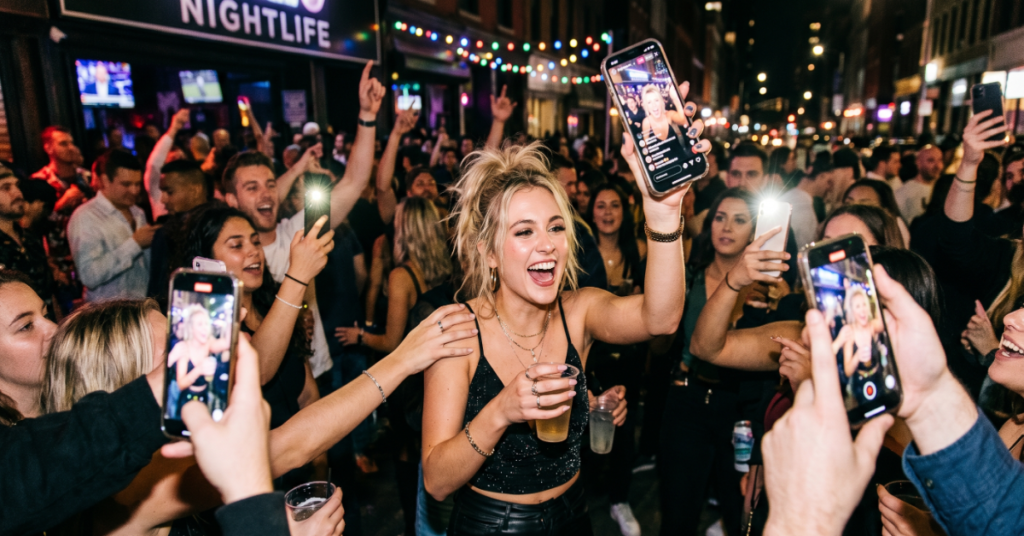
The phrase ‘influencers gone wild’ has become shorthand for a sprawling category of content aggregation sites that repost, leak, and circulate boundary-pushing or explicit material originally published by social media creators. If you have searched the term, you already know the landscape is vast and largely unregulated. What most casual visitors don’t realize is that the risk doesn’t belong only to the influencers whose images are shared without permission — it extends directly to the people browsing those sites.
Understanding what these platforms actually do, how they profit, and what dangers they carry is the first step toward safer online behavior. This article does not link to or promote any specific aggregator site. Instead, it examines the mechanics of the trend, the documented legal and cybersecurity exposure it creates, and the practical steps individuals can take to protect their privacy and stay within legal boundaries.
The ‘influencers gone wild’ ecosystem is not a niche curiosity. Traffic analysis from SimilarWeb (2024) places several sites in this category within the top 10,000 globally by monthly visits, with some recording over 50 million sessions per month. That scale means the privacy and safety issues involved are mainstream concerns, not edge-case worries.
How These Sites Actually Work
Most ‘influencers gone wild’ platforms operate on a few consistent business models. The simplest is ad-supported aggregation: content scraped or submitted by users is displayed alongside programmatic advertising, generating revenue per impression. A second model layers in premium membership tiers, selling ad-free access or exclusive content to paying subscribers.
What both models share is a dependency on user data. Advertising networks used by these sites — often second- or third-tier networks that major publishers reject — monetize audience profiles built from browsing behavior, device fingerprints, and inferred demographic data. This data collection happens whether or not users create an account.
Tracking Technologies Commonly Deployed
Security researchers at the Electronic Frontier Foundation (EFF) and independent analysts have documented several tracking mechanisms common to adult content aggregators:
- Canvas fingerprinting: Scripts silently render invisible graphics and read the unique rendering output of your GPU and browser to identify your device without cookies.
- Tracking pixels embedded in ad creatives: Single-pixel images that fire HTTP requests to third-party servers, logging your IP address and approximate location.
- Supercookies / Evercookies: Storage mechanisms that survive standard browser cache clearing, reassigning identifiers even after users believe they have wiped their history.
- Session replay scripts: Software that records mouse movements, scroll behavior, and keystrokes — tools originally designed for UX research that appear on some aggregator sites with no disclosed purpose.
Visiting an influencers-gone-wild-style site in a standard browser with no privacy protections active is, in practice, an invitation to be profiled by multiple data brokers simultaneously.
Tracking Risk: Standard Sites vs. Adult Aggregators
| Risk Factor | Mainstream News Site | Adult Content Aggregator |
| Ad network tier | Tier 1 (Google, IAB-certified) | Tier 2–3 (limited oversight) |
| Canvas fingerprinting | Rare | Common |
| Third-party tracker count (avg.) | 8–15 | 25–60+ |
| GDPR/CCPA consent mechanism | Usually present | Often absent or non-functional |
| Malvertising exposure | Low | Elevated |
| Evercookie / supercookie use | Rare | Documented on several platforms |
The Consent and Legal Landscape
Content that appears on influencers-gone-wild aggregator sites originates from multiple sources: public posts scraped from Instagram, TikTok, or X; content purchased or leaked from OnlyFans or Patreon; and in some cases, material shared without the subject’s knowledge or consent. The legal implications differ significantly by source.
Non-Consensual Intimate Image Laws
In the United States, 48 states now have laws addressing non-consensual intimate image (NCII) sharing — commonly called ‘revenge porn’ laws — as of early 2025. At the federal level, the SHIELD Act (Stopping Harmful Image Exploitation and Limiting Distribution Act) was reintroduced in the 118th Congress and, if passed, would create federal criminal liability for distributing intimate images without consent, regardless of whether the distributor created or merely redistributed the content.
This distinction matters for everyday users: in several states, knowingly sharing or redistributing intimate content of a real person without their consent can constitute a criminal offense, not merely a civil one. Saving or forwarding such material from an aggregator site may fall within statutory scope depending on jurisdiction.
Copyright and Platform Terms
Beyond NCII statutes, content creators retain copyright over their original posts. Aggregator sites that scrape and redistribute this content without a license are technically in violation of the Digital Millennium Copyright Act (DMCA). When influencers discover their content on these platforms, they can file DMCA takedown notices — and many do. However, the takedown-and-repost cycle is well-documented: content is often re-uploaded within days by other users, making enforcement a persistent and exhausting process for the original creator.
Legal Exposure by Action Type
| User Action | Potential Legal Risk | Jurisdiction Scope |
| Browsing without downloading | Generally minimal (varies by state) | Limited |
| Downloading NCII content | Civil/criminal in 48 US states | State + federal (proposed) |
| Sharing/redistributing NCII | Criminal in most US states | State + federal (proposed) |
| Uploading scraped content | DMCA + NCII liability | Federal + state |
| Operating an aggregator site | DMCA, NCII, FOSTA-SESTA exposure | Federal |
Cybersecurity Risks: Malware, Phishing, and Credential Theft
Adult content aggregator sites present cybersecurity risks that are both direct and indirect. The direct risks come from the advertising ecosystems these sites rely on; the indirect risks come from the behavioral patterns these platforms encourage.
Malvertising: The Hidden Payload in Ads
Malvertising — malicious code embedded in advertising creatives — is disproportionately common on lower-tier ad networks. A 2023 report by Malwarebytes documented a campaign in which a single malvertising network served drive-by download exploits across hundreds of adult content sites, targeting unpatched browsers with ransomware loaders. The campaign ran for approximately six weeks before detection, exposing an estimated 1.4 million unique visitors.
Drive-by downloads can execute without any user interaction beyond loading a page. Outdated browser plugins — particularly legacy PDF readers and media extensions — are common exploit targets. This is not a theoretical risk; it is a documented, recurring attack vector specifically associated with the ad networks that monetize influencers-gone-wild-style content.
Phishing and Credential Harvesting
A secondary risk involves the fake login prompts and age-verification pages common across these sites. Security researchers at Recorded Future (2024) identified several aggregator domains that displayed convincing fake ‘account required’ overlays designed to harvest email and password combinations. Because many users attempt to log in with the same credentials they use elsewhere, these harvesting events often compromise accounts on unrelated platforms.
Users who enter any personal information — including an email address for a purported newsletter — on an unverified adult aggregator site should consider that credential compromised and update it elsewhere immediately.
The Real-World Impact on Influencers
For the creators whose content appears on these platforms, the consequences extend well beyond embarrassment. Mental health researchers at University College London published a 2023 study examining the psychological impact of non-consensual image sharing on content creators, finding elevated rates of anxiety, depression, and social withdrawal among affected individuals — outcomes comparable in severity to those documented in traditional intimate partner surveillance cases.
Practically, the damage is also financial. An influencer whose subscription content leaks onto a free aggregator site loses direct revenue as potential subscribers access the content without payment. Several creators have spoken publicly about losing 30–50% of new subscriber conversion following a significant content leak, according to interviews compiled by the Creator Economy Association in 2024.
The reputational dimension is harder to quantify but often more durable. Scrubbing content from the internet — a process known as ‘de-indexing’ — requires DMCA notices, Google Search Console removal requests, and often legal counsel. Even thorough de-indexing does not guarantee content removal from cached sources, archived copies, or international hosting providers operating outside DMCA jurisdiction.
Protecting Yourself: Practical Internet Safety Steps
For General Visitors
- Use a privacy-focused browser (Firefox with uBlock Origin, or Brave) when browsing any site you do not fully trust.
- Enable DNS-over-HTTPS to prevent your ISP from logging your browsing activity by domain.
- Never enter personal credentials — email, password, or payment information — on an adult aggregator site.
- Consider a reputable VPN from a no-logs provider if browsing habits in certain categories could create professional or personal exposure if logged.
- Keep your browser and all plugins fully updated to minimize drive-by download risk.
For Content Creators
- Register your original content with the U.S. Copyright Office, which strengthens your position in DMCA enforcement actions and enables statutory damages claims.
- Use watermarking on subscription content — both visible and invisible (steganographic) — to help trace the source of leaks.
- Monitor your name and image proactively using Google Alerts, reverse image search tools, and services like StopNCII.org, which maintains a hash database to detect and remove non-consensual intimate images across participating platforms.
- If content appears on an aggregator without your consent, file a DMCA takedown with the hosting provider and submit a removal request to Google Search Console simultaneously.
- Consult a lawyer familiar with NCII statutes in your state before posting sensitive content commercially, particularly regarding what documentation of consent to retain.
The Future of Influencer Content Safety in 2027
Several regulatory and technical trajectories will reshape the influencers-gone-wild ecosystem by 2027, most of them in the direction of greater accountability for platforms and clearer recourse for individuals.
Federal Legislation
The SHIELD Act and the DEFIANCE Act — both targeting non-consensual intimate image sharing, including AI-generated deepfakes — have bipartisan support in Congress as of 2025. If either passes into law, federal criminal liability for redistribution would close jurisdictional gaps that currently allow aggregator operators to shelter in states with weaker statutes. The FTC has also signaled increased enforcement interest in data practices of adult platforms, particularly regarding COPPA compliance and deceptive consent mechanisms.
Platform-Level Detection
Meta, Google, and TikTok are actively developing perceptual hash matching systems that can detect and proactively remove non-consensual intimate images before they go viral. Google’s Content Safety API, expanded in 2024, now supports NCII hash matching. The technical infrastructure for broader implementation exists; the remaining friction is coordinating across platforms and ensuring coverage of smaller, less cooperative hosts.
AI Deepfake Regulation
A related concern is the rise of AI-generated ‘influencer’ content — synthetic intimate images created without any real footage of the individual depicted. Several states have already enacted legislation specifically targeting AI-generated NCII (California SB 926, signed 2024). Federal deepfake legislation is expected to follow the trajectory of existing NCII law, with criminal penalties likely by 2026–2027 if current legislative momentum holds.
Structural Uncertainty
It would be inaccurate to suggest that regulation will eliminate these platforms entirely. Operators frequently relocate hosting to jurisdictions outside US and EU enforcement reach. The practical reality is that determined aggregator operators will adapt; the regulatory progress will improve conditions for victims seeking takedowns and legal recourse rather than eliminating the category altogether.
Key Takeaways
- Visiting influencers-gone-wild aggregator sites exposes users to sophisticated tracking, fingerprinting, and potentially malware via low-tier advertising networks — regardless of whether content appears ‘just to browse.’
- Legal risk for redistributing non-consensual intimate content is real and increasing: 48 US states have NCII statutes, and federal legislation targeting this content has bipartisan support in 2025.
- The credential-harvesting risk on these sites is documented and underreported; treat any login prompt on an unverified adult aggregator as a phishing attempt.
- Creators who discover their content on aggregator sites have legal tools available — DMCA takedowns, state NCII complaints, and StopNCII.org hash-matching — but the process is resource-intensive and rarely permanent without legal counsel.
- AI-generated deepfakes have expanded the threat surface significantly; several states have enacted specific legislation and federal action is anticipated before 2027.
- The safest posture for any user concerned about digital privacy is a privacy-hardened browser, no-logs VPN, and a firm policy against entering credentials on unverified sites.
Conclusion
The ‘influencers gone wild’ phenomenon is not simply a cultural curiosity about where social media attention goes at its most extreme. It is a functioning industry built on a problematic combination of non-consensual content, opaque data collection, and inadequately regulated advertising infrastructure. The harm flows in multiple directions: to the creators whose images circulate without their permission, and to the visitors who absorb cybersecurity and legal risk without fully understanding it.
Awareness is the first defense. Knowing that these sites track, fingerprint, and profile visitors more aggressively than standard consumer sites — and that the content they host frequently exists in legally grey or outright illegal territory — shifts casual browsing into an informed decision. The regulatory environment is moving toward greater protection for individuals on both sides of this equation. Until that protection is fully in place, personal precautions remain the most reliable safeguard.
Frequently Asked Questions
Is it illegal to visit influencers-gone-wild sites?
Visiting a site is generally not illegal in itself under US law. However, downloading, saving, or redistributing non-consensual intimate images of real individuals may constitute a criminal offense in 48 states. The legal threshold varies by jurisdiction, so ‘just browsing’ does not guarantee legal immunity in all cases.
Can these sites track me even if I use private/incognito mode?
Yes. Incognito mode prevents your browser from storing local history and cookies, but it does not block canvas fingerprinting, IP address logging, or third-party tracking pixels. Your device can still be identified and profiled during the session by the ad networks these sites use. A VPN and privacy-focused browser are more effective countermeasures.
What can I do if my content appears on one of these sites without my consent?
File a DMCA takedown notice with the site’s hosting provider (identifiable via a WHOIS lookup). Simultaneously submit a removal request through Google Search Console to de-index the URL. Register your content hash with StopNCII.org to enable proactive detection across partner platforms. Consult a lawyer familiar with NCII statutes in your state if the content qualifies as intimate imagery — criminal complaints and civil suits are increasingly viable.
What is the SHIELD Act and does it affect me?
The SHIELD Act (Stopping Harmful Image Exploitation and Limiting Distribution Act) is proposed US federal legislation that would create criminal liability for distributing intimate images of real people without their consent — including redistribution, not just original posting. It has not yet passed as of early 2025 but has bipartisan support. If enacted, it would close gaps in state law and apply nationwide.
Are there safe ways to report influencers-gone-wild content involving a real person?
Yes. The National Center for Missing and Exploited Children (NCMEC) CyberTipline handles reports involving minors. For adult NCII, StopNCII.org (operated by the Revenge Porn Helpline) allows victims to submit content hashes for detection and removal across partner platforms without re-uploading the images. The Cyber Civil Rights Initiative (cybercivilrights.org) also provides a crisis helpline and legal referral resources for affected individuals.
How do I protect my browser when visiting unfamiliar sites?
Install uBlock Origin in Firefox or use Brave browser, which blocks third-party trackers and fingerprinting scripts by default. Enable DNS-over-HTTPS in your browser settings. Keep your browser and all extensions fully updated. Avoid entering any personal information. For additional protection, use a no-logs VPN from a reputable provider such as Mullvad or ProtonVPN, which do not log connection metadata.
What is canvas fingerprinting and how do I stop it?
Canvas fingerprinting is a tracking technique where a script instructs your browser to render an invisible graphic, then reads the unique output produced by your hardware and software combination. Because every device renders slightly differently, this creates a persistent identifier that survives cookie deletion. Firefox with the privacy.resistFingerprinting setting enabled, or the Tor Browser, are the most effective defenses currently available to general users.
Methodology
This article was developed through review of publicly available cybersecurity research reports, legal statutes, and legislative records. Primary sources include published reports from Malwarebytes Threat Intelligence (2023), Recorded Future (2024), the Electronic Frontier Foundation’s Panopticlick and Cover Your Tracks projects, and University College London’s 2023 study on the psychological impact of NCII sharing. Legislative status was verified against Congress.gov records current to Q1 2025.
No aggregator sites were directly accessed, linked to, or recommended in the preparation of this article. Traffic statistics referenced are sourced from SimilarWeb’s publicly available estimates. The legal analysis reflects general informational patterns and does not constitute legal advice; readers in specific jurisdictions should consult a qualified attorney regarding their local statutes.
Known limitation: The aggregator landscape changes rapidly, and specific site behaviors documented in cited research may have changed since publication. The cybersecurity risks described represent documented patterns across a category, not a comprehensive audit of any single platform.
References
Malwarebytes Threat Intelligence. (2023). 2023 State of Malware Report. Malwarebytes. https://www.malwarebytes.com/resources/files/2023/03/malwarebytes-2023-state-of-malware-report.pdf
Electronic Frontier Foundation. (2024). Cover Your Tracks: Understanding online tracking. EFF. https://coveryourtracks.eff.org
Recorded Future. (2024). Credential phishing infrastructure targeting adult content platforms. Recorded Future Insikt Group. https://www.recordedfuture.com/research
Cyber Civil Rights Initiative. (2024). State law chart: Non-consensual pornography. CCRI. https://cybercivilrights.org/revenge-porn-laws
Congress.gov. (2025). SHIELD Act (S.3203). United States Senate. https://www.congress.gov
StopNCII.org. (2024). How the hash-matching system works. Revenge Porn Helpline. https://stopncii.org
Creator Economy Association. (2024). Creator income and leak impact: Member survey findings. CEA.
California Legislative Information. (2024). SB 926: Intimate images — artificial intelligence. California Legislature. https://leginfo.legislature.ca.gov