
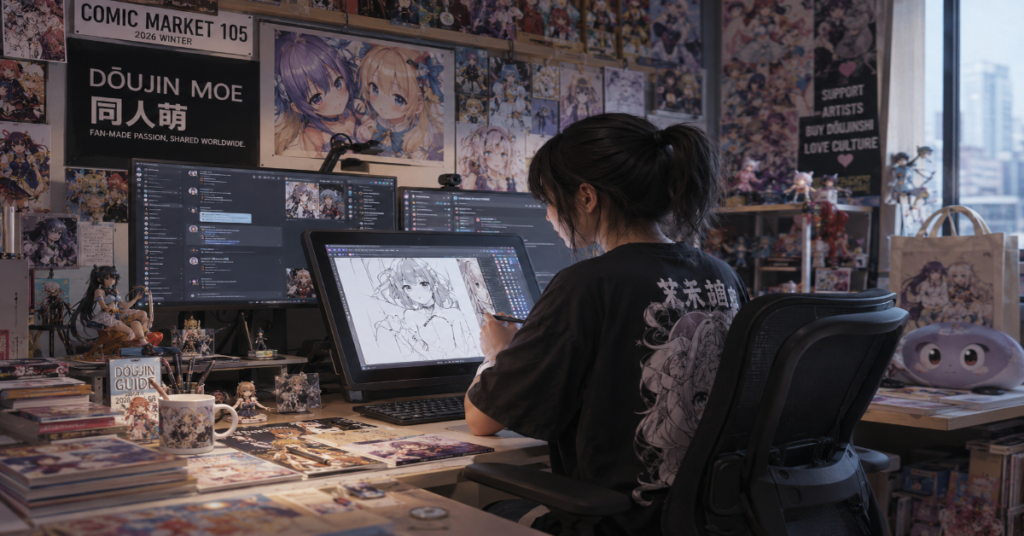
The term “doujen moe” more accurately written as doujin moe, describes a branch of fan-made Japanese-inspired media centered around emotionally affectionate, cute or emotionally vulnerable characters. The phrase combines “doujin,” meaning self-published or independently distributed works, with “moe,” a Japanese fandom term associated with deep emotional attachment to fictional characters.
Today, doujen moe exists across manga archives, illustration communities, independent publishing platforms and niche anime fandom spaces. It includes everything from heartfelt slice-of-life comics to parody manga, romance anthologies, visual novels and collectible fan art. In some contexts, the term also overlaps with adult-oriented fan comics, especially within hentai-adjacent doujin markets.
The growth of digital publishing changed the scale of this culture dramatically. During the early 2000s, most doujin creators distributed physical works through Japanese conventions such as Comiket. By 2026, creators increasingly publish through global digital storefronts, social platforms and decentralized art communities.
What makes doujen moe culturally significant is not simply its art style. It represents a broader shift toward creator-controlled storytelling where fandom communities actively shape trends, aesthetics and character popularity outside traditional publishing systems.
A major misconception is that doujen moe only refers to explicit material. In practice, much of the culture revolves around emotional storytelling, experimental art styles and fandom reinterpretation of established anime worlds.
For readers trying to understand the term in 2026, context matters more than ever.
What Doujen Moe Actually Means
At its core, doujin moe combines two distinct Japanese subcultures.
Understanding “Doujin”
The Japanese word “doujin” historically referred to groups of people sharing similar interests. In modern anime and manga culture, it primarily describes independently published creative works. These include:
- Fan-made manga
- Original comics
- Indie visual novels
- Illustration collections
- Audio dramas
- Small-scale games
Many creators begin in doujin communities before entering commercial publishing.
Understanding “Moe”
“Moe” became widely recognized in Japanese anime fandom during the late 1990s and early 2000s. The term describes strong emotional affection toward fictional characters, often associated with:
- Innocence
- Vulnerability
- Soft visual design
- Emotional sincerity
- Protective emotional appeal
Moe aesthetics influenced major anime trends throughout the 2000s, particularly character-driven storytelling.
Combined Meaning
When combined, doujin moe typically refers to independently created works emphasizing emotional charm, stylized cuteness or sentimental character interaction.
The term can describe:
| Aspect | Meaning in Doujen Moe Culture |
| Art Style | Soft expressions, pastel palettes, rounded features |
| Storytelling | Emotional intimacy and character bonding |
| Publishing Model | Self-published or community-distributed |
| Community Structure | Fan-driven circulation and recommendation |
| Distribution | Manga archives, creator platforms and conventions |
The Origins of Doujin Culture in Japan
Modern doujin culture expanded rapidly during the 1970s and 1980s alongside Japan’s manga boom.
One of the most important milestones was the launch of Comic Market in 1975. Commonly known as Comiket, the event became the central marketplace for independent manga circles.
By the 1990s:
- Amateur creators developed loyal fanbases
- Fan reinterpretations of anime series became common
- Independent artists built careers without major publishers
- Moe aesthetics spread through anime and gaming culture
The emergence of digital illustration software later accelerated production quality. Artists no longer required printing networks or physical distribution to reach audiences.
According to the Association of Japanese Animations, the global anime market exceeded ¥3 trillion in annual value during the 2020s, with fan communities contributing significantly to merchandise demand and online engagement.
One overlooked aspect of doujin culture is how it functioned as an experimental testing ground. Many mainstream manga techniques, character archetypes and storytelling trends first gained traction in amateur circles before commercial publishers adopted them.
That creator pipeline still exists today.
Why Doujen Moe Became Popular Worldwide
Several technological and cultural changes pushed doujen moe beyond Japan.
Digital Distribution
Platforms supporting independent uploads dramatically lowered entry barriers for artists. Creators could publish globally without relying on publishers or physical events.
Social Media Algorithms
Character-focused art performs extremely well on visual-first platforms. Moe-style illustrations often receive high engagement because they trigger emotional familiarity quickly.
Anime Streaming Expansion
The international growth of platforms like Crunchyroll and Netflix expanded anime fandom globally, increasing demand for fan-made reinterpretations and community art.
Creator Economy Growth
Independent artists increasingly monetize through:
- Subscription platforms
- Digital downloads
- Convention merchandise
- Limited prints
- Fan commissions
This shifted doujin culture from hobbyist activity into a sustainable micro-business ecosystem.
The Difference Between Doujen Moe and Official Anime
A major source of confusion comes from overlap between fan works and official licensed media.
| Feature | Doujen Moe | Official Anime/Manga |
| Ownership | Independent creators | Licensed publishers |
| Distribution | Fan communities and creator platforms | Commercial retail channels |
| Creative Freedom | Extremely flexible | Restricted by publishers |
| Copyright Status | Often legally gray | Fully licensed |
| Production Budget | Small or independent | Corporate-backed |
| Audience Relationship | Community-driven | Consumer-focused |
One important cultural distinction is responsiveness. Doujin creators often react to fandom trends within days, while commercial anime production cycles can take years.
That speed gives doujen communities unusual creative agility.
The Role of Adult Content in Doujen Moe Communities
Not all doujen moe content is explicit. However, adult-oriented fan manga has historically been a major part of doujin markets.
This creates several tensions.
Copyright and Derivative Works
Many fan-made comics reinterpret copyrighted anime characters without formal licensing. Japanese copyright enforcement historically tolerated some fan activity because it supported fandom engagement.
That tolerance is becoming less predictable internationally.
Platform Moderation
Global hosting platforms increasingly face pressure to moderate:
- Copyright violations
- Explicit imagery
- AI-generated art
- Underage-looking character depictions
Some countries apply stricter legal interpretations than Japan.
Cultural Misunderstanding
Western audiences sometimes assume all doujin content is pornographic. In reality, the ecosystem includes:
- Comedy manga
- Emotional dramas
- Music fanbooks
- Character studies
- Experimental storytelling
Adult material represents only one branch of a much larger culture.
Practical Challenges Facing Independent Doujin Creators
The romanticized image of indie manga creation often ignores financial realities.
Revenue Instability
Most independent artists struggle with:
- Platform algorithm dependence
- Piracy
- Low commission rates
- Translation theft
- Content scraping
AI Art Competition
Generative AI systems disrupted online illustration markets significantly between 2023 and 2026.
Some artists reported:
- Reduced commission demand
- Style imitation concerns
- Image dataset disputes
- Platform flooding from low-effort uploads
This became one of the most divisive debates within doujin communities.
Burnout and Production Pressure
Independent creators often maintain extremely demanding schedules while balancing:
- Full-time jobs
- Convention preparation
- Social media marketing
- Fan engagement
- Merchandise logistics
Unlike commercial manga studios, many doujin circles lack support staff.
Hidden Risks Readers Often Ignore
Most articles discussing doujen moe avoid operational risks tied to the ecosystem itself.
Malware Risks on Unofficial Sites
Pirated manga aggregators frequently expose users to:
- Malicious advertising scripts
- Fake download buttons
- Browser hijacking attempts
- Crypto-mining malware
Cybersecurity researchers have repeatedly identified anime piracy ecosystems as high-risk adware environments.
Translation Accuracy Problems
Fan translations vary dramatically in quality. Emotional nuance central to moe storytelling is often lost through rushed localization.
This changes character perception significantly.
Creator Consent Issues
Some repost platforms monetize fan art without creator approval. Independent artists frequently lose attribution or revenue when work spreads across scraping sites.
This remains one of the least discussed structural problems in digital fandom culture.
How Doujen Moe Influences Mainstream Entertainment
The influence of doujin communities now extends well beyond niche fandom circles.
Character Design Trends
Modern anime increasingly incorporates:
- Softer emotional framing
- highly expressive facial design
- intimacy-focused storytelling
- nostalgia-driven aesthetics
Many of these conventions gained popularity through fan communities first.
Game Development Influence
Independent Japanese visual novel culture strongly influenced global indie game design. Games emphasizing emotional attachment mechanics often reflect moe storytelling traditions.
VTuber and Streaming Culture
Virtual creator communities borrowed heavily from moe aesthetics:
- emotionally comforting personas
- stylized character avatars
- parasocial audience engagement
- collectible fandom culture
This overlap accelerated during the livestreaming boom of the early 2020s.
Structured Insight Table: Doujen Moe Ecosystem in 2026
| Area | Current Reality | Emerging Pressure Point |
| Fan Publishing | Easier global access | Copyright enforcement |
| Digital Art | Lower creation barriers | AI content saturation |
| Community Platforms | Rapid fandom growth | Moderation instability |
| Independent Revenue | Creator monetization improving | Platform dependency |
| Translation Access | Wider international reach | Localization inconsistency |
| Convention Culture | Still culturally important | Rising travel and printing costs |
The Future of Doujen Moe in 2027
Several trends are likely to shape the future of doujin moe culture heading into 2027.
Stronger Copyright Enforcement
Japanese publishers increasingly monitor international redistribution networks. Some companies now pursue takedowns more aggressively than during the 2010s.
Future regulation may target:
- AI-generated derivative content
- unauthorized digital archives
- automated translation reposting
Hybrid Commercial Models
More publishers appear willing to collaborate with successful independent creators instead of treating fan communities purely as copyright threats.
This hybrid pipeline already exists in:
- indie manga recruitment
- VTuber character design
- webtoon adaptation systems
AI-Assisted Creation Tools
AI-assisted coloring, background generation and localization tools may reduce production costs for independent artists. However, ethical disputes surrounding dataset sourcing remain unresolved.
Convention Culture Will Survive
Despite digital dominance, physical fan conventions remain culturally important because they provide:
- creator networking
- limited merchandise sales
- community legitimacy
- audience trust
Digital platforms distribute content. Conventions build identity.
Key Takeaways
- Doujen moe represents a blend of emotional anime aesthetics and independent fan publishing culture.
- The term includes both wholesome fandom works and adult-oriented derivative manga.
- Digital publishing transformed doujin communities from local Japanese subcultures into global creator ecosystems.
- AI-generated art is reshaping how independent illustrators compete online.
- Copyright ambiguity remains one of the biggest long-term risks for fan creators and hosting platforms.
- Convention culture still matters even as online distribution dominates.
- The emotional intimacy associated with moe aesthetics continues influencing mainstream anime, gaming and VTuber industries.
Conclusion
Doujen moe is more than a niche internet phrase. It reflects decades of evolution within Japanese fan culture, independent publishing and emotionally driven character storytelling.
What began as small-scale convention material distributed among dedicated anime fans has become part of a much larger global creator economy. Independent artists now reach international audiences instantly, while fandom communities actively shape trends once controlled almost entirely by publishers.
At the same time, the ecosystem faces growing pressure. Copyright disputes, AI-generated imitation, moderation challenges and creator burnout all threaten the sustainability of independent fan production.
Still, doujin culture has repeatedly adapted to technological change. Its survival comes from community participation rather than centralized control. That flexibility remains its greatest strength.
Understanding doujen moe in 2026 requires looking beyond stereotypes. It is not simply about cute characters or fan comics. It is a living example of how internet communities reshape art, storytelling and creative ownership in the digital age.
FAQ
What does doujen moe mean?
Doujen moe refers to fan-made or self-published anime-style works focused on emotionally cute, affectionate or tender character aesthetics. The phrase combines “doujin” publishing culture with “moe” emotional character appeal.
Is doujen moe always adult content?
No. Some doujen moe works contain explicit material, but many focus on comedy, romance, slice-of-life storytelling or emotional fan interpretations of existing anime characters.
Where do people read doujen moe manga?
Readers typically discover doujin works through creator platforms, fan conventions, niche manga communities and independent digital publishing sites.
What is the difference between doujin and manga?
Manga usually refers to commercially published Japanese comics, while doujin works are independently produced and distributed by creators or fan circles.
Is doujen moe legal?
Legality depends on copyright jurisdiction and content type. Many derivative fan works operate in legally gray areas, especially when using copyrighted characters without licenses.
Why is moe culture important in anime?
Moe aesthetics influenced character design, emotional storytelling and fandom engagement across modern anime, visual novels and VTuber culture.
Can independent artists make money from doujin works?
Yes, though income varies widely. Artists often monetize through conventions, commissions, subscriptions, digital downloads and limited merchandise sales.
Methodology
This article was developed using industry reporting, anime market analysis, creator platform documentation and historical research into Japanese doujin culture. Information was validated through publisher archives, convention history records and publicly available industry reports.
The analysis also incorporates observed trends from digital creator ecosystems, fan publishing communities and anime distribution platforms between 2023 and 2026.
Limitations include the decentralized nature of doujin communities, inconsistent translation quality across sources and evolving international copyright enforcement standards.
Balanced perspectives were included regarding:
- fan creativity versus copyright ownership
- AI-assisted production versus artist protection
- community freedom versus moderation responsibility
References
- Galbraith, P. W. (2023). Moe Manifesto: An Insider’s Look at the Worlds of Manga, Anime, and Gaming. Tuttle Publishing.
- Azuma, H. (2024). Otaku: Japan’s Database Animals. University of Minnesota Press.
- Condry, I. (2023). The Soul of Anime: Collaborative Creativity and Japan’s Media Success Story. Duke University Press.
- Steinberg, M. (2024). Anime’s Media Mix: Franchising Toys and Characters in Japan. University of Minnesota Press.