
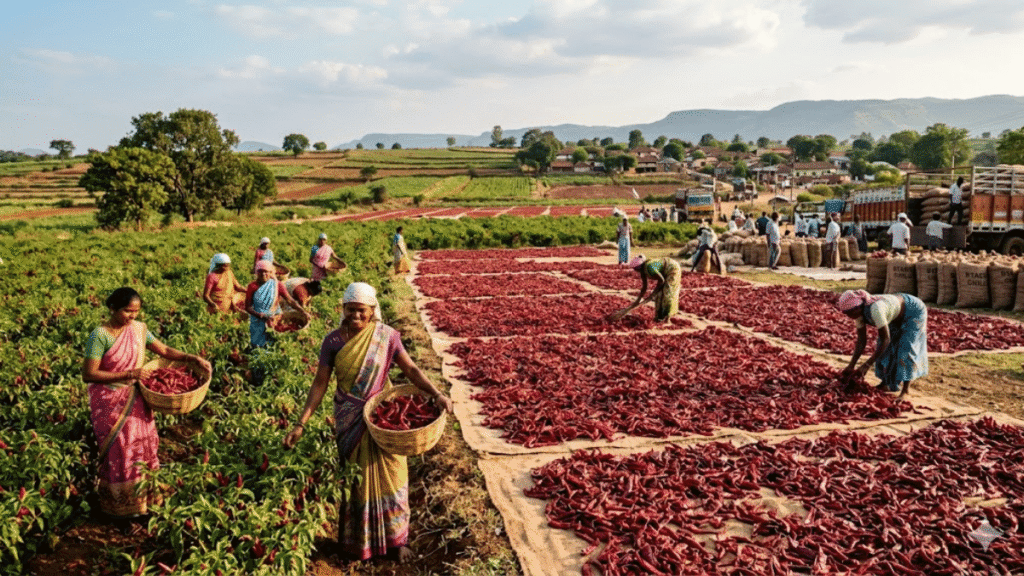
Walking through the vibrant markets of Karnataka in early 2026, one color dominates the visual landscape: a deep, crinkled, almost hypnotic crimson. This is the hallmark of the byadi chilli, a spice that has transcended its humble agricultural roots to become a global culinary and industrial powerhouse. While many associate chillies with searing heat that challenges the palate, the byadi variety offers something far more sophisticated—a brilliant saturation of color paired with a mild, approachable warmth.
Understanding the byadi phenomenon requires looking beyond the kitchen. It is a story of geographical prestige, historical resilience, and a unique chemical composition that makes it indispensable to both Michelin-starred chefs and international cosmetic giants. In this guide, you will discover the ancestral origins of this “red gold,” the economic engines that drive its trade in 2026, and why its Geographical Indication (GI) status remains one of India’s most protected cultural assets. We will explore how this specific cultivar managed to carve out a niche that higher-heat varieties like the Teja or Guntur cannot touch.
The Crimson Legacy: Origins of the Byadi Variety
The story of the byadi chilli begins in the Haveri district of Karnataka, specifically within the town of Byadgi. Historically, this region provided the perfect intersection of black soil and a specific micro-climate that allowed the chilli to develop its characteristic shriveled appearance and high oil content. For centuries, local farmers have refined the cultivation of two main subtypes: Dabbi and Kaddi.
The Dabbi is easily recognized by its shorter, fatter frame and its intensely deep red hue, while the Kaddi is longer, thinner, and slightly more popular for general commercial trade. In 2026, these distinctions remain vital for buyers at the Byadgi APMC market, which stands as the second-largest chilli market in India. The historical weight of this spice is anchored in the traditional cuisine of the Udupi and Malnad regions, where the byadi provides the foundational color for dishes like Bisi Bele Bath and the iconic Kundapur Chicken Ghee Roast.
Why the Byadi Variety Dominates the 2026 Spice Market
The global demand for the byadi chilli in 2026 has reached an all-time high, driven largely by the shift toward natural food coloring. Unlike synthetic dyes that face increasing scrutiny from health-conscious consumers, the pigments found in this chilli are entirely organic and shelf-stable. This has made the variety a darling of the export sector, with shipments heading to Europe, Southeast Asia, and North America at record volumes.
What sets it apart in the marketplace is its predictability. When a food manufacturer buys byadi, they know exactly what they are getting: a consistent Scoville Heat Unit (SHU) count that rarely exceeds 15,000 to 25,000. For context, this is significantly milder than the common bird’s eye chilli. This low heat allows the vibrant red oils to be extracted and used in everything from snacks and sauces to high-end lipsticks and skincare products without causing irritation.
The Science of Color: Low Heat, High Pigment
The secret to the byadi variety’s fame lies in its high oleoresin content. Oleoresin is the naturally occurring oil that carries both the flavor and the color of the spice. While other chillies focus their biological energy on producing capsaicin—the chemical responsible for heat—the byadi focuses on capsanthin and capsorubin.
In 2026, the extraction technology used in Karnataka has become incredibly efficient. Processing units now isolate these pigments to create highly concentrated dyes. This scientific profile is why the byadi is often referred to as “the cosmetic chilli.” If you have ever used a vibrant red lipstick or eaten a bright orange snack that didn’t burn your mouth, there is a high probability that the byadi played a role in its creation. This unique chemical trade-off—giving up fire for color—is a perfect example of nature’s specialization.
Karnataka’s Spice Capital: A Visit to the Byadgi Market
To truly appreciate the byadi, one must witness the sheer scale of its trade. The Byadgi market in 2026 is a sensory overload. On peak days, the air is thick with the sweet, slightly smoky aroma of dried peppers, and the ground is covered in a sea of red sacks. Traders from across the globe gather here to participate in auctions that dictate the price of red chilli across the subcontinent.
The market has modernized significantly over the last few years. Digital weighing scales and blockchain-based tracing systems now ensure that every bag of byadi can be traced back to its original farm. This transparency is crucial for maintaining the GI tag integrity. Seeing the interaction between traditional farmers and tech-enabled traders highlights how ancient spice routes have adapted to the digital economy.
READ: Grafitada: The 2026 Guide to This Coastal Culinary Trend
Culinary Applications: Beyond the Bisi Bele Bath
In the kitchen, the byadi is a magician. Its primary role is to provide “the look” of a spicy dish without the associated pain. For home cooks, using this chilli is an exercise in layering flavors. When tempered in hot oil, the byadi releases a deep, earthy aroma that grounds more volatile spices like cardamom or cloves.
In 2026, fusion cuisine has brought the byadi into Western kitchens as well. Chefs in London and New York are beginning to use byadi powder in dry rubs for barbecued meats, where the sugar content in the chilli helps create a beautiful, dark crust during the smoking process. It is also becoming a staple in vegan cooking, where its rich color can make plant-based proteins look more like traditional meat dishes.
The GI Tag Advantage and Economic Impact in 2026
The Geographical Indication (GI) tag granted to the byadi chilli is more than just a label; it is an economic shield. This legal protection ensures that only chillies grown in the designated regions of Karnataka can carry the name. This prevents “counterfeit” chillies from other regions—which might look similar but lack the oleoresin density—from diluting the market value.
For the local economy, this has been a game-changer. Farmers growing authentic byadi can command a premium price, often 20 to 30 percent higher than non-GI varieties. In 2026, this income has been reinvested into drip irrigation and cold storage facilities, making the crop more resilient to the changing weather patterns that have affected other agricultural sectors in India.
Sustainable Harvesting and the Future of Indian Spices
Sustainability is the watchword for byadi production in 2026. Because the chilli is so prized for its natural oils, maintaining the health of the soil is paramount. Farmers are increasingly moving away from harsh chemical pesticides in favor of organic alternatives that don’t leave residues in the oleoresin.
The future of the byadi looks bright as global trends move toward “clean label” products. As long as the world craves vibrant, natural colors and complex, mild flavors, the small town of Byadgi will remain at the center of the spice map. The challenge moving forward will be balancing this massive industrial demand with the artisanal traditions that made the chilli famous in the first place.
Expert Tips for Using and Storing Byadi Chillies
- The Sniff Test: When buying whole dried byadi, the skin should be deeply wrinkled and the aroma should be sweet and smoky, not acrid or burnt.
- Roast Before Grinding: To unlock the full potential of the color, lightly roast the chillies in a dry pan until they become fragrant before grinding them into a powder.
- Storage Matters: Because of the high oil content, byadi powder can turn rancid faster than other spices. Store it in an airtight glass container in a cool, dark cupboard, or even the refrigerator.
- Deseed for Zero Heat: If you want the color with absolutely no spice, remove the seeds and the internal white membranes, as that is where the tiny amount of capsaicin resides.
- Infused Oil: Create your own “red gold” by steeping whole byadi chillies in warm neutral oil for an hour. Use this oil to drizzle over pizza or pasta for a stunning visual effect.
Frequently Asked Questions
What makes the byadi chilli different from the Kashmiri chilli?
While both are known for their vibrant red color and low heat, the byadi has a much higher oleoresin content and a more distinctively wrinkled skin. The byadi also tends to have a slightly more earthy, smoky flavor profile compared to the sweeter Kashmiri variety.
Why is the byadi chilli so wrinkled?
The wrinkles are a natural result of the drying process combined with the specific skin thickness of the cultivar. These folds are actually a good sign, as they indicate a high concentration of the oils and pigments within the fruit.
Can I grow byadi chillies in my backyard?
Yes, you can grow them if you live in a warm, sunny climate with well-draining soil. However, they may not achieve the same intense color or oil profile as those grown in the specific black soil of the Haveri district, which is why the GI tag is so important.
Is the byadi chilli used in non-food industries?
Absolutely. In 2026, the byadi is a major source of natural dye for the textile and cosmetic industries. Its lack of intense heat makes it much easier to process into skin-safe products than other red peppers.
How has climate change affected byadi production in 2026?
Unpredictable rainfall has led to more indoor cultivation and the use of sophisticated weather-monitoring technology. Farmers in Karnataka are also experimenting with hardier versions of the byadi that can withstand higher temperatures without losing their pigment density.
The byadi is more than just a kitchen staple; it is a testament to how geography and culture can create a product that the rest of the world finds indispensable. Whether you are a professional chef seeking the perfect red for your curry or a consumer looking for natural alternatives in your daily products, the byadi offers a unique blend of beauty and utility that continues to define the spice trade in 2026.