
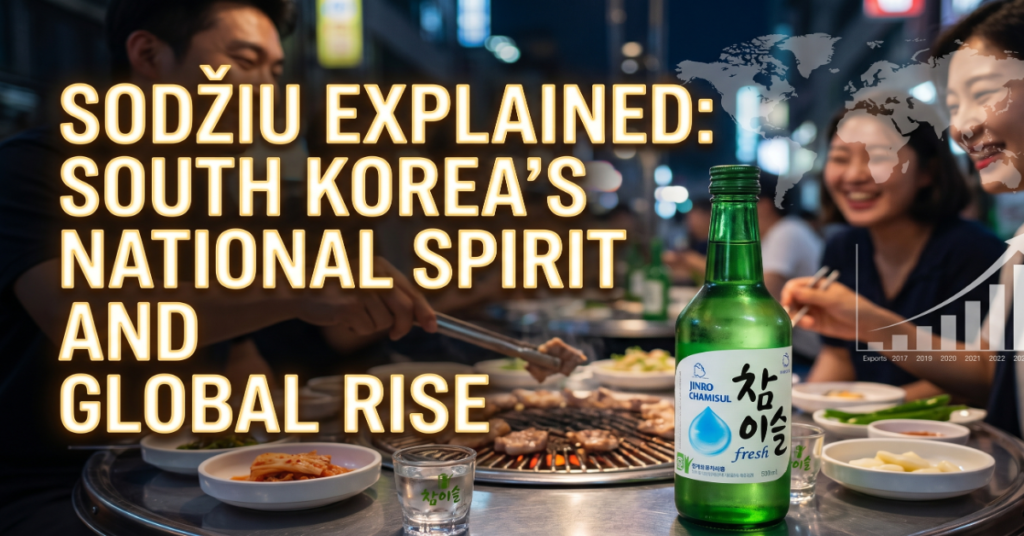
Sodžiu, more widely recognized internationally as soju, is one of the most culturally important alcoholic beverages in South Korea. Traditionally distilled from rice, the clear spirit is known for its smooth texture, relatively mild flavor profile, and flexible alcohol content that ranges from around 12.5% to more than 50% ABV depending on the style. Today, low-alcohol versions under 20% dominate commercial markets, especially among younger drinkers and international consumers.
The word “sodžiu” is commonly seen on Lithuanian retail websites and menus as a localized spelling of soju. Despite the spelling difference, the beverage refers to the same Korean spirit often sold in distinctive green bottles under brands such as Jinro, Chamisul, and Chum Churum. Its flavor is lighter than vodka, slightly sweet in many commercial versions, and designed for easy social drinking.
The rise of Korean pop culture has accelerated global curiosity around sodžiu. K-dramas, Korean barbecue restaurants, and international cocktail bars have helped introduce the drink far beyond East Asia. Yet many articles reduce it to a trendy beverage without explaining its historical origins, production methods, economic impact, or cultural etiquette.
That broader context matters. Sodžiu reflects centuries of Korean culinary adaptation, government regulation, industrial production shifts, and changing social behavior. Understanding the drink means understanding part of modern Korean identity itself.
The Origins of Sodžiu in Korean History
Soju’s origins date back to the 13th century during the Mongol invasions of Korea. Distillation techniques spread across the Korean peninsula after contact with Middle Eastern and Mongolian alcohol-making traditions. Historians widely trace the development of Korean distilled spirits to these exchanges.
The name itself carries technical meaning:
| Term | Meaning |
| So (소) | “Burn” or heat from distillation |
| Ju (주) | Alcoholic beverage or liquor |
Together, the term translates roughly to “burned liquor,” referencing the distillation process.
Traditional Korean soju differed significantly from many modern commercial products. Earlier forms were often stronger, more aromatic, and produced through rice fermentation followed by pot distillation. Regional variations developed across Korea, especially in cities like Andong, which remains associated with premium traditional soju production today.
One overlooked historical factor is the role of government food policy. During rice shortages in the 1960s, South Korea restricted rice use for alcohol production. Manufacturers shifted toward sweet potatoes, tapioca, barley, and diluted neutral spirits. This industrial pivot permanently changed the flavor and economics of commercial soju.
That transition explains why many contemporary bottles taste lighter and sweeter than traditional distilled Korean spirits.
How Sodžiu Is Made
The production process depends on whether the product is traditional distilled soju or modern diluted soju.
Traditional Distilled Production
Traditional producers typically follow these steps:
- Rice washing and steaming
- Fermentation using yeast and nuruk
- Alcohol extraction through distillation
- Aging or resting before bottling
Nuruk, a Korean fermentation starter, plays a major role in flavor complexity. Unlike industrial spirits with neutral profiles, traditional sodžiu can contain earthy, fruity, or grain-forward characteristics.
Modern Commercial Production
Mass-market brands often use:
- Neutral grain spirits
- Dilution with water
- Sweeteners
- Flavor additives
- Activated charcoal filtration
This process lowers production costs and creates a smoother product aimed at high-volume consumption.
Comparison: Traditional vs Commercial Sodžiu
| Feature | Traditional Soju | Commercial Soju |
| Base ingredients | Rice, grains | Neutral spirits, starches |
| Production | Pot-distilled | Diluted industrial alcohol |
| Typical ABV | 25%–45% | 12.5%–20% |
| Flavor | Complex, earthy | Light, smooth, sweet |
| Price | Premium | Affordable |
| Drinking context | Specialty dining | Casual social drinking |
One practical insight often missed in English-language coverage is how refrigeration changed consumption habits. Lower-ABV commercial sodžiu became especially popular because it could be served ice-cold directly from convenience store refrigerators, reinforcing its role in spontaneous after-work social gatherings.
Flavor Profile and Why It Differs From Vodka
Many first-time drinkers compare sodžiu to vodka, but the similarity is incomplete.
Vodka is generally distilled for neutrality. Sodžiu prioritizes smoothness and drinkability over absolute purity. Commercial products often contain residual sweetness or added flavoring that softens the alcohol bite.
Typical tasting notes include:
- Mild grain sweetness
- Light citrus hints
- Soft alcoholic warmth
- Clean finish
- Occasionally herbal or floral undertones
Premium traditional versions can become significantly more layered, especially when produced with rice-only fermentation and artisanal distillation methods.
A major market misconception is that lower alcohol automatically means lower intoxication risk. Because sodžiu is easy to drink quickly, consumers often underestimate cumulative alcohol intake during social meals.
Popular Sodžiu Brands and Flavor Trends
Several brands dominate international exports.
| Brand | Known For | Common ABV |
| Jinro Chamisul | Clean finish and global distribution | 16%–20% |
| Chum Churum | Softer mineral-water profile | 16%–20% |
| Andong Soju | Traditional distilled craftsmanship | 35%–45% |
| Good Day | Fruit flavors targeting younger consumers | 12%–14% |
Fruit-flavored sodžiu has become especially important commercially. Peach, grapefruit, plum, strawberry, apple, and green grape varieties expanded rapidly during the late 2010s and early 2020s.
This shift reflects broader demographic changes in Korean alcohol consumption. Younger consumers increasingly prefer sweeter, lower-ABV drinks over harsher traditional spirits.
One underreported implication is margin economics. Flavored sodžiu often generates stronger retail profitability because flavoring enables brand differentiation in an otherwise price-competitive market.
Kaip Teisingai Gerti Sodžiu Korėjoje
Korean drinking etiquette remains deeply important in professional and family settings.
Common practices include:
- Pouring drinks for others rather than yourself
- Using two hands when pouring or receiving
- Turning slightly away from elders when drinking
- Sharing bottles communally during meals
These customs reinforce hierarchy, respect, and group identity.
Sodžiu consumption is closely tied to food culture. It is frequently paired with:
- Korean barbecue
- Fried chicken
- Seafood dishes
- Spicy stews
- Street food
The social environment matters as much as the beverage itself.
Foreign audiences often interpret soju mainly through nightlife marketing. In Korea, however, it also functions as a ritualized social connector in business dinners, family gatherings, and workplace bonding sessions.
Populiariausi Sodžiu Kokteilių Receptai
Modern cocktail culture has expanded sodžiu’s international reach.
Someok
A mixture of beer and soju.
| Ingredient | Amount |
| Beer | 3 parts |
| Soju | 1 part |
This combination is popular during Korean group dinners.
K-Jack Coke
A simplified cola cocktail.
| Ingredient | Amount |
| Soju | 2 oz |
| Cola | 4 oz |
| Ice | As needed |
Yogurt Soju
A sweeter party-style drink combining soju, yogurt beverage, and lemon-lime soda.
One emerging trend in international bars is premium cocktail integration. Mixologists increasingly use traditional distilled sodžiu instead of vodka because its softer grain profile blends well with fruit and tea-based ingredients.
Sodžiu ir Shochu Skirtumai
Sodžiu is often confused with Japanese shochu, but they are distinct beverages.
Soju vs Shochu
| Category | Sodžiu (Soju) | Shochu |
| Country | South Korea | Japan |
| Typical ABV | 12.5%–25% | 20%–45% |
| Common ingredients | Rice, barley, sweet potato | Barley, sweet potato, rice |
| Flavor profile | Smooth, light | Richer and more varied |
| Serving style | Chilled shots | Warm or chilled |
| Market style | Social group drinking | Culinary pairing focus |
Commercial Korean sodžiu is generally sweeter and more approachable for casual drinking, while Japanese shochu often emphasizes ingredient-specific complexity.
Global Market Impact and Cultural Export
Soju’s international growth is closely tied to the Korean Wave, or Hallyu. Streaming platforms exposed global audiences to Korean dining and nightlife culture, dramatically increasing curiosity about Korean beverages.
Restaurants outside Korea now frequently market sodžiu alongside:
- Korean barbecue
- K-pop-themed dining
- Fried chicken chains
- Asian fusion cocktails
According to global spirits industry reports, Jinro has repeatedly ranked among the world’s highest-selling spirit brands by volume.
Yet export success also creates authenticity challenges. Many export-oriented products are heavily sweetened or reformulated for international palates, creating a gap between traditional Korean distillation heritage and mass-market branding.
That tension mirrors broader food globalization patterns where accessibility sometimes overrides regional authenticity.
Risks, Health Considerations and Trade-Offs
Sodžiu’s approachable flavor can obscure alcohol intensity.
Key considerations include:
- Rapid consumption during social rituals
- High calorie intake in flavored variants
- Increased binge-drinking risk in workplace culture
- Sweetened formulations masking alcohol strength
South Korea has historically faced significant public health discussions around heavy drinking culture, especially in corporate environments.
At the same time, lower-ABV soju products may reduce hard liquor intake compared with stronger spirits when consumed moderately.
The broader issue is behavioral rather than product-specific. Serving customs encourage continuous rounds of shared drinking that can lead to unintended overconsumption.
The Future of Sodžiu in 2027
The future of sodžiu appears tied to premiumization, export diversification, and changing consumer health preferences.
Several trends are already visible:
Lower-Alcohol Innovation
Younger consumers increasingly seek beverages under 15% ABV. Manufacturers are responding with lighter formulas and flavored variants.
Craft Distillation Revival
Traditional rice-distilled soju is gaining renewed attention in upscale dining and export markets. Premium Korean spirits may follow a trajectory similar to Japanese whisky over the next decade, though production scale remains far smaller.
Regulatory Pressure
Health regulators globally continue examining alcohol labeling transparency, sugar disclosures, and advertising standards. Sweetened sodžiu products may face tighter labeling requirements in some markets by 2027.
Sustainability Focus
Distilleries are beginning to emphasize:
- Rice sourcing transparency
- Packaging sustainability
- Lower-emission production systems
One realistic limitation remains distribution economics. Premium traditional sodžiu still lacks the export infrastructure and global recognition enjoyed by Japanese sake or whisky. Growth is likely, but gradual rather than explosive.
Key Takeaways
- Sodžiu is the Lithuanian spelling of Korea’s globally recognized spirit, soju.
- Traditional soju and commercial soju differ dramatically in production and flavor complexity.
- Korean drinking etiquette remains central to the beverage’s cultural identity.
- Fruit-flavored and lower-ABV products are reshaping global consumer demand.
- Commercial success has created tension between authenticity and international market adaptation.
- Premium artisanal soju may become a larger export category by 2027.
- The drink’s smoothness can lead consumers to underestimate alcohol intake.
Conclusion
Sodžiu represents far more than a trendy imported spirit. Its history reflects centuries of cultural exchange, agricultural adaptation, industrial modernization, and evolving social rituals within South Korea. What began as a traditional distilled rice liquor eventually transformed into one of the world’s most commercially successful spirits through affordability, accessibility, and cultural export power.
Modern global audiences often encounter sodžiu through Korean dramas, barbecue restaurants, or flavored bottles aimed at younger drinkers. Yet the beverage carries deeper historical and culinary significance than its marketing sometimes suggests. Traditional distilled soju still preserves craftsmanship rooted in fermentation science and regional identity.
The next phase of sodžiu’s growth will likely depend on whether producers can balance mass-market popularity with authenticity. Lower-alcohol products and fruit flavors will continue expanding internationally, but premium artisanal distillation may ultimately define the category’s long-term reputation.
For consumers, understanding sodžiu means appreciating not only what is inside the bottle, but also the social customs, historical pressures, and evolving global influences that shaped it.
FAQ
What does sodžiu mean?
Sodžiu is the Lithuanian spelling of soju, the traditional Korean distilled alcoholic beverage commonly sold in green bottles.
Is sodžiu stronger than vodka?
Usually no. Most commercial sodžiu products range between 12.5% and 20% ABV, while vodka is commonly around 40% ABV.
What does sodžiu taste like?
It is generally smooth, lightly sweet, and mild compared with stronger distilled spirits. Premium traditional versions can have more grain complexity.
Kaip gaminamas sodžiu namuose?
Homemade soju production typically involves grain fermentation and distillation. However, alcohol distillation laws vary significantly by country and may require licenses.
What foods pair best with sodžiu?
Korean barbecue, fried chicken, seafood dishes, spicy soups, and savory street foods pair especially well with sodžiu.
What is the difference between sodžiu and sake?
Sake is brewed like beer or wine and usually not distilled. Sodžiu is distilled, resulting in a higher alcohol concentration and different flavor structure.
Which flavored sodžiu is most popular?
Green grape, peach, grapefruit, and strawberry varieties are among the bestselling flavored options globally.
Methodology
This article was developed using historical research, Korean beverage industry reporting, export market analysis, and published cultural studies on Korean alcohol consumption. Product positioning and market observations were validated through manufacturer documentation, retailer listings, hospitality industry reporting, and Korean culinary sources.
The analysis distinguishes between traditional distilled soju and modern commercial diluted soju because many English-language articles incorrectly treat them as identical products. Cultural etiquette observations were cross-referenced against Korean dining customs documented by hospitality experts and tourism organizations.
Limitations include regional production variability and evolving export formulations that differ by market. Alcohol consumption trends can also change rapidly based on regulation, taxation, and generational behavior shifts.
References
International Wine & Spirit Research. (2024). Global spirits market trends report. IWSR.
Kim, H. J. (2023). Traditional Korean alcohol production and modernization trends. Journal of East Asian Culinary Studies, 18(2), 44–61.
Korea Agro-Fisheries & Food Trade Corporation. (2024). Korean alcoholic beverage export statistics. Retrieved from https://www.at.or.kr
Ministry of Food and Drug Safety of South Korea. (2023). Alcohol labeling and beverage standards. Retrieved from https://www.mfds.go.kr
Park, S. Y. (2022). Drinking culture and workplace socialization in South Korea. Asian Cultural Research Review, 11(4), 90–108.
Statista. (2024). Soju consumption and export market data. Retrieved from https://www.statista.com
The Korea Herald. (2023). Premium traditional soju gains international attention. Retrieved from https://www.koreaherald.com World Health Organization. (2024). Global status report on alcohol and health. Geneva: WHO.