
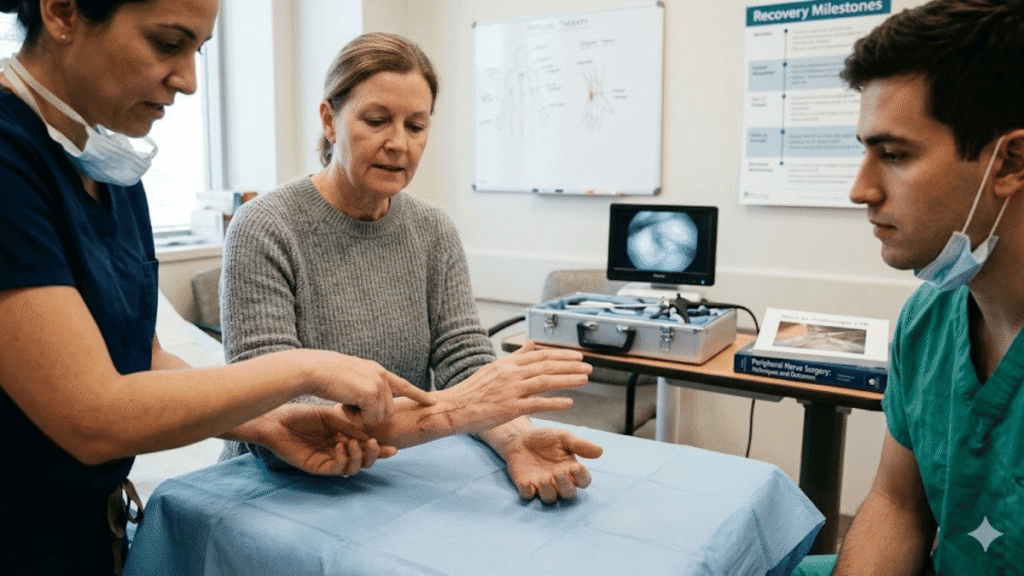
For millions of people worldwide, the simple acts of typing, driving, or holding a cup of coffee are clouded by a persistent, electric numbness. Carpal tunnel surgery, or carpal tunnel release (CTR), is the definitive solution when conservative treatments fail. The procedure involves cutting the transverse carpal ligament to increase the size of the carpal tunnel, thereby relieving pressure on the median nerve. To satisfy search intent immediately: the surgery is typically a 15–30 minute outpatient procedure with a success rate exceeding 90%. Patients generally regain basic hand function within weeks, though full neurological recovery can take six months to a year depending on the severity of the initial nerve damage.
The condition itself is a byproduct of anatomy and lifestyle. The carpal tunnel is a narrow passageway of ligament and bone at the base of the hand. When the tissues surrounding the flexor tendons become inflamed, they squeeze the median nerve, leading to pain, tingling, and eventual muscle atrophy in the thumb and fingers. While splinting and steroid injections offer temporary respite, surgery remains the gold standard for permanent relief. Modern medicine has refined this intervention into two primary modalities: the traditional open release and the minimally invasive endoscopic release. Both aim for the same anatomical goal but differ significantly in their recovery trajectories and scar formation.
Understanding the decision to undergo surgery requires a look at the diagnostic journey. Electromyography (EMG) and nerve conduction studies serve as the “gold standard” for confirming the diagnosis, ensuring that the symptoms aren’t originating from the neck or elbow. As our society moves further into a digital-first existence, the prevalence of this condition has shifted from industrial laborers to office workers and heavy smartphone users. This evolution has spurred a surge in surgical demand, making CTR one of the most common orthopedic procedures performed in the United States today, with roughly 400,000 to 500,000 cases reported annually.
READ: Buccal Fat Removal: What Before-and-After Results Don’t Reveal About the Procedure
The Surgical Spectrum: Open vs. Endoscopic Techniques
The debate between open carpal tunnel release (OCTR) and endoscopic carpal tunnel release (ECTR) often dominates pre-operative consultations. The open approach involves a two-inch incision at the base of the palm, providing the surgeon with a direct, unobstructed view of the transverse carpal ligament. This method has been the standard for decades due to its reliability and low complication rate. Surgeons often prefer it for complex cases where anatomical variations or previous injuries might make a “blind” or endoscopic approach riskier. Despite the larger scar, many patients find the certainty of a successful release worth the slightly longer initial healing time for the skin.
In contrast, the endoscopic method utilizes one or two small incisions—sometimes only a centimeter long—through which a tiny camera and specialized blade are inserted. This allows the surgeon to divide the ligament from the inside out. The primary appeal of ECTR is the reduction in “pillar pain,” which is soreness in the fleshy parts of the palm adjacent to the incision. Studies have shown that endoscopic patients often return to work and daily activities several days earlier than their open-surgery counterparts. However, the procedure requires a high level of technical proficiency to avoid accidental injury to the median nerve or the superficial palmar arch.
| Feature | Open Release (OCTR) | Endoscopic Release (ECTR) |
| Incision Size | 1.5 to 2 inches | 0.5 to 1 centimeter |
| Direct Visualization | Excellent (Direct Eye) | Good (Via Camera) |
| Recovery Time | 4–6 weeks for heavy use | 2–4 weeks for heavy use |
| Complication Risk | Very Low | Slightly Higher (Nerve Irritation) |
| Pillar Pain | More common | Less common |
| Anesthesia | Local, Regional, or General | Local or Regional |
The Mechanics of Recovery and Nerve Regeneration
Post-operative care is just as critical as the surgery itself. Once the transverse carpal ligament is severed, the pressure on the median nerve drops immediately. However, the nerve itself may have been compressed for years, leading to a state of ischemia or internal scarring. Nerve fibers regenerate at a rate of approximately one millimeter per day. This explains why some patients feel immediate relief from “pins and needles,” while others may wait months for the strength in their thumb to return. It is a slow biological reconstruction that cannot be rushed by sheer force of will.
“The surgery is only half the battle; the rest is biology. We provide the space, but the nerve must find its way back to health,” says Dr. Sanjeev Kakar, an orthopedic surgeon at the Mayo Clinic specializing in hand and microvascular surgery.
Therapy often begins within days of the procedure. Hand therapists emphasize “nerve gliding” exercises—specific movements designed to prevent the median nerve from becoming stuck in the scar tissue forming at the surgical site. Without these exercises, the nerve may become tethered, leading to a recurrence of symptoms. The goal is to ensure that as the transverse carpal ligament heals and “arches” over the tunnel, it does so in a way that preserves the newfound volume of the canal. Patients are encouraged to use their hands for light tasks like eating or dressing almost immediately to promote circulation and mobility.
Complications and the Reality of “Failed” Surgery
While the success rate is high, no surgery is without risk. Potential complications include infection, scar hypersensitivity, and the aforementioned pillar pain. A small percentage of patients may experience “recurrent” carpal tunnel syndrome. This often occurs when the ligament was not completely divided during the initial procedure—a risk that is statistically slightly higher in endoscopic cases—or due to the excessive formation of internal scar tissue. In some instances, the nerve damage was simply too severe or long-standing for surgery to fully reverse the muscle wasting.
“Early intervention is the best predictor of a perfect outcome. If the patient waits until they have permanent numbness or muscle atrophy, the surgery becomes a salvage mission rather than a restorative one,” notes Dr. Asif Ilyas, President of the Rothman Orthopaedic Institute Foundation.
The psychological impact of surgery is also a factor. Many patients expect a “switch” to be flipped, ending their pain instantly. When they face the reality of surgical soreness and the slow pace of nerve healing, frustration can set in. Managing expectations is a vital part of the surgical process. It is important for patients to realize that the incision at the palm is in a high-traffic area of the body; every time we grip or lean on our hands, we put stress on that healing tissue. Proper wound care and patience are the non-negotiable requirements for a successful long-term result.
| Recovery Milestone | Timeline | Activity Level |
| Week 1 | 0–7 Days | Light movement, dressing changes, no lifting > 1lb |
| Week 2 | 8–14 Days | Suture removal, increased range of motion |
| Month 1 | 4 Weeks | Return to most desk work, light driving |
| Month 3 | 12 Weeks | Full grip strength returning, scar softening |
| Year 1 | 12 Months | Maximum nerve regeneration and sensation |
The Economic and Social Impact
The decision to proceed with surgery often carries significant economic weight. For many, carpal tunnel syndrome is an occupational hazard. In the United States, the Occupational Safety and Health Administration (OSHA) has long tracked the impact of repetitive strain injuries on the workforce. Carpal tunnel syndrome results in the highest number of days away from work among all major disabling injuries and illnesses. Surgery, therefore, is not just a personal health choice but a necessity for maintaining one’s livelihood. The shift toward endoscopic procedures has been largely driven by the desire to minimize “down time” for the American worker.
“We are seeing a younger demographic requiring surgery because of the sheer volume of digital interaction required in today’s economy,” observes Dr. Duretti Fufa, an orthopedic surgeon at the Hospital for Special Surgery in New York.
Beyond the workplace, the social cost of hand dysfunction is profound. From the ability to hold a grandchild to the pursuit of hobbies like gardening or playing an instrument, hand health is intrinsic to the human experience. Surgery offers a path back to these activities. As surgical techniques continue to evolve—including the emergence of ultrasound-guided carpal tunnel release, which requires even smaller incisions than endoscopy—the barrier to entry for this life-changing procedure continues to lower, offering hope to those who have long lived in the shadow of chronic pain.
Takeaways for the Prospective Patient
- Surgery is highly effective: With success rates over 90%, it remains the most reliable cure for moderate to severe nerve compression.
- Timing is critical: Waiting too long can lead to irreversible nerve damage and muscle wasting that surgery cannot fully fix.
- Technique choice: Discuss both open and endoscopic options with your surgeon to see which fits your anatomy and lifestyle.
- Nerve healing is slow: Do not be discouraged if numbness persists for several months; nerves regenerate slowly.
- Therapy matters: Adhering to post-operative nerve gliding exercises is essential to prevent scar tissue from trapping the nerve again.
- Diagnostic clarity: Ensure you have had an EMG or nerve conduction study to confirm the diagnosis before going under the knife.
- Pillar pain is normal: Expect soreness in the palm for several weeks as the deep tissues heal and adjust to the new internal space.
Conclusion
Carpal tunnel surgery represents a unique intersection of anatomical simplicity and life-changing impact. By merely severing a single ligament, surgeons can restore the function of the most vital tool in the human arsenal: the hand. Whether through the tried-and-true open method or the high-tech endoscopic approach, the goal remains the same—to free the median nerve from its narrow, pressurized cage. While the procedure itself is brief, the journey toward full recovery is a marathon of biological patience and diligent rehabilitation.
As we continue to navigate an era defined by repetitive digital motions, the importance of recognizing and treating carpal tunnel syndrome cannot be overstated. Surgery should not be viewed as a failure of conservative management, but rather as a proactive step toward maintaining long-term independence and quality of life. For the patient who has spent years waking up in the middle of the night to shake out “asleep” hands, the post-surgical silence of the nerves is nothing short of a miracle. The palm will heal, the scar will fade, and in most cases, the hand will return to its rightful place as an instrument of creation and connection.
FAQs
How long is the actual carpal tunnel surgery?
The surgical procedure itself is remarkably quick, usually lasting between 15 and 30 minutes. However, you will spend several hours at the surgical center for pre-operative preparation and post-operative monitoring. Most patients are able to go home within an hour or two after the surgeon has finished the release.
When can I drive after carpal tunnel surgery?
Most patients can resume driving within 3 to 7 days, provided they are no longer taking narcotic pain medications and feel they have enough grip strength to safely control the steering wheel in an emergency. If the surgery was on your dominant hand, it may take slightly longer to feel comfortable.
Is carpal tunnel surgery permanent?
For the vast majority of patients, the relief is permanent. The transverse carpal ligament does eventually heal by bridging the gap with scar tissue, but the “tunnel” remains larger than it was before. Recurrence is rare, occurring in less than 5% of cases, often due to incomplete initial release or excessive internal scarring.
Will I need physical therapy after the procedure?
Not everyone requires formal physical therapy. Many surgeons provide a list of “nerve gliding” exercises to perform at home. However, if you have significant stiffness, weakness, or “pillar pain,” a few sessions with a certified hand therapist (CHT) can significantly improve your functional outcome and speed up your return to work.
Can I have surgery on both hands at the same time?
While possible, most surgeons recommend staggering the procedures by 4 to 6 weeks. Having “bilateral” surgery makes basic tasks like personal hygiene and eating extremely difficult, as you will have limited use of both hands simultaneously. Staggering ensures you always have one functional hand during the peak healing phase.
Disclaimer: This article is for informational purposes only and does not constitute medical advice. Always seek the advice of your physician or other qualified health provider with any questions you may have regarding a medical condition or surgical procedure.