
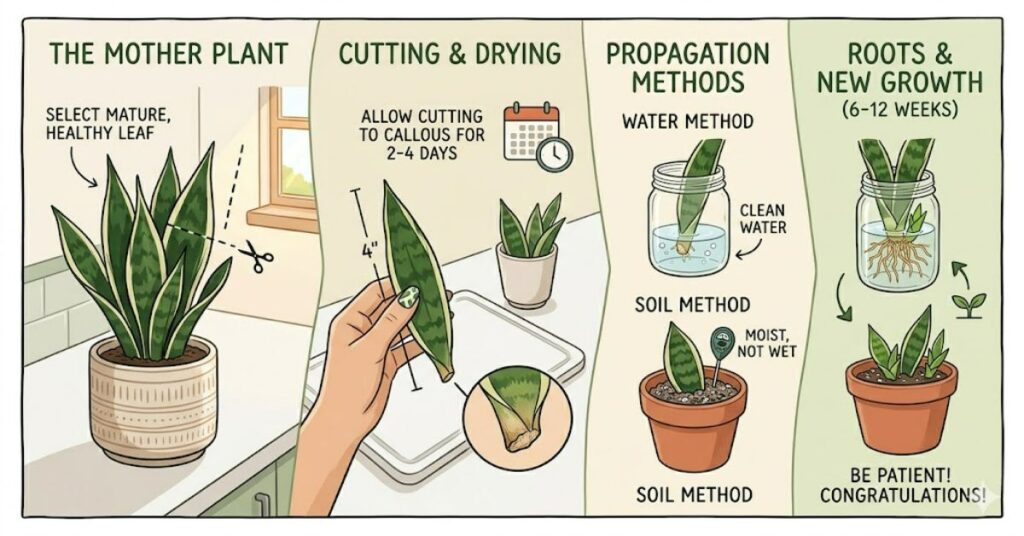
Snake plant propagation is one of the easiest plant-care projects for beginners and experienced gardeners alike. Whether you want more plants for your home, gifts for friends, or a cost-effective way to expand your indoor garden, propagating Sansevieria (now classified under Dracaena) is surprisingly straightforward.
The popularity of snake plants has surged over the past decade thanks to their architectural appearance, drought tolerance, and ability to thrive in low-light environments. Unlike many houseplants that require constant attention, snake plants are remarkably forgiving. That resilience extends to reproduction as well.
Most gardeners choose between three propagation techniques: division, water propagation, and soil propagation. Each method has advantages and limitations depending on your goals, available time, and the size of the parent plant. Division generally delivers the quickest results because the new plants already possess developed root systems. Water propagation allows growers to observe root development, while soil propagation closely mimics natural growth conditions.
Understanding when and how to use each method can dramatically improve success rates. This guide explores every major approach, examines common mistakes, and explains what to expect during each stage of development.
Understanding the Snake Plant
Snake plants originate from West Africa and are known for their upright sword-shaped leaves. They store moisture in thick foliage and rhizomes beneath the soil.
These underground rhizomes are the key to successful propagation. They naturally produce new shoots, often called pups, that eventually become independent plants.
Why Snake Plants Are Easy to Propagate
Several biological characteristics contribute to their propagation success:
- Strong rhizome network
- Drought-resistant tissue
- Low nutrient requirements
- High tolerance for environmental variation
- Slow but steady growth pattern
These traits make snake plants ideal for beginners learning plant propagation techniques.
Comparing the Three Main Propagation Methods
| Method | Difficulty | Speed | Success Rate | Best For |
| Division | Easy | Fast | Very High | Mature plants |
| Water Propagation | Easy | Medium | High | Beginners |
| Soil Propagation | Moderate | Medium | High | Natural rooting |
| Rhizome Propagation | Moderate | Fast | High | Advanced growers |
Method 1: Plant Division
Division is widely considered the best method for snake plant propagation.
Instead of waiting for roots to form, you separate an existing plant into multiple sections, each with roots already attached.
When to Divide
The ideal time is:
- Spring
- Early summer
- During repotting
Avoid division during winter dormancy.
Step-by-Step Process
- Remove the plant from its pot.
- Gently shake away excess soil.
- Locate natural divisions in the root system.
- Separate clumps using clean shears.
- Ensure each section contains roots and leaves.
- Plant divisions into fresh, well-draining soil.
- Water lightly.
Benefits of Division
- Fastest growth
- Immediate establishment
- Preserves leaf patterns and variegation
- Lowest failure rate
Real-World Observation
Many indoor gardeners report visible new growth within four to eight weeks after dividing healthy mature plants. Garden centers commonly use this method because it produces saleable plants faster than leaf-cutting techniques.
Method 2: Water Propagation
Water propagation remains popular because it allows growers to watch roots develop.
Materials Needed
- Sharp sterilized scissors
- Glass container
- Fresh water
- Healthy leaf cutting
How to Propagate in Water
- Cut a healthy leaf near its base.
- Allow the cut end to dry for 24 hours.
- Place the lower section in water.
- Keep the container in bright indirect light.
- Change water weekly.
Roots typically appear within four to eight weeks.
Advantages
- Easy monitoring
- Visually interesting process
- Simple setup
Drawbacks
- Slower than division
- Root shock may occur when transferred to soil
- Greater risk of rot if water becomes contaminated
Method 3: Soil Propagation
Some growers prefer rooting cuttings directly in potting mix.
Best Soil Mix
A well-draining blend works best:
| Component | Purpose |
| Potting soil | Nutrient base |
| Perlite | Aeration |
| Sand | Drainage |
| Orchid bark | Root health |
Steps
- Cut healthy leaves into sections.
- Let cuttings dry for 24–48 hours.
- Insert the bottom end into soil.
- Place in indirect sunlight.
- Water sparingly.
Patience is essential. Root formation can take several weeks before new shoots emerge.
Common Mistakes That Prevent Success
Overwatering
The biggest cause of propagation failure is excessive moisture.
Snake plants evolved in arid regions and prefer drying between waterings.
Using Dull Tools
Dirty or dull blades create damaged tissue vulnerable to fungal infections.
Always sterilize cutting tools before use.
Insufficient Light
Propagation requires energy.
While mature snake plants tolerate low light, cuttings root faster in bright indirect sunlight.
Planting Upside Down
This surprisingly common mistake prevents rooting.
Mark the bottom end of cuttings before separating them.
Variegated Snake Plants Require Special Attention
Many collectors grow cultivars such as:
- Laurentii
- Moonshine
- Black Gold
- Whale Fin
A lesser-known limitation is that leaf-cutting methods may not preserve variegation patterns.
Important Insight
If maintaining yellow margins or unique coloration matters, division is often the preferred method. New plants produced from leaf cuttings sometimes revert to more basic green forms.
This issue is frequently overlooked in beginner guides.
Growth Timeline After Propagation
Understanding realistic expectations prevents disappointment.
| Stage | Typical Timeframe |
| Cutting preparation | 1–2 days |
| Initial root formation | 4–8 weeks |
| New shoot development | 8–16 weeks |
| Established young plant | 4–8 months |
| Mature plant appearance | 1–2 years |
Snake plants are naturally slow growers. Success often becomes visible gradually rather than dramatically.
Strategic Benefits of Propagating Snake Plants
Propagation offers more than free plants.
Cost Savings
A mature decorative snake plant can cost significantly more than producing multiple plants from an existing specimen.
Indoor Design Flexibility
New plants can be placed throughout:
- Home offices
- Bedrooms
- Living rooms
- Entryways
Plant Health Management
Dividing crowded plants reduces competition for water and nutrients.
This often improves the appearance of the parent plant.
Risks and Trade-Offs
Every propagation method involves compromises.
| Method | Primary Risk |
| Division | Root disturbance |
| Water rooting | Root rot |
| Soil rooting | Slower visible progress |
| Rhizome propagation | Cutting damage |
Choosing the right method depends on priorities.
Growers seeking speed should choose division. Those who enjoy observing development may prefer water propagation.
The Future of Snake Plant Propagation in 2027
The indoor gardening sector continues expanding due to urban living trends and growing interest in home décor plants.
By 2027, several developments may influence propagation practices:
- Increased availability of specialty cultivars
- Greater adoption of self-watering containers
- Enhanced consumer education through plant-care apps
- Wider distribution of sustainable potting materials
However, traditional propagation methods are unlikely to change dramatically. Snake plants have remained reliable and easy to reproduce for decades.
The most notable shift may come from digital plant-care tools that help users monitor watering schedules and environmental conditions more effectively.
Key Takeaways
- Division remains the fastest and most reliable propagation technique.
- Water propagation offers excellent visibility into root development.
- Soil propagation closely replicates natural growing conditions.
- Variegated cultivars may lose coloration when propagated by leaf cuttings.
- Overwatering causes more failures than any other factor.
- Spring and summer provide optimal propagation conditions.
- Patience is essential because snake plants grow slowly even when healthy.
Conclusion
Snake plant propagation combines simplicity with a high probability of success, making it one of the most rewarding projects for indoor gardeners. Whether you choose division, water rooting, or direct soil propagation, the underlying process relies on the plant’s natural resilience and ability to regenerate.
Division stands out as the fastest option because it creates established plants almost immediately. Water propagation appeals to those who enjoy watching root systems develop, while soil propagation provides a straightforward, low-maintenance approach.
The key to success lies in avoiding common mistakes such as overwatering, poor sanitation, and insufficient light. Understanding the strengths and limitations of each method helps growers choose the best strategy for their goals.
With proper care and realistic expectations, a single healthy snake plant can eventually become several thriving specimens, enhancing both indoor spaces and gardening confidence.
FAQ
What is the easiest method of snake plant propagation?
Division is generally considered the easiest and fastest method because each new section already has roots attached.
Can snake plants grow from leaf cuttings?
Yes. Healthy leaf cuttings can develop roots and eventually produce new shoots when placed in water or soil.
How long does water propagation take?
Roots usually appear within four to eight weeks, though environmental conditions can affect timing.
Why isn’t my cutting rooting?
Common causes include low light, excessive moisture, contaminated water, or planting the cutting upside down.
Does propagation work during winter?
It can work, but success rates are generally lower because plant growth slows during cooler months.
Can variegated snake plants lose their patterns?
Yes. Leaf-cutting propagation may produce plants without the original variegation. Division is usually better for preserving appearance.
How often should propagated cuttings be watered?
Water sparingly. The soil should dry partially between waterings to prevent root rot.
Methodology
This article was developed using horticultural guidance from university extension resources, botanical references, indoor gardening publications, and established houseplant cultivation practices. Information was cross-checked against contemporary plant-care recommendations and commercial nursery propagation methods.
Limitations include regional differences in climate, humidity, and growing conditions that may affect propagation timelines. Results can vary based on plant health, cultivar type, and environmental factors.
This article was drafted with AI assistance and should undergo editorial review before publication.
References
University of Florida IFAS Extension. (2023). Sansevieria and indoor plant propagation guidelines.
Missouri Botanical Garden. (2024). Dracaena trifasciata plant profile.
Royal Horticultural Society. (2024). Propagation methods for houseplants.
North Carolina State Extension. (2023). Houseplant propagation techniques and best practices.
Chicago Botanic Garden. (2024). Indoor plant division and maintenance guide.