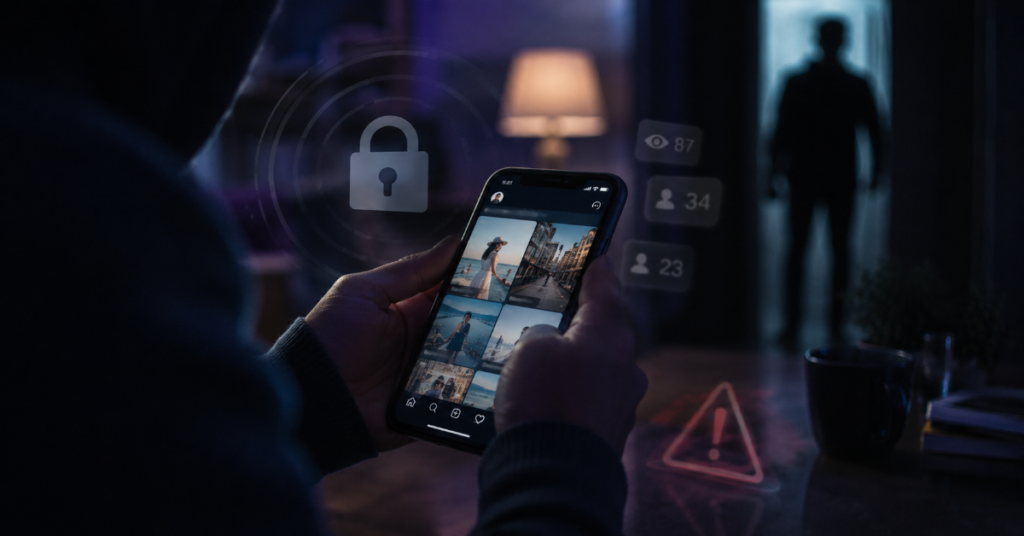
Anonymous Instagram is one of those search terms that sounds simple but covers several very different user intents. Some people want to look at public profiles without logging in. Others want to watch stories without appearing in the viewer list. A more risky group searches for tools that claim to unlock private profiles without following the account.
The honest answer is direct: Instagram does not provide a native anonymous story-viewing mode, and private Instagram content is meant to remain visible only to approved followers. Instagram’s own help pages explain that public accounts are visible broadly, while private accounts restrict posts, reels and stories to approved followers. Certain profile information may still be public, even on private accounts.
That distinction matters because many “anonymous Instagram viewer” sites blur the line between privacy and bypassing consent. Viewing a public profile quietly is not the same as using a suspicious tool that asks for a username, password, survey completion or app installation. The first is ordinary browsing behavior. The second can become a security problem.
This article explains how anonymous viewing actually works, what Instagram permits, where third-party tools become risky, how privacy settings protect users and what the search trend may look like in 2027.
What Anonymous Instagram Usually Means
The phrase has three common meanings:
| Search Intent | What Users Usually Want | Reality |
| Public profile viewing | See posts, reels or bio details without interaction | Some public content may be visible, but access can vary by region, device and login state |
| Anonymous story viewing | Watch stories without appearing in the viewer list | Instagram does not offer a native anonymous story mode |
| Private profile viewing | See private content without approval | Legitimate access requires being accepted as a follower |
The third category is where most risk appears. Any service claiming to bypass a private account is asking the user to ignore Instagram’s privacy model. If a profile is private, the account owner has made a clear visibility choice.
Instagram’s privacy controls are built around that choice. Users can make their account private, limit comments, block people, hide activity status and manage message requests through official settings.
How Instagram Privacy Actually Works
Instagram accounts are either public or private.
On a public account, anyone may be able to see profile information and content, depending on Instagram’s current access rules and whether the viewer is logged in. On a private account, only approved followers can see shared posts, stories and reels. Instagram states that accounts are public by default in many cases, though users under 18 may be handled differently depending on platform rules and region.
A private account does not hide everything. Instagram says some profile information is visible for both public and private accounts. That can include the profile picture, username, name, bio and other limited identifying information.
This creates the first practical insight: privacy on Instagram is layered, not absolute. A private account reduces content visibility, but it does not make the account invisible.
Anonymous Story Viewing: What Is Real and What Is Not
Instagram stories are designed with a viewer list. If someone watches a story while logged into an account that has access, the account may appear in that list. That is the basic product design.
Some users try workarounds, including:
| Method | Works For | Risk Level | Limitation |
| Viewing public content without logging in | Some public profiles | Low to medium | Access is inconsistent |
| Using a secondary account | Public or approved content | Medium | Can violate trust if deceptive |
| Third-party story viewers | Public stories only, when they work | Medium to high | May track users or push ads |
| Private viewer tools | Claimed private access | High | Often misleading or unsafe |
The safest rule is simple. If a tool claims it can show private content without permission, treat it as suspicious.
The Risk Behind Third-Party Viewer Tools
Anonymous Instagram viewer sites often use privacy language to make themselves sound harmless. The risk depends on what the tool asks from the user.
High-risk signs include:
- Asking for your Instagram password
- Asking for two-factor authentication codes
- Requiring browser extensions
- Forcing surveys before showing results
- Claiming guaranteed access to private accounts
- Redirecting through several unrelated ad pages
- Asking for app installation outside official app stores
These patterns resemble common credential-harvesting and scam mechanics. Matrics360 has covered similar risk patterns in its guide to fake reward and login schemes, where suspicious sites use verification flows, login prompts and false promises to capture user data. (Matrics360)
The hidden limitation is that many viewer sites do not need to “hack” Instagram to create harm. They only need to convince the user to hand over credentials, install a risky extension or interact with aggressive ad networks.
Data, Tracking and Platform Privacy
Even when no password is entered, anonymous browsing is not always truly anonymous.
Meta’s privacy policy says it collects and uses data across its products, including Instagram, to provide, personalize and improve services. That can include account activity, device information and other signals depending on user settings and regional rules.
This is important for readers who assume “not commenting” or “not liking” means invisible. It does not. A person can avoid appearing in another user’s public engagement signals while still leaving technical traces through browsers, apps, devices or third-party websites.
The Electronic Frontier Foundation has also criticized Meta’s broader tracking practices, arguing that Meta can receive activity data from many websites and apps beyond its own platforms.
The practical takeaway: anonymous Instagram viewing is not a single privacy switch. It is a mix of account visibility, story viewer design, browser tracking, app permissions and third-party site behavior.
Comparison: Built-In Privacy Controls vs Third-Party Viewer Sites
| Feature | Instagram Built-In Controls | Third-Party Viewer Sites |
| Account privacy | Official private account setting | Cannot legitimately override private accounts |
| Story privacy | Close Friends, blocking, hiding stories | May claim hidden viewing for public stories |
| Data control | Account settings, privacy tools, access controls | Often unclear or undocumented |
| Security | Protected by Meta account systems and 2FA | Varies widely, often risky |
| Transparency | Official help pages and policy documents | Often vague ownership and weak disclosure |
| Best use case | Protecting your own account | Limited public-content browsing only |
For most users, official privacy controls are more valuable than anonymous viewer tools.
Practical Safety Guidance for Readers
A safer anonymous Instagram workflow looks like this:
| Goal | Safer Approach | Avoid |
| Check a public brand profile | Use Instagram normally or a browser view if available | Logging into unknown viewer sites |
| Reduce your visibility | Set your account private and limit activity status | Using apps that promise invisibility |
| Avoid unwanted contact | Block, restrict or report accounts | Engaging with suspicious DMs |
| Protect private content | Review followers and story audience settings | Assuming private means invisible |
| Research a creator or business | Use public posts, official links and verified pages | Tools claiming private profile access |
Instagram’s official settings let users make accounts private, block people, hide comments, manage message requests and review data.
Real-World Safety Context
The anonymous viewing debate is not only about curiosity. It touches harassment, stalking, teen safety and unwanted monitoring.
In 2025, Meta introduced teen safety features and removed hundreds of thousands of accounts linked to inappropriate behavior toward children, according to Associated Press reporting. The same report noted that Meta was using safety warnings, blocking tools and restricted teen account settings as part of a broader response to predatory behavior.
That context changes how anonymous Instagram tools should be judged. A feature that sounds convenient for casual browsing can become dangerous when used for evasion, harassment or surveillance.
Meta’s Transparency Center says its platforms use reporting, blocking, hiding and enforcement systems to address safety risks and policy violations.
Original Insights: What Most Guides Miss
| Insight | Why It Matters |
| “Anonymous” often means “not visible to another user,” not “not tracked anywhere” | Users confuse social invisibility with technical privacy |
| Private viewer tools sell access to something Instagram’s model is designed to prevent | The business promise itself is a warning sign |
| Secondary accounts create social risk even when they avoid tool risk | They may violate trust, workplace rules or relationship boundaries |
| Public-profile browsing still creates metadata | Browsers, cookies, IP signals and third-party scripts can still collect information |
| Teen safety makes anonymous viewing ethically sensitive | Tools that hide identity can also help bad actors avoid accountability |
These are not abstract concerns. They are the actual friction points users face when trying to separate privacy from secrecy.
The Future of Anonymous Instagram in 2027
The future of anonymous Instagram in 2027 will likely move in two opposite directions.
First, privacy controls will keep becoming more granular. Meta has already placed more emphasis on teen safety, account restrictions and automated detection tools. That direction suggests Instagram will continue adding safety-focused controls rather than opening anonymous access to private content. (AP News)
Second, third-party viewer sites will likely keep appearing because search demand remains strong. As long as users want to browse quietly, low-quality tools will market themselves around “anonymous viewing,” “private profile viewer” and similar phrases.
Regulation will also shape the market. European consumer groups and regulators have continued scrutinizing Meta’s advertising and consent model, especially around privacy, data use and personalized ads. Reuters reported in January 2025 that BEUC argued Meta’s revised ad-free subscription approach may still breach EU privacy and consumer rules, while Meta said its changes were designed to comply with regulatory demands. (Reuters)
By 2027, the most likely outcome is not a fully anonymous Instagram mode. It is a stricter split between verified account access, teen safety protections, regional data controls and a continuing grey market of risky viewer tools.
Takeaways
- Anonymous browsing is limited by Instagram’s account visibility rules.
- Private profiles cannot be legitimately viewed without approval.
- Third-party viewer tools are safest only when they never request login credentials, downloads or payment.
- Instagram’s official privacy settings provide better protection than most external tools.
- Social invisibility does not equal technical anonymity.
- Teen safety and anti-harassment concerns make anonymous viewing ethically complicated.
- The best privacy strategy is prevention: private account settings, follower review, restricted messages and careful data habits.
Conclusion
Anonymous Instagram is not a magic mode. It is a search phrase covering public browsing, story-viewing workarounds, private-account curiosity and privacy anxiety. The safest interpretation is narrow: users may browse some public content quietly, but private content remains private unless access is approved.
The biggest mistake is trusting tools that promise too much. A site claiming to unlock private profiles is not offering privacy. It is usually selling risk, collecting attention or pushing users toward unsafe behavior.
For ordinary users, Instagram’s built-in controls remain the better path. Make the account private, review followers, limit story audiences, block unwanted accounts and avoid handing credentials to unknown services. In 2027, privacy debates around Instagram will become more technical, more regulated and more safety-focused. The basic rule will remain the same: if access requires bypassing another person’s consent, it is not a privacy feature.
FAQ
What does anonymous Instagram mean?
It usually means browsing Instagram without obvious public interaction. Some users mean viewing public profiles quietly, while others mean watching stories without appearing in the viewer list. Riskier searches involve private viewer tools, which should be treated with caution.
Can I view a private Instagram account anonymously?
No legitimate method allows users to view private Instagram posts, stories or reels without being approved as a follower. Tools that claim otherwise are usually misleading, unsafe or designed to collect data.
Can someone see if I viewed their Instagram profile?
Instagram does not generally show users a list of profile visitors. Stories are different because they include viewer lists. If you watch a story while logged in with access, your account may appear.
Are anonymous Instagram viewer sites safe?
Some may only display public content, but many carry risks. Avoid any site asking for your password, two-factor code, app installation, browser extension, payment or survey completion.
How can I make my Instagram more private?
Set your account to private, review followers, hide stories from specific users, use Close Friends, turn off activity status, manage message requests and block or restrict unwanted accounts.
Is anonymous story viewing allowed?
Instagram does not provide a native anonymous story-viewing feature. Workarounds may be unreliable, ethically questionable or risky depending on the method used.
What is the safest way to browse Instagram privately?
Use official Instagram privacy settings, avoid suspicious third-party tools, protect your login details and remember that technical tracking may still occur even when you do not like, comment or follow.
Methodology
This article was drafted from Instagram and Meta help pages, Meta privacy and transparency resources, reputable news reporting and related Matrics360 risk-analysis coverage. The analysis distinguishes between official platform behavior, public-policy documentation and third-party viewer claims.
No private testing, credential testing or bypass testing was conducted. That limitation is intentional because attempting to bypass private accounts would raise privacy and safety concerns. Third-party viewer tools were assessed from publicly visible claims and known risk patterns, not by logging in or submitting personal data.
References
Associated Press. (2025). Meta launches new teen safety features, removes 635,000 accounts that sexualize children. Associated Press. (AP News)
Electronic Frontier Foundation. (2025). Mad at Meta? Don’t let them collect and monetize your personal data. (Electronic Frontier Foundation)
Instagram Help Center. (n.d.). Controlling your visibility. Meta. (Instagram Help Centre)
Instagram Help Center. (n.d.). Make your Instagram account private. Meta. (Instagram Help Centre)
Instagram Help Center. (n.d.). What profile information anyone can see on Instagram. Meta. (Instagram Help Centre)
Instagram Help Center. (n.d.). Differences between public and private accounts on Instagram. Meta. (Instagram Help Centre)
Meta. (n.d.). Privacy Policy: How Meta collects and uses user data. (Facebook)
Meta. (n.d.). Transparency Center. (Transparency Center)
Reuters. (2025). Meta’s revised paid ad-free service may breach EU privacy laws, consumer group says. (Reuters)