
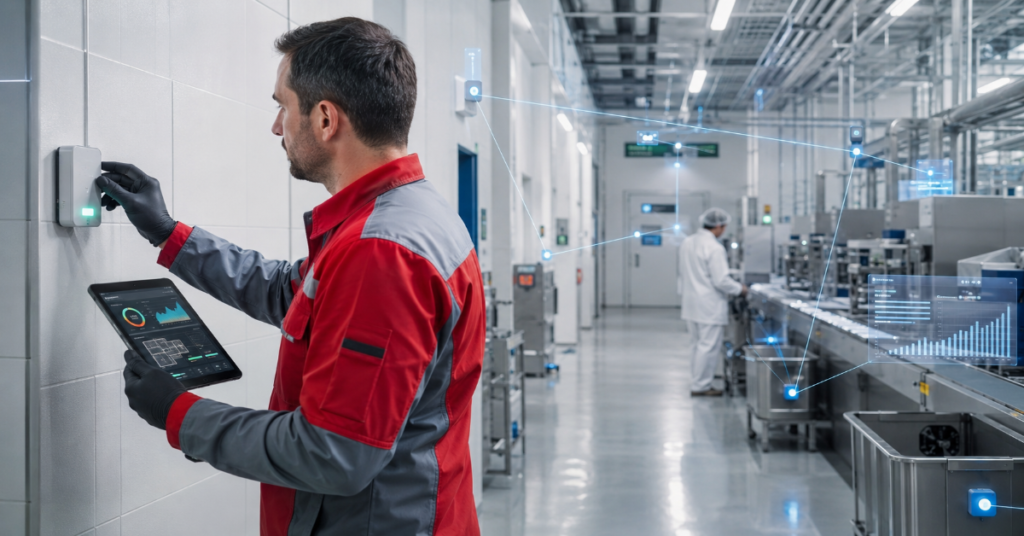
Anticimex 3d sanidad ambiental / wisecon estrategia de consolidación refers to the business logic behind Anticimex’s move from conventional pest control toward a more digital, centralized and preventive model. In plain English, it describes how Anticimex 3D Sanidad Ambiental’s Spanish operations fit into the wider Anticimex Group strategy after the company invested in WiseCon, a Danish specialist in electronic rat traps and monitoring systems.
The key dates matter. Anticimex first acquired a 20 percent stake in WiseCon A/S in January 2015. The company then acquired the remaining 80 percent in April 2017 and announced the creation of an innovation center for digital pest control in Helsinge, Denmark. Anticimex described the move as part of its strategy to grow digital pest control services.
That makes the WiseCon transaction more than an acquisition. It was a platform decision. Instead of treating pest control as a sequence of isolated site visits, Anticimex pushed toward a connected service model: electronic traps, sensors, real-time alerts, remote documentation and preventive intervention.
For Spain, the relevance is practical. Anticimex lists Anticimex 3D Sanidad Ambiental as its Spanish operation, while Spain’s corporate registry notices also show later consolidation activity involving Anticimex 3D Sanidad Ambiental, S.A.U. and absorbed entities.
The result is a useful case study in modern business consolidation: not just buying companies, but aligning technology, operations, data and compliance under one repeatable service system.
What Anticimex 3D Sanidad Ambiental Does
Anticimex 3D Sanidad Ambiental operates in the environmental health and pest control field in Spain. Its work sits inside a broader global group that presents itself as a modern pest control company focused on prevention, technology and sustainable solutions.
In practical terms, sanidad ambiental covers more than killing pests. It includes inspection, prevention, monitoring, hygiene risk control, documentation, regulatory compliance and corrective action. For commercial clients such as food facilities, logistics warehouses, hotels, hospitals, supermarkets and property managers, the value is not only pest elimination. The value is proof of control.
That proof matters because pest control is increasingly tied to audit readiness. A food plant, for example, does not only need traps on site. It needs records showing inspection frequency, activity patterns, corrective actions, trend analysis and reduced chemical dependence where possible.
This is where anticimex 3d sanidad ambiental / wisecon estrategia de consolidación becomes commercially important. WiseCon’s digital technology supports a service model where information can move from the trap or sensor to the technician, customer portal or operations center with less delay.
Who WiseCon Is and Why Anticimex Bought It
WiseCon A/S developed advanced electronic rat traps and monitoring systems. When Anticimex bought its initial 20 percent stake in 2015, the company described WiseCon as a Danish business at the forefront of electronic rat traps and monitoring systems.
In 2017, Anticimex completed the acquisition by buying the remaining 80 percent. The company said it would combine Anticimex’s Smart concept with WiseCon’s technology and establish an innovation center for digital pest control.
That combination reveals the strategic logic:
| Traditional pest control model | Anticimex WiseCon digital model |
| Manual trap checks at scheduled intervals | Continuous monitoring through connected devices |
| Reactive service after visible pest activity | Preventive alerts before infestation escalates |
| Paper or fragmented digital reports | Centralized documentation and data trails |
| Higher dependence on technician site visits | Remote visibility with targeted interventions |
| Chemical treatment often used after escalation | Earlier detection may support reduced biocide use |
| Local process variation across branches | Standardized service model across markets |
The acquisition also gave Anticimex more control over core technology. That matters because digital pest control depends on hardware reliability, sensor accuracy, software integration, technician workflow and customer reporting. Owning more of the technology stack reduces dependence on external vendors.
The Consolidation Strategy Behind the Deal
The phrase estrategia de consolidación can be misunderstood. It does not only mean merging legal entities or buying competitors. In this case, it means consolidating capability.
Anticimex’s public history says the group acquired a 20 percent WiseCon stake in 2015, accelerated its digital SMART concept and acquired the remaining 80 percent by 2017, establishing the Anticimex Innovation Center in Helsinge.
That sequence shows three layers of consolidation.
First, technology consolidation. WiseCon’s electronic traps and monitoring systems became part of a wider Anticimex digital service architecture.
Second, operational consolidation. Field service can be standardized when technicians, branches and clients work from similar data flows.
Third, corporate consolidation. In Spain, BORME records show a 2024 merger process in which absorbed companies were extinguished and their assets transferred to Anticimex 3D Sanidad Ambiental, S.A.U. by universal succession.
Together, these moves suggest a business model built around scale. Local expertise still matters, but the operating backbone becomes more centralized.
How Digital Pest Control Works in Practice
Digital pest control replaces part of the old inspection rhythm with continuous or near-continuous monitoring. A connected trap or sensor detects activity, sends a signal and creates a record. A technician or service center can then decide whether the site needs immediate intervention, trend review or a scheduled visit.
The Anticimex Smart positioning focuses on intelligent traps and sensors that monitor and control pest activity.
A typical workflow looks like this:
| Stage | Digital function | Business value |
| Detection | Sensor or electronic trap registers pest activity | Faster awareness |
| Transmission | Device sends alert to monitoring system | Reduced delay |
| Triage | Technician reviews activity pattern | Better prioritization |
| Intervention | Targeted visit or corrective action | Less wasted field time |
| Documentation | Activity and response are logged | Stronger audit trail |
| Trend review | Data shows recurring hotspots | Better prevention planning |
This model is especially relevant for sites where rodents can create serious operational risk. Food warehouses, pharmaceutical storage, restaurants, schools and hospitals cannot rely only on occasional manual checks. They need early warning.
Why the Strategy Matters in Spain
Spain’s pest control market is shaped by several pressures at once: urban density, hospitality demand, food safety expectations, climate variation and stricter customer audits. Digital systems do not remove the need for trained pest control professionals, but they change how those professionals allocate time.
For Anticimex 3D Sanidad Ambiental, the WiseCon strategy supports a more defensible service proposition. Instead of selling only visits and treatments, the company can sell monitoring, prevention, reporting and sustainability.
That distinction matters in competitive B2B services. A hotel chain does not want a pest control supplier that simply reacts after a complaint. A food producer does not want undocumented activity. A logistics operator does not want chemical overuse that creates compliance concerns.
The stronger commercial pitch is: fewer blind spots, better records, faster response and more preventive control.
Strategic Implications for Anticimex
anticimex 3d sanidad ambiental / wisecon estrategia de consolidación shows how a services company can use technology to change its economics.
The first implication is recurring value. Traditional pest control can look transactional: inspect, treat, invoice. Digital pest control supports longer service relationships because clients depend on monitoring infrastructure and reporting continuity.
The second implication is data advantage. A company that collects activity data across many sites can identify patterns by building type, season, geography and risk category. That improves service planning.
The third implication is operational leverage. If alerts are prioritized intelligently, technicians can spend less time on low-risk routine checks and more time on targeted interventions.
The fourth implication is brand positioning. Anticimex can present itself not merely as a pest control vendor, but as a preventive environmental health partner.
That shift aligns with wider business interest in workflow consolidation. Matrics360’s coverage of unified digital ecosystems has noted that organizations increasingly want centralized systems rather than fragmented tools. The same logic applies here: a connected pest control platform is more valuable than isolated traps and separate reports.
Risks and Trade-Offs
Digital consolidation also creates risks.
The first risk is system dependency. If monitoring hardware, connectivity or software dashboards fail, clients may assume they are protected when visibility is actually reduced. Pest control companies need redundancy, maintenance protocols and clear escalation procedures.
The second risk is data overload. More alerts do not automatically mean better service. Without good triage rules, technicians may face noise rather than insight.
The third risk is customer misunderstanding. Some clients may believe digital traps replace professional inspection. They do not. Sensors detect activity, but trained professionals still interpret structural risk, sanitation gaps, entry points and environmental conditions.
The fourth risk is regulatory complexity. Pest control in Europe intersects with biocidal product rules, environmental policy and workplace safety obligations. Digital monitoring may reduce unnecessary chemical use, but it does not remove compliance duties.
The fifth risk is uneven adoption. Large food, logistics and hospitality clients may adopt digital monitoring quickly. Smaller businesses may hesitate because of cost, contract complexity or lack of perceived need.
WiseCon, Biocides and Sustainability
One of the most important claims around digital pest control is reduced pesticide or biocide dependence. This must be handled carefully.
Digital monitoring can support reduction because it detects activity earlier and helps technicians target interventions. However, it does not automatically eliminate chemical treatment. Severe infestations, species behavior, site structure and sanitation conditions still influence the control plan.
The sustainability argument is strongest when digital monitoring is paired with integrated pest management. That means prevention, exclusion, sanitation, monitoring, mechanical controls and chemical treatment only when justified.
Anticimex’s global messaging emphasizes prevention, modern technology and sustainable solutions.
The practical insight is this: the real sustainability benefit does not come from the trap alone. It comes from changing the decision process. Earlier data allows a technician to ask, “What is causing activity here?” rather than simply applying treatment after pests are already established.
Structured Insight Table: What Consolidation Changes
| Consolidation area | What changes | Why it matters |
| Technology | WiseCon devices become part of Anticimex Smart infrastructure | More control over the digital pest control stack |
| Operations | Branches can follow more standardized monitoring workflows | Better consistency across regions |
| Reporting | Digital records replace fragmented manual documentation | Stronger audit readiness for commercial clients |
| Field service | Alerts guide technician visits | More efficient labor allocation |
| Sustainability | Earlier detection may reduce unnecessary biocide use | Supports preventive environmental health |
| Corporate structure | Local entities can be integrated under larger operating units | Easier coordination and scale |
Market Impact: From Pest Control Vendor to Data Service Provider
The wider market impact is subtle but important. Pest control is becoming more like a monitored infrastructure service.
In older models, value was visible mainly when something went wrong. A technician arrived, treated the problem and left. In digital models, value is visible through dashboards, alerts, reports and trends even when there is no infestation.
That changes buying behavior. Procurement teams can compare suppliers not only by price per visit, but by response time, documentation quality, digital coverage, preventive planning and chemical reduction policies.
It also changes competition. Smaller operators can still compete on local service and relationships, but large groups with proprietary monitoring platforms may gain an advantage in enterprise accounts.
This is where anticimex 3d sanidad ambiental / wisecon estrategia de consolidación becomes a useful business case. It shows how consolidation can create a repeatable service model that combines acquisitions, technology ownership and standardized operating procedures.
Real-World Examples of Where the Model Fits
A food distribution warehouse is a clear example. Rodent activity near loading bays can escalate quickly because doors open frequently, goods move constantly and waste handling patterns change throughout the day. Digital monitoring can identify activity outside normal inspection windows and help technicians focus on entry points.
A hotel is another example. Guest-facing pest incidents carry reputational risk. A preventive monitoring system can help the property team detect activity in back-of-house areas before it reaches public spaces.
A supermarket chain also benefits from standardized reporting. Regional managers need comparable documentation across stores. Digital systems make it easier to compare site risk and response histories.
These examples are not claims about specific Anticimex customer outcomes. They are common operational use cases for digital pest monitoring in high-risk commercial environments.
The Role of Documentation and Audit Readiness
Documentation is one of the least glamorous but most valuable parts of pest control.
For regulated clients, a clean report can matter almost as much as the treatment itself. Auditors may ask for trap maps, inspection logs, corrective actions, product records, pest trend data and proof that recommendations were followed.
Digital monitoring improves this process because activity records are generated closer to the event. That reduces reliance on memory, paper forms or delayed manual entry.
The hidden benefit is managerial visibility. A site manager can see whether recurring activity is linked to a sanitation issue, structural gap or supplier delivery pattern. That turns pest control from a maintenance task into an operational risk signal.
The Future of Anticimex 3D Sanidad Ambiental and WiseCon in 2027
By 2027, the likely direction is not simply more traps. The future is smarter integration.
Anticimex’s own history frames WiseCon and Smart as part of the group’s digital era, with intelligent traps and sensors supporting monitoring and control. That foundation could expand in several ways.
First, predictive analytics may become more important. If enough site data is available, pest activity can be analyzed by weather, building type, waste patterns and seasonality.
Second, customer reporting may become more automated. Clients will expect dashboards that translate pest activity into risk scores, not just raw alerts.
Third, sustainability pressure may increase. Companies will continue looking for ways to document lower chemical use without compromising safety.
Fourth, consolidation may continue. Anticimex’s mergers and acquisitions page states that since 2015, the company has combined strong organic growth with more than 350 acquisitions globally and tripled sales. That pattern suggests scale will remain central to the group’s strategy.
The uncertain part is adoption speed. Digital monitoring costs money. It also requires customer education, technician training and system maintenance. By 2027, the winners will likely be the companies that combine technology with disciplined field execution rather than those that simply install connected hardware.
Key Takeaways
• Anticimex’s WiseCon deal was a strategic technology acquisition, not just a financial transaction.
• The exact value of digital pest control comes from combining sensors, technician judgment, documentation and preventive site management.
• Anticimex 3D Sanidad Ambiental benefits from the broader group’s digital infrastructure while serving Spain’s local environmental health market.
• Consolidation works only when corporate integration improves service quality. Legal mergers alone do not create operational advantage.
• Reduced biocide use is possible, but only when digital monitoring supports integrated pest management rather than replacing professional assessment.
• The competitive edge lies in audit-ready documentation, remote visibility and faster prioritization of field work.
• By 2027, pest control will look increasingly like a data-enabled risk management service.
Conclusion
anticimex 3d sanidad ambiental / wisecon estrategia de consolidación is best understood as a case study in service modernization. Anticimex did not simply add digital traps to a traditional pest control business. Through WiseCon, it strengthened a broader model built around prevention, monitoring, reporting and operational scale.
For Spain, Anticimex 3D Sanidad Ambiental sits at the intersection of local environmental health needs and global digital pest control infrastructure. That position can create real advantages for commercial clients that need faster detection, stronger documentation and more sustainable intervention planning.
The strategy still depends on execution. Sensors must work. Technicians must interpret the data. Clients must understand the limits of automation. Compliance must remain central.
When those pieces align, WiseCon becomes more than an acquisition. It becomes the technical foundation for a more preventive, measurable and scalable form of pest control.
FAQ
What does anticimex 3d sanidad ambiental / wisecon estrategia de consolidación mean?
It refers to Anticimex 3D Sanidad Ambiental’s connection to Anticimex’s wider WiseCon-based digital pest control strategy. The phrase describes how technology, monitoring, operations and corporate consolidation support a more preventive environmental health service model.
When did Anticimex acquire WiseCon?
Anticimex acquired a 20 percent stake in WiseCon in January 2015. In April 2017, it acquired the remaining 80 percent and announced an innovation center for digital pest control in Denmark.
How does WiseCon technology support pest control?
WiseCon technology supports electronic traps and monitoring systems. These tools help detect pest activity earlier, send alerts, improve documentation and allow technicians to prioritize interventions based on real activity rather than only scheduled manual checks.
Does digital pest control reduce biocide use?
It can support reduced biocide use when paired with integrated pest management. Digital monitoring enables earlier detection and more targeted interventions, but it does not eliminate the need for professional assessment or chemical treatment in severe cases.
Why is consolidation important for Anticimex 3D Sanidad Ambiental?
Consolidation can standardize service, reporting, technology and management processes. In Spain, corporate merger notices involving Anticimex 3D Sanidad Ambiental show a broader logic of operational and legal integration.
Is Anticimex Smart the same as WiseCon?
No. Anticimex Smart is the broader digital pest control concept used by Anticimex. WiseCon supplied important technology for electronic traps and monitoring systems, which Anticimex integrated into its Smart strategy.
What is the biggest risk of digital pest control?
The biggest risk is treating technology as a substitute for expertise. Sensors provide data, but technicians still need to inspect buildings, identify root causes, advise clients and choose appropriate control methods.
Methodology
This article was prepared from the user-provided Matrics360 production brief, Anticimex public acquisition announcements, Anticimex corporate history pages, Anticimex Spain listing information, public Spanish BORME merger notice material and relevant Matrics360 internal-link candidates.
The analysis distinguishes verified facts from interpretation. Verified facts include the 2015 WiseCon minority acquisition, the 2017 acquisition of the remaining WiseCon stake, the creation of an Anticimex digital pest control innovation center and the existence of Spanish corporate consolidation notices. Strategic conclusions about operational consolidation, documentation value, sustainability and market positioning are analytical interpretations based on those sources.
Known limitations: this article does not include private Anticimex customer performance data, internal financial metrics or technician interviews. Claims about reduced biocide use are framed cautiously because digital monitoring can support reduction, but reduction depends on site conditions, pest pressure, professional judgment and integrated pest management practice.
References
Anticimex. (2017, April 26). Anticimex acquires remaining 80 percent in WiseCon and establishes an innovation center for digital pest control.
Anticimex. (n.d.). Our history.
Anticimex. (n.d.). The modern pest control company.
Anticimex. (n.d.). Spain: Anticimex 3D Sanidad Ambiental, S.A.
Anticimex Mergers and Acquisitions. (n.d.). Forma parte de Anticimex.
Boletín Oficial del Registro Mercantil. (2024). BORME-C-2024-4863 Anticimex 3D Sanidad Ambiental, S.A.U.
Flick Anticimex. (2015, January 27). Anticimex acquires stake in WiseCon digital pest control.
Matrics360. (2026). BMVX4: The unified digital ecosystem reshaping multi-platform workflows.
Matrics360. (2026). None Company Objectives 2026 explained.
Matrics360. (2026). Labarty: The innovation mindset behind modern teams.